
 comparison
Custom Home vs Production Home: Cost Breakdown
Table of Contents
- Custom Home vs Production Home: Key Cost Differences
- Average Cost to Build a Custom Home
- Production Home Construction Timeline and Pricing
- Custom Home Building Process Steps and Cost Drivers
- Long-Term Value: Resale and Energy Efficiency
- Financing Custom vs Production Homes
- Choosing the Right Build for Your Budget and Goals
- Frequently Asked Questions
Last Updated: September 28, 2026
Custom Home vs Production Home: Key Cost Differences
Understanding the custom home vs production home cost difference shapes not just your initial budget, but your long-term financial picture. Custom homes typically cost 20-30% more per square foot than production homes, yet the reasons behind that premium aren't always obvious. Understanding where those extra costs come from helps you make a decision that fits your actual needs and finances.
At Master Builder LLC, we work with homeowners on both custom builds and remodels. The core difference isn't just about price, it's about flexibility, control, timeline, and what you're paying for at each stage.
Production homes are built to a fixed floor plan with predetermined finishes and structural layouts. Economies of scale work in the builder's favor: they purchase materials in bulk, use standardized processes, and move crews through similar work repeatedly. Custom homes, by contrast, are designed specifically for your lot and preferences. That personalization comes with costs that production builders avoid: site-specific engineering, custom architectural design, and the management overhead of coordinating unique specifications.
When evaluating custom home vs production home cost, the real question isn't "which is cheaper?" but "which aligns with your goals and timeline?" A production home gets you into a finished house faster and at a lower entry price. A custom home gives you control over layout, finishes, and structural design, but requires more time, coordination, and budget flexibility.
Average Cost to Build a Custom Home
Custom home construction costs vary significantly based on location, complexity, and finish level. A typical custom home ranges from $300 to $500+ per square foot, though this varies by region and material choices. For a 2,500-square-foot custom home, you're looking at a substantial investment that extends beyond the base construction cost.
The base price covers framing, roofing, exterior walls, and basic systems. But the final cost grows as you add site-specific work. Your lot may require grading, drainage improvements, or utility extensions that a standard production home lot doesn't need. These site development costs can add tens of thousands of dollars before construction even begins.
Architectural design fees represent another significant line item. A custom home requires detailed plans tailored to your property, preferences, and local building codes. These plans must account for site topography, soil conditions, and any unique structural requirements. Design costs typically run 8-15% of the total project budget, depending on complexity.
Material selection and upgrades compound costs as well. When you're building custom, every fixture, finish, and structural choice is yours to make, and each choice carries a price tag. Upgrading from standard drywall to premium finishes, selecting higher-end cabinetry, or choosing custom millwork adds up quickly. The flexibility to choose is valuable, but it requires discipline to stay within budget.
Change orders are a reality in custom home building. As construction progresses and unforeseen conditions emerge, soil issues, utility conflicts, or design refinements, costs adjust. Builders who manage these transparently and communicate early help minimize surprises. Master Builder LLC focuses on comprehensive planning and upfront coordination.
Production Home Construction Timeline and Pricing
Production homes are engineered for speed and consistency. A production home typically moves from foundation to completion in 4-6 months, compared to 9-18 months for custom builds. That speed comes from standardized floor plans, pre-negotiated material suppliers, and crews trained to execute the same sequence repeatedly.
Pricing for production homes reflects this efficiency. The builder's volume purchasing power reduces per-unit material costs. They've negotiated fixed pricing with subcontractors and suppliers, which means your price is locked in, change orders are rare because changes are limited. The base price you see is typically what you pay, with few surprises.
Production homes are sold as spec homes, built to inventory before a buyer is identified, or as pre-sold homes with a buyer lined up before construction starts. Either way, the builder controls the timeline and process. Your role is simpler: choose a floor plan, select from a limited upgrade menu, and wait for completion.
The trade-off is clear: you gain speed and price certainty, but lose flexibility. If the floor plan doesn't quite fit your needs, your options are limited. If you want custom finishes or structural modifications, you'll either accept the standard offering or pay production builders' premium pricing for deviations, which often costs more than custom building would have.
Custom Home Building Process Steps and Cost Drivers
Building a custom home involves distinct phases, each with cost implications. Understanding these phases helps you anticipate expenses and manage your budget realistically.
Phase 1: Land Acquisition and Site Analysis begins before construction. You purchase the lot, then hire a surveyor and engineer to assess soil conditions, drainage, utility access, and any site constraints. This phase typically costs $2,000-$5,000 but reveals critical information that affects your design and budget.
Phase 2: Design and Permitting involves working with an architect to develop plans tailored to your site and preferences. Architectural fees run 8-15% of total project cost. Once designs are finalized, you submit for building permits, a process that can take 4-8 weeks depending on local review processes. Permit fees vary by jurisdiction and project scope.
Phase 3: Site Preparation and Utilities prepares the land for construction. Grading, drainage installation, and utility extensions happen before the foundation is poured. Site-specific challenges, poor drainage, difficult terrain, or distant utility connections, drive costs higher.
Phase 4: Foundation and Structural Framing is where the bulk of labor and materials converge. Custom homes often require site-specific foundation engineering, especially on sloped or challenging lots. Framing costs depend on complexity, materials, and local labor rates.
Phase 5: Systems and Finishes includes electrical, plumbing, HVAC, insulation, drywall, and interior finishes. This phase is where customization choices compound costs. Premium finishes, custom cabinetry, and high-end fixtures push budgets higher.
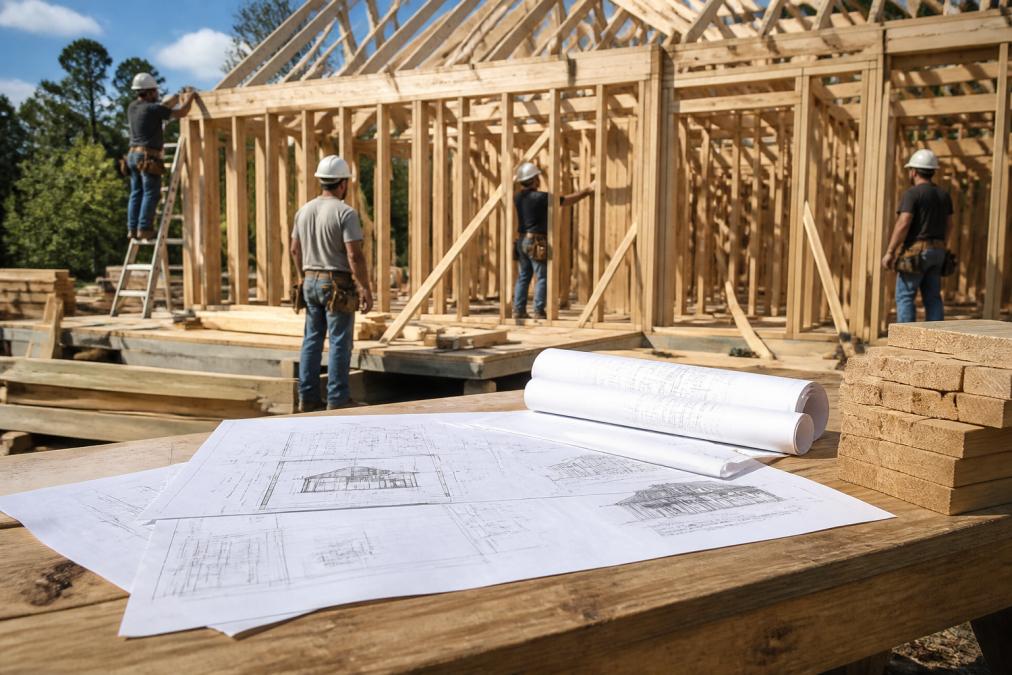
Phase 6: Final Inspection and Closeout involves municipal inspections, punch-list corrections, and final walkthrough. A thorough final inspection prevents costly issues after you move in.
Cost drivers throughout these phases include labor rates (which vary by region), material selection, site complexity, and design customization. A simple, efficient design costs less than a complex one. Standard materials cost less than premium finishes. Straightforward sites cost less than those requiring extensive grading or utility work.
Long-Term Value: Resale and Energy Efficiency
The initial price difference between custom and production homes narrows over time when you factor in long-term value. Custom homes often appreciate differently because they're designed to your specific preferences, which may or may not align with future buyers' tastes. A highly customized interior finish or unusual layout can limit your buyer pool when you sell.
Production homes, by contrast, appeal to a broader market. The standardized floor plan and finishes fit more buyers' expectations, which can support resale value. However, a well-designed custom home in a desirable location typically holds value competitively with production homes in the same area.
Energy efficiency offers a long-term financial advantage that custom builders can optimize. A custom home built with energy-efficient design, proper insulation, high-performance windows, efficient HVAC systems, costs more upfront but reduces utility expenses for decades. Production homes vary in efficiency; some builders prioritize it, others don't. If energy efficiency matters to you, a custom build lets you specify systems and materials that minimize long-term operating costs.
The total cost of ownership, purchase price plus utility costs, maintenance, and repairs over 10-20 years, often favors custom homes built with durability and efficiency in mind.
Financing Custom vs Production Homes
Financing differs significantly between custom and production homes, affecting your cash flow and total borrowing costs.
Choosing the Right Build for Your Budget and Goals
The decision between custom and production homes depends on your priorities, timeline, and budget flexibility.
Choose a production home if:
- You need to move quickly and want a predictable closing date
- Your budget is fixed and you need certainty on final costs
- Your lot is already owned or readily available
- You're comfortable with standardized floor plans and finishes
- You prefer simpler financing with a standard mortgage
Choose a custom home if:
- You have specific design preferences or site constraints that demand customization
- You're willing to invest time in design and coordination
- Your budget has some flexibility for site-specific costs or design refinements
- You prioritize long-term efficiency, durability, or specific features
- You value control over every aspect of the build
| Factor | Production Home | Custom Home | Winner for Budget |
|---|---|---|---|
| Timeline | 4-6 months | 9-18 months | Production |
| Initial Cost per Sq Ft | Lower | 20-30% higher | Production |
| Design Control | Limited | Full customization | Custom |
| Cost Certainty | High (fixed price) | Moderate (change orders likely) | Production |
| Site Flexibility | Standardized | Site-specific | Custom |
| Financing | Standard mortgage | Construction-to-permanent | Production |
| Long-term Efficiency | Varies | Optimizable | Custom |
| Resale Appeal | Broad market | Depends on design | Production |
Frequently Asked Questions
Is it cheaper to have a custom home built?
Not typically. Custom homes cost 20-30% more per square foot than production homes due to individual design, smaller volume purchasing power, and longer construction timelines. However, custom homes offer greater flexibility in design, materials, and site-specific features. The higher upfront cost may be offset by better long-term resale value and energy efficiency if you plan to stay in the home long-term or prioritize specific features.
What are the hidden costs associated with custom home construction?
Common hidden costs include site development fees, building permits, utility hookups, architectural design revisions, change orders for design modifications, subcontractor management fees, and extended financing costs due to longer timelines. Land acquisition, soil testing, and foundation work vary significantly by location. A fixed-price contract with a builder experienced in your area can help minimize surprises, but site-specific variables often emerge during construction.
How do production builders keep their costs lower than custom builders?
Production builders achieve lower costs through economies of scale, volume purchasing of materials, standardized floor plans that reduce design time, and efficient construction management across multiple homes simultaneously. They use spec homes (built before sale) and master-planned communities to streamline site development. Standardized layouts and finishes eliminate change orders and reduce labor variability, passing savings directly to buyers.
Does a custom home offer better long-term value than a production home?
Custom homes can offer better long-term value if built with quality craftsmanship, energy-efficient systems, and timeless design. They often command higher resale prices in desirable locations and appeal to buyers seeking specific features. However, this depends on the builder's reputation, local market conditions, and how well the home's design aligns with future buyer preferences. Production homes in established communities may appreciate more predictably due to stable neighborhood values.