
 ultimate-guide
Guaranteeing Quality Workmanship in Residential Construction
Table of Contents
- What Quality Workmanship Means in Residential Construction
- Understanding Implied Warranty of Good Workmanship
- Construction Workmanship Warranty Clause: What to Include
- Selecting Skilled Contractors and Subcontractors
- Residential Construction Quality Control Checklist
- On-Site Inspection and Digital Documentation
- Managing Expectations and Dispute Resolution
- Conclusion
Last Updated: August 27, 2026
What Quality Workmanship Means in Residential Construction
Quality workmanship in residential construction refers to the execution of building work according to established industry standards, building codes, and contractual specifications that result in safe, functional, and durable structures. At Master Builder llc., we define quality workmanship as the combination of skilled labor, proper material selection, adherence to project specifications, and meticulous attention to detail throughout every phase of construction.
The distinction between acceptable and superior workmanship often comes down to how contractors approach problem-solving on site. A skilled contractor doesn't just follow plans, they anticipate issues, communicate proactively with architects and designers, and make decisions that prioritize long-term durability over short-term convenience. This is where many homeowners discover the real cost of cutting corners: a $2,000 shortcut during framing can become a $15,000 structural repair five years later (peer-reviewed research).
Understanding what quality workmanship actually looks like protects homeowners from vague promises and helps them evaluate contractors with clarity. When you know what to look for, you can spot the difference between a contractor who rushes through work and one who takes pride in craftsmanship. The residential construction quality control process begins before a single nail is driven, it starts with clear expectations, documented standards, and a contractor who understands that their reputation depends on delivering work that stands the test of time.
Understanding Implied Warranty of Good Workmanship
The implied warranty of good workmanship is a legal protection that exists in most jurisdictions, even when not explicitly stated in a contract (nolo.com). This warranty guarantees that work performed by a contractor will be done in a professional, competent manner consistent with industry standards and local building codes. Unlike an express warranty, which is explicitly written into the contract, an implied warranty of good workmanship is assumed to exist by law.
What this means practically: if a contractor installs cabinetry that's visibly uneven, applies finish work with visible drips and sanding marks, or leaves gaps where trim should fit flush, they've violated the implied warranty of good workmanship. A homeowner can typically pursue remedies without having to prove they were promised perfection, the law assumes competent execution was promised simply by virtue of hiring a professional.
The challenge for homeowners is that implied warranties vary by jurisdiction and can be limited or waived in some cases. This is why documenting expectations in writing becomes critical. A contractor might argue that "acceptable workmanship" in their view means something different from yours. Written specifications eliminate that ambiguity.
Master Builder llc. operates with the understanding that quality standards aren't negotiable, they're the baseline expectation. We document what "good workmanship" means for each project through detailed specifications and regular inspections, so there's no dispute about whether work meets the implied warranty standard.
Construction Workmanship Warranty Clause: What to Include
A construction workmanship warranty clause should specify exactly what work is covered, for how long, and what the contractor's obligations are if defects appear. Many homeowners sign contracts with vague warranty language and later discover their coverage is weaker than they assumed.
Essential elements of a strong workmanship warranty clause:
- Scope of coverage: Specify which work is covered (structural, finish, systems, landscaping) and what's excluded (manufacturer defects, normal wear, changes made by homeowner)
- Duration: State the warranty period clearly (typically 1 year for finish work, 2-5 years for structural work, longer for critical systems)
- Definition of defect: Define what constitutes a defect eligible for repair, visible gaps, cracks, misalignment, leaks, or failure to meet building code standards
- Contractor obligations: Specify whether the contractor will repair defects at no cost, reimburse the homeowner, or both
- Notice requirements: State how the homeowner should document and report defects (written notice within what timeframe)
- Exclusions: Clearly list what's not covered, acts of nature, homeowner modifications, normal settling, manufacturer defects on installed products
- Dispute resolution: Include language about how warranty disputes will be handled (mediation, arbitration, or litigation)
The most common mistake homeowners make is accepting a warranty clause that says "workmanship is guaranteed for one year" without defining what that means. Does it cover cosmetic issues? Only safety-critical failures? What if the defect appears on day 366? A detailed clause removes these questions.
When working with Master Builder llc., we provide a comprehensive workmanship warranty that covers the scope of work detailed in your specifications. We document this clearly so you understand exactly what's protected and for how long.
Selecting Skilled Contractors and Subcontractors
The quality of your finished project depends almost entirely on the skill and reliability of the people doing the work. A well-written contract with a mediocre contractor produces mediocre results. A solid contract with a skilled, professional team produces work you'll be satisfied with for decades.
Evaluating contractor competence:
Start by examining their past work in person, not just in photos. Photos can hide poor workmanship, angles, lighting, and cropping hide gaps, misalignment, and finish quality. Walk through completed projects and look at details: How are seams finished? Are transitions clean? Do cabinets hang level? Are transitions between materials handled with care?
Ask for references from homeowners whose projects are at least two years old. Anyone can provide a reference from a recent project. Homeowners with two-year-old work have had time to discover whether workmanship holds up. Ask specifically about whether the contractor responded to warranty issues, how quickly, and whether the repairs were done right the first time.
Verify licensing and insurance. A contractor operating without proper licensing or insurance is cutting corners on overhead, which usually means they cut corners elsewhere too. Verify their license status with your state's contractor licensing board and confirm they carry liability insurance and workers' compensation coverage (cslb.ca.gov).
Request a detailed breakdown of subcontractors they'll use for specialized work (electrical, plumbing, HVAC, tile). Ask about those subs' experience and qualifications. A general contractor is only as good as the specialists they hire. Master Builder llc. maintains relationships with skilled subcontractors who understand our quality standards and have proven track records on similar projects.
Red flags in contractor selection:
- Unwillingness to provide references or past project addresses
- Significantly lower bids than competitors (usually indicates corner-cutting)
- Vague answers about timelines, specifications, or warranty coverage
- No written contract or contract that lacks detail about workmanship standards
- Pressure to make decisions quickly without time for evaluation
Residential Construction Quality Control Checklist
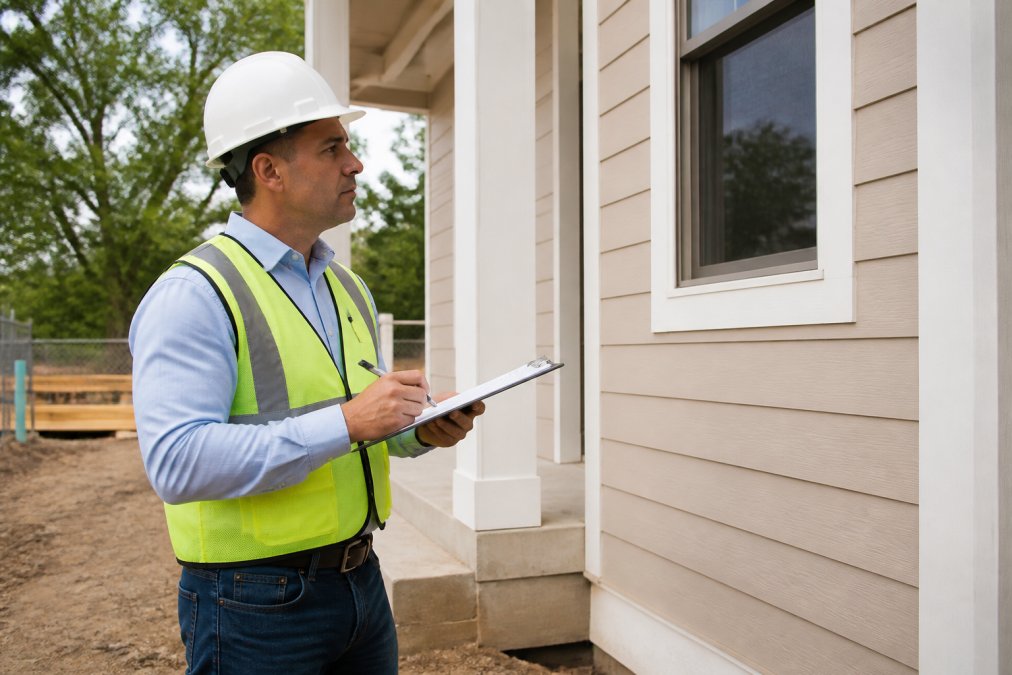
A quality control checklist ensures that inspections happen systematically and issues are caught early, when they're cheapest to fix. Without a checklist, inspections become informal and inconsistent, some items get checked, others get missed, and problems compound.
Pre-construction phase:
- All plans reviewed and approved by relevant authorities
- Building permit obtained and posted on site
- Subcontractors and material suppliers confirmed
- Site safety plan documented
- Material delivery schedule confirmed
Foundation and framing phase:
- Foundation dimensions verified against plans
- Framing lumber inspected for defects before installation
- Structural members properly sized and spaced per code
- Connections (bolts, nails, fasteners) meet specifications
- Openings (doors, windows) framed to correct dimensions
- Rough-in inspections passed (electrical, plumbing, HVAC)
Exterior phase:
- Roofing material installed per manufacturer specifications
- Flashing installed at all penetrations and transitions
- Windows and doors properly sealed and flashed
- Exterior walls checked for plumb and level
- Caulking and sealants applied per specifications
- Grading slopes away from foundation
Interior systems phase:
- Electrical wiring properly sized and installed per code
- Plumbing rough-in pressure-tested
- HVAC ductwork sealed and properly sized
- Insulation installed to specified R-values
- Drywall installed without damage; joints properly taped
Finish phase:
- Paint applied per specifications (primer, finish coats)
- Flooring installed level and without gaps
- Cabinetry installed level and plumb with proper clearances
- Trim work installed with tight joints and proper finish
- Hardware installed and functional
- Doors and windows operate smoothly
Final inspection phase:
- All building code violations corrected
- Punch list items completed
- Surfaces cleaned of construction debris
- Final walk-through completed with homeowner
- Warranty documentation provided
Regular use of this checklist prevents the situation where work is completed but issues are discovered after the contractor has left the site and is difficult to reach for repairs.
On-Site Inspection and Digital Documentation
Traditional construction inspection relied on a contractor's word and occasional site visits. Modern quality control combines regular on-site inspections with digital documentation that creates an auditable record of work completion and condition.
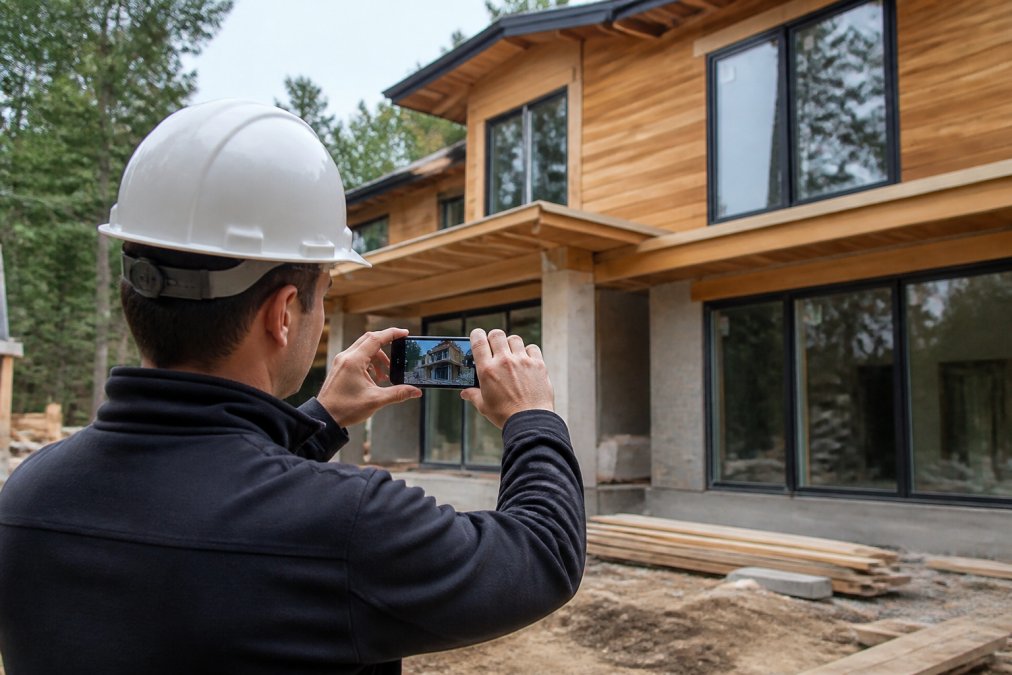
Digital documentation serves multiple purposes. It creates a timestamped record of work condition at each phase, which protects both homeowner and contractor if disputes arise later. It allows architects, designers, and project managers to monitor progress without being on site every day. It provides a reference for warranty claims, if an issue appears months later, you have photos from the day the work was completed showing it wasn't present.
Effective digital documentation includes:
- Photo documentation at each major phase (before, during, after key work)
- Close-up photos of critical details (flashing, sealing, connections, finish quality)
- Wide-angle photos showing overall progress and context
- Written notes accompanying photos (date, time, what was inspected, any issues noted)
- Video walkthroughs at completion of each phase
- Digital punch list tracking (items needing repair with photos and status updates)
This documentation becomes invaluable if you need to pursue a warranty claim. Instead of arguing about whether a gap in trim existed at completion, you have a photo from the day work finished. Instead of relying on memory about how something was supposed to look, you have a record.
Master Builder llc. uses digital documentation throughout projects to ensure transparency and create a clear record of work completion. This protects you by providing evidence of what was completed and in what condition, and it protects us by documenting that work met specifications.
Managing Expectations and Dispute Resolution
Many construction disputes don't arise from poor workmanship, they arise from misaligned expectations about what "quality" means or what the final result should look like. A homeowner imagines one outcome, the contractor delivers something different, and both parties believe they've held up their end of the bargain.
Clear communication prevents most disputes. Before work begins, discuss what quality looks like for each element of the project. For finish work, show examples of acceptable and unacceptable finishes. For paint, discuss color samples in the actual lighting of the room. For tile work, discuss grout color, grout width, and acceptable variation in tile placement. These conversations take time but save months of frustration later.
Documentation of expectations is equally important. A contract should reference specific materials by brand and model number, not just "tile" or "paint." It should specify finish standards, "paint finish should be smooth without visible brush marks or drips" is more useful than "professional paint finish." It should reference building codes and industry standards as the baseline for workmanship quality.
If disputes do arise, establish a resolution process:
Most contracts include a dispute resolution clause that specifies steps before litigation. A typical process might be:
- Written notice to contractor describing the defect with photos
- Contractor inspection and response within 5-7 business days
- Contractor repair attempt or explanation of why repair isn't warranted
- If disagreement persists, third-party inspection by an independent professional (architect, engineer, or qualified inspector)
- Mediation or arbitration if third-party inspection doesn't resolve the dispute
- Litigation only as a final resort
This staged approach often resolves disputes without expensive legal action. A third-party inspection is particularly valuable, an independent professional's assessment carries weight with both parties and often clarifies whether the issue is a legitimate defect or a difference in expectations.
Guaranteeing quality workmanship in residential construction requires clear contracts, skilled contractors, systematic inspections, and documented expectations. The work you do before construction begins, selecting the right contractor, writing detailed specifications, and establishing quality standards, determines whether your project delivers the result you envisioned.
Master Builder llc. approaches every project with the understanding that quality workmanship isn't negotiable. We manage the entire process from initial planning through final inspection, collaborate directly with your architect or designer, and document progress so you have confidence in the work being completed. If you're planning a residential remodel or new construction project and want a contractor who treats quality as non-negotiable, [Book Online] to discuss your project with our team.
Frequently Asked Questions
What is the standard wording for a workmanship guarantee in a construction contract?
A solid construction workmanship warranty clause should state that the contractor guarantees all work will be performed in a workmanlike manner according to industry standards and applicable building codes. It should specify the warranty period (typically 1-2 years), define what is covered, outline the process for reporting defects, and clarify the contractor's obligation to repair or correct work at no additional cost. Include language that the contractor warrants materials will be new, of good quality, and properly installed. The clause should also address exclusions, such as normal wear and tear or damage from misuse.
How long does a contractor have to guarantee his work under implied warranty of good workmanship?
Implied warranty of good workmanship is governed by state law and typically extends for a reasonable period, often 4-10 years depending on the state and the nature of the work. For structural elements, the period may be longer; for finishes, shorter. Most express warranties in construction contracts specify 1-2 years for workmanship defects. However, homeowners should verify their state's specific statute of repose and implied warranty laws, as these vary significantly. The implied warranty of good workmanship cannot be waived in most states and protects against defects that appear after the contractor completes the work.
What should be included in a residential construction quality control checklist?
A comprehensive residential construction quality control checklist should cover structural integrity (foundation, framing, load-bearing elements), building code compliance, material specifications (grade, type, finish), installation quality (plumb, level, square), mechanical systems (HVAC, plumbing, electrical), waterproofing and weather barriers, finish quality (paint, trim, flooring), and safety standards. Include inspection points at key phases: rough-in, before drywall, pre-final, and final walk-through. Document defects with photos and descriptions, assign responsibility for correction, and track completion. A third-party inspector can verify compliance against the contract specifications and applicable building codes.
Can I sue a builder for poor workmanship under implied warranty laws?
Yes, homeowners can typically sue a builder for poor workmanship under implied warranty of good workmanship in most states. This protection applies even without an express warranty and covers defects that do not meet industry standards or building codes. To succeed, you must prove the work was defective, the defect existed at the time of completion, and the defect caused damages. Document all defects thoroughly with photos and written descriptions. Consult a construction attorney in your state, as implied warranty laws, damage caps, and statutes of limitations vary. Many states also have construction defect statutes that provide specific timelines and procedures for claims.
How can I ensure quality assurance during the construction process?
Ensure quality assurance by establishing clear contract specifications and performance benchmarks before work begins. Conduct regular on-site inspections at critical phases (foundation, framing, mechanical rough-in, before finishes). Use a detailed punch list to document any deviations from specifications or defects. Require the contractor to provide proof of professional certifications for key trades. Implement digital documentation, photos and progress notes, to create a record of work quality. Consider hiring a third-party inspector for objective oversight. Hold weekly progress meetings to address issues immediately. Verify that subcontractors meet the same quality standards, and ensure the contractor maintains project management systems to track quality control throughout.
What is the difference between an express warranty and an implied warranty of good workmanship?
An express warranty is a specific, written promise made by the contractor about the quality or performance of work. It appears in the construction contract and defines what is covered, for how long, and what happens if work fails. An implied warranty of good workmanship is an automatic legal protection that exists regardless of written terms, it guarantees work will be performed in a competent, professional manner according to industry standards and building codes. Implied warranties cannot be waived in most states and provide a baseline protection. Express warranties often provide more detailed coverage and longer periods, but both serve to protect homeowners against defective workmanship.
What should I do if a contractor leaves defects after the project is complete?
Document all defects immediately with photos, written descriptions, and measurements. Review your contract's warranty clause and the punch list to confirm the work falls within the contractor's obligation. Send a formal written notice (email or certified letter) describing each defect, referencing the contract terms, and requesting correction within a reasonable timeframe (typically 7-14 days). Keep records of all communications. If the contractor does not respond or refuses to correct work, consult a construction attorney about your options: small claims court, mediation, or a formal lawsuit based on breach of contract or implied warranty violation. Many states have construction defect statutes with specific procedures and timelines for claims.
This article was written using GrandRanker