
 listicle
Hiring Reliable Construction Partners in 2026: 7 Steps
Table of Contents
- Why Reliable Construction Partners Matter More in 2026
- 1. Verify Licensing, Insurance, and Safety Compliance Standards
- 2. Use a Vetting Construction Subcontractors Checklist
- 3. Managing Architect and Subcontractor Relationships
- 4. Lock In Pricing and Prevent Change Order Surprises
- 5. Construction Partnership Agreement Templates and What to Include
- 6. Evaluate Technology Integration and Project Delivery Methods
- 7. Red Flags When Hiring Reliable Construction Partners
- Frequently Asked Questions
Last Updated: September 10, 2026
Why Reliable Construction Partners Matter More in 2026
Hiring reliable construction partners in 2026 means treating contractor selection as the risk decision it is, not a price comparison. Material lead times swing, labor markets stay tight, and owners tolerate schedule surprises less than they used to. Master Builder llc. sees the same pattern: projects rarely fail because of one bad subcontractor, but because nobody vetted the whole team before mobilization.
Below are seven steps that separate a contractor you can build with for a decade from one you'll be chasing for warranty repairs.
1. Verify Licensing, Insurance, and Safety Compliance Standards
Start with the paperwork, because it filters out most of the field before you waste a site visit. A reliable construction partner holds a current state license for the trade and scope they perform, carries general liability and workers' compensation coverage, and can produce certificates naming you or your project as additionally insured. Verify the license number with the issuing state board, not a photocopy.
The Documents to Collect Before You Sign
Run every candidate through the same document request. A partner with their house in order produces these in a day; a stall is your answer.
- State contractor license number, verified on the state board's public lookup
- Certificate of insurance (COI) for general liability, with policy limits stated
- Workers' compensation certificate, or a state-approved exemption
- Additional-insured endorsement naming you or the project entity
- Surety letter confirming bonding capacity at your project's scale
- OSHA 300A summary for the last three years
- Experience Modification Rate (EMR), the industry's standard safety score
- Written safety program and jobsite hazard communication plan
- Written substance-abuse and jobsite-conduct policy
What the Numbers Actually Mean
The Experience Modification Rate (EMR) is the most useful safety number a contractor can hand you, calculated from past workers' comp claims against expected losses for their trade and size. An EMR of 1.0 is industry average; below 1.0 means fewer claims than expected, above 1.0 means more. A contractor with an EMR of 1.3 pays more for insurance than competitors, and so do you, indirectly, through their pricing. A partner who doesn't know their own EMR isn't tracking safety.
The OSHA 300A summary is the annual log of recordable injuries a contractor must post. Three years of clean forms tell you the safety program works; repeat injuries in the same category tell you it doesn't.
Verify, Don't Trust
Certificates of insurance are the most-forged document in construction. The COI is issued by the insurer, not the contractor, so verify directly:
- Call the insurance agent listed on the COI and confirm the policy is active and the limits match.
- Confirm the additional-insured endorsement is actually attached, not just promised.
- Check the expiration date against your project timeline, a policy that lapses mid-project leaves you exposed.
- For workers' comp, confirm the classification code matches the work being performed. A framing sub insured as a "clerical" operation is a red flag.
The OSHA construction industry safety and health topics pages outline the standards any legitimate partner should already be meeting, and the Federal Trade Commission consumer advice on hiring a contractor recommends checking references and getting everything in writing, advice that applies just as directly to commercial owners vetting subs.
2. Use a Vetting Construction Subcontractors Checklist
A vetting construction subcontractors checklist turns a gut feeling into a repeatable process. Run every candidate through the same questions, score the answers, and compare candidates side by side instead of relying on whoever returned your call fastest.
- License current and verified with the state board
- General liability and workers' comp certificates on file
- Bonding capacity sufficient for this project's value
- Three references from projects completed in the last 24 months
- Written safety program and OSHA history reviewed
- Financial statements or a letter of credit for larger scopes
- Change order process documented in writing
- Named on-site supervisor and their availability confirmed
Financial Stability and Bonding Capacity
Financial stability is the quiet disqualifier. A subcontractor with thin cash reserves can walk off a job mid-phase when a supplier demands payment up front. Request a current balance sheet, ask about their line of credit, and confirm their surety can issue a performance bond at your project's scale. Hesitation is your answer.
Reference Checks That Go Beyond a Phone Call
Reference checks that go beyond a phone call mean asking specific, uncomfortable questions. Don't ask "were they good to work with." Ask how many change orders the project generated, whether the crew showed up on the promised date, and whether the contractor came back to fix warranty items without being threatened. The Federal Trade Commission consumer advice on hiring a contractor recommends checking references and getting everything in writing, and that advice applies just as directly to commercial owners vetting subs.
3. Managing Architect and Subcontractor Relationships
Managing architect and subcontractor relationships is where most owners accidentally become the general contractor. On a well-run project, the builder coordinates information between the design team and the trades so the owner never relays a single RFI. On a poorly run one, you spend evenings forwarding emails between an architect who won't answer the sub's question and a sub who won't proceed without an answer.
The fix is structural, not personal. Establish one point of contact for design clarifications, one for field questions, and a weekly coordination meeting both sides attend. When the architect and trades hear the same information at the same time, the finger-pointing that stalls projects never starts, coordination a general contractor should absorb.
4. Lock In Pricing and Prevent Change Order Surprises
Locked pricing only works when the scope is defined tightly enough that both sides know what "done" means. A fixed number attached to a vague scope is a placeholder that moves the moment the first hidden condition appears. Get a line-item estimate, not a lump sum, and state allowances for finishes, fixtures, and contingencies as ranges with a documented selection deadline.
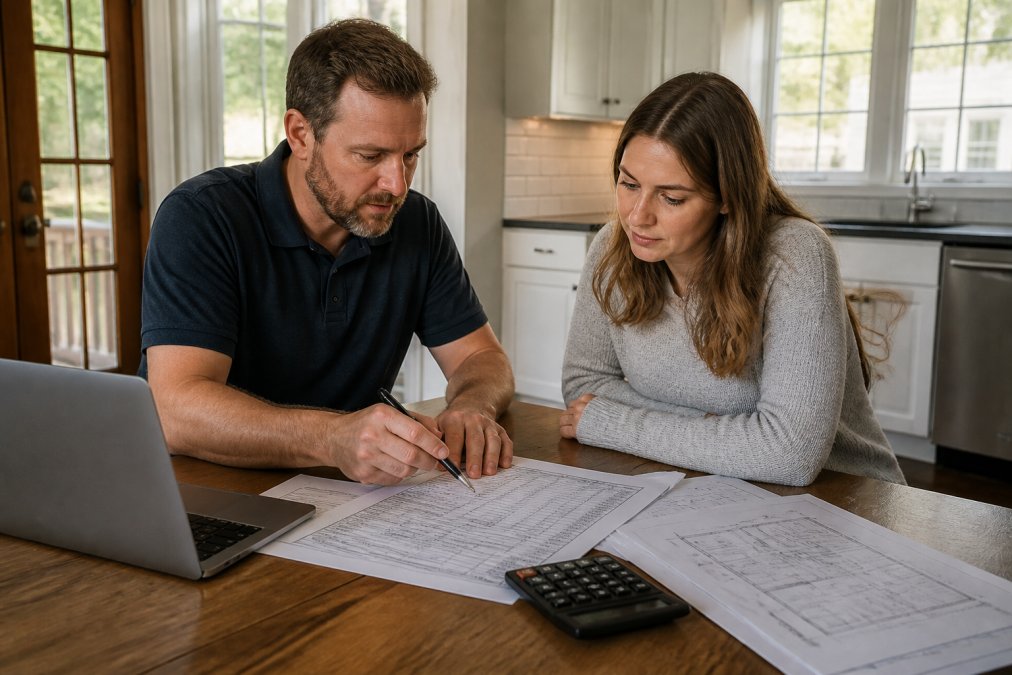
Change orders themselves are not the enemy; unpriced, undocumented ones are. Require every change to be written, priced, and signed before work proceeds, and set a threshold above which no verbal approval is valid. The table below maps common pricing failures to contract fixes.
| Pricing Problem | What It Costs You | The Fix |
|---|---|---|
| Lump-sum bid, vague scope | Mid-project price increases | Demand a line-item estimate |
| Verbal change approvals | Disputed invoices at closeout | Written sign-off before work starts |
| Open-ended allowances | Selection overruns | Set allowance ranges and deadlines |
| No contingency line | Surprise add-ons | Agree on a stated contingency percentage |
5. Construction Partnership Agreement Templates and What to Include
Construction partnership agreement templates give you a starting structure, but the clauses that protect you are the ones you write in yourself. At minimum, define scope, payment tied to milestones rather than dates, change order procedure, dispute resolution, warranty terms, and termination conditions. Payment tied to dates rewards showing up; payment tied to milestones rewards finishing.
Two clauses get skipped constantly and cause the most grief: a retainage provision holding back a percentage of each payment until final acceptance, and a written warranty period with a defined response time for defects. Without both, you have no recourse after the final invoice clears.
6. Evaluate Technology Integration and Project Delivery Methods
Technology integration in 2026 separates a builder who can prove progress from one who can only describe it. The question isn't whether a candidate "uses technology", everyone claims that. It's which systems they use, who owns the data, and whether you get access without asking.
Ask for the actual stack, by name. A partner worth hiring answers without hesitation:
- Scheduling and coordination: Procore, Autodesk Construction Cloud, or Buildertrend for schedule, RFIs, and submittals. If they can't tell you which one, they're tracking schedule in a spreadsheet.
- Field documentation: daily photo logs with timestamps and geotags, not a text thread. Ask to see a sample daily report from a live project.
- Design coordination: BIM (Building Information Modeling) for clash detection on anything with mechanical, electrical, and plumbing overlap. On a light commercial or multi-phase remodel, BIM routinely catches conflicts on paper that would otherwise become a field change order.
- Client access: a portal login where you can see schedule status, pending change orders, and photo history in real time. If your only visibility is a weekly phone call, you have no record when a dispute arises.
What to Ask in the Interview
Three questions expose whether the tech is real or marketing:
- "Show me a daily field report from last week." A real partner pulls it up in under a minute.
- "Who owns the project data when we finish, and can I export it?" The answer should be you, in a standard format.
- "How do you handle a field condition that contradicts the drawings?" The answer should describe a documented RFI workflow, not a phone call to the architect.
Project Delivery Method Assigns the Risk
Technology is only half the decision. The delivery method determines who owns cost overruns, and the three standard options assign risk very differently:
| Delivery Method | Who Holds Design Risk | Who Holds Cost Risk | Best Fit |
|---|---|---|---|
| Design-bid-build | Owner | Owner (via change orders) | Well-defined scope, price-sensitive |
| Design-build | Builder | Builder (single contract) | Speed, single point of accountability |
| Construction management at risk | Owner + CM | CM guarantees max price | Complex projects needing early builder input |
For occupied-space work, a working office, a retail floor, a home you're living in, ask how the builder sequences trades around your operating hours. A partner experienced with occupied and fully operational job sites plans disruption before it happens: night pours, negative-air containment, phased utility shutdowns scheduled with your staff. A partner who has only built on empty lots will learn your constraints on your dime.
7. Red Flags When Hiring Reliable Construction Partners
Red flags cluster around communication and money, and they show up early if you're watching. The clearest warning is a contractor who pressures you to sign before you've verified anything, or asks for a large deposit before any work is scheduled. Legitimate builders expect to be vetted and hand over documentation without friction.
- No physical business address or verifiable license number
- Requests for cash payment or a deposit above a normal mobilization amount
- Vague or evasive answers about insurance and bonding
- No written contract, or a contract missing warranty and change order terms
- Pressure to decide immediately, or a bid dramatically below every other bid
- Unwillingness to provide recent references you can actually call
A bid far below the others is not a bargain. It usually means something was left out of the scope that will reappear as a change order once you're committed.
The hardest part of hiring reliable construction partners is not finding someone who can do the work; it's finding someone who will still answer the phone when a warranty issue surfaces two years later. Master Builder llc. was built around that end-to-end relationship, from initial design and planning through final execution. We coordinate directly with your architect and designers, staff the project comprehensively, and work efficiently on occupied and fully operational job sites so your business or household keeps running. Whether you're planning a significant remodel, a custom build, or a multi-phase light commercial project, our collaborative approach keeps communication and project management in one place. Book Online with Master Builder llc. and start your project with a partner who manages the details so you don't have to.
Frequently Asked Questions
What criteria should be used to evaluate construction partners in 2026?
Start with licensing and insurance verification, then check safety records through OSHA. Look at financial stability, bonding capacity, and whether the contractor has completed projects similar in size and type to yours. Ask for a written scope with line-item pricing, a schedule with milestones, and references from the last 12 months. A reliable construction partner will provide all of this without hesitation. If a contractor stalls on documentation, that is your answer.
How do you verify the reliability of a general contractor?
Check the state licensing board for an active license and any complaints. Request a certificate of insurance and call the carrier to confirm coverage is current. Ask for three recent references and visit at least one completed project in person. Look up the contractor's OSHA inspection history. A reliable construction partner will also give you a written contract with clear payment terms, a change order process, and a warranty. If any of these steps feel like pulling teeth, keep looking.
What documentation is required when hiring construction subcontractors?
You need a signed subcontract with scope, price, and schedule. Get a certificate of insurance showing general liability and workers compensation. Verify their license if your state requires one for their trade. Collect a W-9 for tax purposes. Ask for a lien waiver process tied to payments. A vetting construction subcontractors checklist should include all of these items. Missing documentation puts you at risk for liability, delays, and payment disputes later in the project.
How does Master Builder LLC ensure project reliability?
Master Builder LLC provides an end-to-end client experience with comprehensive planning and staffing. They work on occupied and fully operational job sites, which means your business or home stays usable during construction. Their collaborative approach with architects and designers keeps the project moving without you coordinating between parties. They handle residential and light commercial projects, so you get a team that manages the full scope rather than passing you between subs.
How to avoid construction delays by choosing the right partners?
Ask for a schedule with specific milestones and penalties for missed deadlines. Confirm the contractor has a dedicated project manager, not someone splitting time across ten jobs. Check that materials are ordered and confirmed before demolition starts. A reliable construction partner will provide weekly updates and flag risks early. If a contractor cannot explain how they handle delays or weather, they have not planned for the realities of construction.