
 how-to
How to Avoid Hidden Construction Costs
Table of Contents
- Understand What Causes Hidden Construction Costs
- How to Read a Construction Estimate and Spot Vague Line Items
- Establish a Construction Contingency Fund Percentage That Protects You
- Review Your Contract for Cost Protection Clauses
- Managing Change Orders in Construction to Control Budget Creep
- Conduct a Pre-Construction Site Assessment to Identify Risk Factors
- Establish Real-Time Project Monitoring and Communication
- Conclusion
Last Updated: August 29, 2026
Understand What Causes Hidden Construction Costs
Hidden construction costs emerge when scope, site conditions, or contract terms remain unclear before work begins. These surprises typically fall into predictable categories: unforeseen site conditions discovered during excavation, material price fluctuations, permit and regulatory fees, change orders from design modifications, labor productivity issues, and subcontractor markup variations.
The real problem isn't that hidden costs exist, it's that most homeowners and business owners approach construction with incomplete information. A contractor may provide a detailed estimate, but if that estimate glosses over contingencies, site assessment findings, or contract flexibility around unknowns, you're setting yourself up for budget overruns.
Site conditions matter enormously. A residential addition on a sloped lot with poor drainage requires different foundation work than a flat, well-draining site. Soil assessment during pre-construction planning reveals these differences; without it, costs spike mid-project. Material escalation is another common culprit, steel, lumber, and concrete prices fluctuate, and an estimate locked in months before purchase may not reflect current rates. Regulatory compliance adds another layer through permit fees, utility connection costs, and inspections that vary by jurisdiction. Labor productivity depends heavily on site conditions; working in an occupied commercial space takes longer and costs more than working in an empty lot.
How to Read a Construction Estimate and Spot Vague Line Items
A solid construction estimate breaks down costs into specific, measurable line items. Each line should tell you exactly what work is included, the quantity, the unit price, and the total. Vague language is a red flag that hidden costs are waiting to emerge.
Start by checking whether the estimate separates labor from materials. A line that says "Framing: $15,000" tells you nothing about whether that includes materials or how many hours of labor. A better estimate reads: "Framing labor: 240 hours at $65/hour = $15,600" and "Framing materials: 8,000 board feet at $0.85/board foot = $6,800."
Watch for catch-all categories like "General Contractor overhead," "miscellaneous," or "contingency" without explanation. Ask your contractor to itemize what falls under overhead. Permits and fees should be listed separately with specific amounts; don't accept "permit fees: TBD." Contact your local building department yourself to confirm actual fees. Utility connection costs by trade should be itemized, not lumped together.
Material pricing is critical. If an estimate says "materials: $50,000," ask for a material takeoff listing quantities and unit prices for each item. This protects you if material costs fluctuate. Labor productivity rates deserve scrutiny too, if the estimate assumes your contractor can frame a house in 200 hours but your site is tight or access is limited, that assumption is wrong. Ask how productivity assumptions were determined and whether the contractor visited your site.
Finally, check whether the estimate includes a contingency fund percentage. A responsible estimate sets aside 10-15% for unknowns. If no contingency appears, either the contractor is overconfident or the estimate is incomplete.
Establish a Construction Contingency Fund Percentage That Protects You
A construction contingency fund is money set aside for unforeseen costs that emerge during the project. Industry practice suggests 10-15% of total project cost for residential work (aia.org). A $100,000 project would reserve $10,000-$15,000. For commercial work, especially multi-phase projects or those involving existing occupied structures, 15-20% is recommended because site conditions are harder to predict.
The contingency percentage depends on project type. New construction on a cleared, assessed site carries lower risk; 10% is often sufficient. Remodels in occupied spaces, additions to existing homes, or projects involving unknown site conditions warrant 15% or higher. Commercial tenant improvements in operating businesses should lean toward 20% because disruption and site constraints are harder to predict.
How you structure the contingency matters as much as the size. Some contractors build contingency into individual line items; others set it aside as a separate reserve. The second approach is clearer because it creates a visible, managed fund. Establish rules for contingency access before work starts. Contingency is not a blank check for scope creep or poor planning, it's for genuine unknowns like discovering rotten framing during a remodel or encountering unexpected soil conditions. Agree that contingency draws require your approval and documentation of what triggered the cost.
Track contingency spending throughout the project. Request monthly reports showing what contingency was used for, the amount, and the reason. This transparency prevents contingency from becoming a dumping ground for poor planning or cost overruns.
Review Your Contract for Cost Protection Clauses
Your construction contract is your primary defense against hidden costs. A weak contract leaves you vulnerable; a strong one protects you by defining what's included, what triggers additional costs, and how disputes are resolved.

Start with a fixed-price contract if possible. Fixed-price means the contractor agrees to complete the work for a stated amount, barring changes you authorize or unforeseen conditions explicitly defined in the contract. This shifts cost risk to the contractor, which incentivizes accurate estimation and efficient execution. If fixed-price isn't feasible, use a guaranteed maximum price (GMP) contract. A GMP sets a ceiling on what you'll pay; if actual costs run lower, you benefit from savings; if they exceed the GMP, the contractor absorbs the overage.
Examine the contract's change order clause carefully. A strong clause requires written change orders before work begins, specifies how change order costs are calculated, and requires your written approval before execution. Weak clauses allow contractors to claim changes were "necessary" and bill you retroactively. Insist that no work outside the original scope begins without a written, signed change order that you've reviewed.
Look for clauses addressing material escalation. A responsible contract either locks in material prices for a defined period or includes an escalation clause that caps how much prices can rise before you can renegotiate. Permit and regulatory compliance should be clearly assigned, does the contractor handle all permits and fees, or do you? If the contractor handles them, are permit costs included in the contract price or billed separately? The contract should specify which party is responsible for each permit type.
Subcontractor payment terms deserve attention. If a sub isn't paid, they can file a lien against your property. A strong contract clarifies payment flow and requires the contractor to manage sub relationships so you're not caught in the middle. Finally, include a dispute resolution clause. How are cost disagreements resolved? Mediation is typically faster and cheaper than litigation.
Managing Change Orders in Construction to Control Budget Creep
Change orders are the mechanism by which scope modifications are documented and priced. Managing them rigorously is essential to preventing budget overruns.
A change order should include a detailed description of the work being added or modified, the reason for the change, the cost impact, the timeline impact, and signatures from you and the contractor before work begins. Without this documentation, you have no record of what was agreed and what it costs.
Establish a change order threshold with your contractor. For example, any change under $500 might be handled verbally with documentation afterward, while changes over $500 require a written change order before work begins. This prevents nickel-and-diming while maintaining control over larger modifications.
When a contractor proposes a change order, ask how the cost was calculated. Is it based on the same labor rates and material pricing as the original estimate? A contractor shouldn't charge premium pricing for changes simply because they're changes. Track all change orders cumulatively; it's easy to approve a few small changes without realizing they've added 10% to your budget. Maintain a running total of authorized change orders so you know at any point how much the project has expanded beyond the original contract.
Distinguish between changes you authorize and changes the contractor deems "necessary" due to site conditions. Necessary changes should be limited and clearly documented as unforeseen. If a contractor claims every other week brings a "necessary" change, that suggests either the pre-construction assessment was inadequate or the contractor is exaggerating problems to justify additional billing.
Conduct a Pre-Construction Site Assessment to Identify Risk Factors
A thorough pre-construction site assessment is your best defense against unforeseen costs. This assessment identifies site conditions that affect pricing, timeline, and feasibility before contracts are signed.
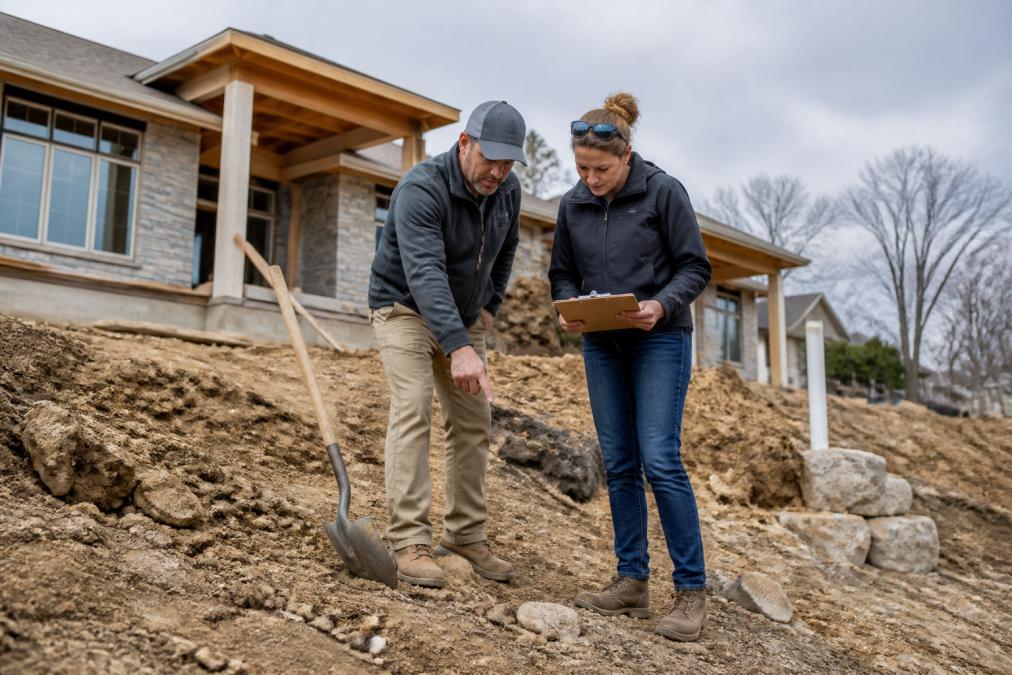
For residential projects, the assessment should include soil testing. Soil composition determines foundation requirements and drainage design. A soil report costs $500-$1,500 but can prevent tens of thousands in foundation surprises. Utility location is critical, before digging, you need to know where electrical lines, gas lines, water mains, and sewer connections are buried. Call 811 (the national utility locating service) to have utilities marked (call811.com). This is free and required by law before digging.
Check for environmental concerns. If the property has a history of industrial use, contamination testing may be needed. Lead paint in older homes requires containment during renovation. Asbestos in insulation or roofing requires professional abatement. Assess site access, how will materials be delivered? Where will the contractor stage equipment? In occupied commercial spaces, access constraints drive up labor costs. Examine existing structures carefully; a pre-construction walk-through with the contractor should identify visible signs of water damage, pest damage, or structural issues.
Check local regulatory requirements by contacting your building department. Floodplain properties, wetland-adjacent properties, or historic districts have additional requirements that affect cost and timeline. Document the site assessment in writing through photos, soil reports, utility markings, and notes. If costs emerge later, you can reference the assessment to determine whether they were foreseeable.
Establish Real-Time Project Monitoring and Communication
Hidden costs often emerge because communication breaks down or changes happen without documentation. Real-time monitoring prevents this.
Establish weekly or bi-weekly site meetings with your contractor, architect (if involved), and key subcontractors. These meetings should cover progress, upcoming work, any issues or concerns, and any potential cost impacts. Minutes should be documented and distributed to all parties.
Request a project management tool or system where the contractor logs daily activities, material deliveries, labor hours, and any issues encountered. This creates a transparent record of what's happening on site. Implement a change order tracking system where every proposed change is logged with a date, description, cost estimate, and approval status.
Site visits matter. Don't rely entirely on reports; visit the site regularly and observe conditions yourself. Ask questions if something looks different from what you expected. When the contractor discovers an unforeseen condition, they should stop work, photograph the condition, and bring it to you immediately. Don't allow work to continue on an undefined problem. Get it documented, priced, and approved before proceeding.
Pay attention to the project timeline as well as budget. Delays often drive cost increases because labor and equipment remain on site longer than planned. If the project is falling behind schedule, understand why and what it means for costs.
Hidden construction costs are preventable with the right approach: understand what causes them, read estimates carefully, establish realistic contingencies, protect yourself with a strong contract, manage change orders rigorously, assess your site thoroughly, and maintain transparent communication throughout the project. Each of these steps removes uncertainty and keeps costs aligned with your budget.
When you're ready to move forward with confidence, Master Builder llc. brings end-to-end project management that handles coordination between architects, subcontractors, and all stakeholders, so you're not managing the chaos yourself. Book Online to discuss your project and how we can keep costs predictable from start to finish.
Frequently Asked Questions
How much of a contingency fund should I set aside for a construction project?
Most construction professionals recommend setting aside 10-20% of your total project budget as a contingency fund. For smaller residential projects, 15% is a reasonable middle ground. This buffer covers unexpected site conditions, material price fluctuations, and permit fee surprises. The exact construction contingency fund percentage depends on project complexity, older homes and extensive renovations warrant 20%, while straightforward new builds may need only 10%.
What are the most common hidden costs in residential construction?
Common hidden construction costs include permit and regulatory fees not clearly itemized in the estimate, site preparation expenses when soil conditions differ from expectations, utility connection costs, architectural fee adjustments, subcontractor markups, waste disposal charges, and post-construction maintenance issues. Material price escalations and labor productivity delays also drive unexpected expenses. Vague line items like 'miscellaneous' or 'contingency labor' often mask these costs, always ask contractors to break them down.
How do change orders impact the total cost of a construction project?
Change orders are formal requests to modify the original scope of work, and they directly increase project costs. When managing change orders in construction, understand that contractors often add markups (15-25%) on top of material and labor costs for scope changes. Uncontrolled change orders are one of the leading causes of budget overruns. Document every change in writing with pricing before work begins, establish a change order approval process with a spending limit, and track cumulative changes against your contingency fund.
Are permit fees and utility connection costs usually included in construction quotes?
Permit fees and utility connection costs are frequently excluded from initial construction estimates or buried in vague line items. Always ask your contractor explicitly whether permit fees, regulatory compliance costs, utility connection fees, and architectural fees are included. Many contractors quote the construction work only and pass permit costs to you separately. Request a detailed breakdown showing which fees and costs are the contractor's responsibility and which are yours, this prevents surprises during the project lifecycle.
This article was written using GrandRanker