
 comparison
Is Design-Build Construction Worth It for Small Commercial Projects?
Table of Contents
- What Is Design-Build Construction?
- Design-Build vs. Design-Bid-Build Cost Comparison
- How Design-Build Project Timeline Expectations Differ
- Benefits of Design-Build for Tenant Improvements
- Real Risks and Downsides for Small Projects
- How to Choose a Commercial General Contractor
- Is Design-Build Right for Your Small Commercial Project?
- Frequently Asked Questions
Last Updated: September 30, 2026
What Is Design-Build Construction?
Design-build construction is a project delivery method where a single entity, the design-build firm, is responsible for both the design and construction phases of a project, which raises the question: is design-build construction worth it for small commercial projects? Rather than hiring an architect separately and then a contractor, you work with one team that manages everything from concept through completion.
In design-build, the designer and constructor collaborate from day one, sharing accountability for budget, schedule, and quality. This single point of responsibility eliminates coordination headaches that plague traditional construction on small commercial projects like tenant improvements or office renovations.
The model works especially well in occupied spaces. Master Builder LLC specializes in managing construction on active job sites where your business continues operating, with simplified communication between design and construction teams reducing surprises and disruption.
Design-Build vs. Design-Bid-Build Cost Comparison
The cost difference between design-build and design-bid-build hinges on how change orders are handled, when design decisions are finalized, and, critically for small business owners, how lenders view each delivery method.
In traditional design-bid-build, you pay an architect upfront for detailed plans, then bid them to multiple contractors. Once construction starts, unforeseen conditions emerge, thicker walls, mismatched infrastructure, triggering expensive change orders not in the original budget.
Design-build reduces change orders because the contractor identifies cost problems during design. Value engineering, finding cost-effective alternatives without sacrificing quality, happens naturally as the team learns what's feasible on your specific site.
For small commercial projects, this matters significantly. Design-build typically costs less overall because the contractor has skin in the game from the start.
The Financing Angle: Why Lenders Prefer One Method Over the Other
If financing through a construction loan, the delivery method affects approval timeline and borrowing costs. Most lenders prefer design-bid-build because complete plans exist upfront, allowing them to review specifications, materials, and fixed bid prices, reducing perceived risk.
Design-build complicates lending because detailed plans don't exist upfront. Some lenders view this as higher risk and require larger contingency reserves (10-15% instead of 5-10%), increasing borrowing costs, or require a GMP agreement before releasing funds, delaying project start.
Some lenders now recognize design-build's advantage: fewer change orders mean fewer loan modifications. If your lender understands design-build, they may approve faster, knowing the contractor has identified cost risks during design. Provide your lender with the contract, contractor qualifications, and change order history on similar projects.
Discuss delivery method with your lender before choosing a contractor. Ask: Do you have design-build experience? What contingency reserve do you require? Will you require a GMP before funding? How does approval timeline differ? A lender comfortable with design-build can accelerate your project and reduce financing costs.
Cost Comparison Table
| Delivery Method | Design Phase Cost | Change Order Risk | Lender Approval Speed | Total Project Cost | Best For |
|---|---|---|---|---|---|
| Design-Bid-Build | Separate architect fee ($5K-$15K) | High (unforeseen conditions) | Faster (complete plans upfront) | Pricing depends on project scope and changes | Large projects with stable scope, lender-preferred |
| Design-Build | Included in contract | Lower (caught during design) | Moderate (requires GMP clarity) | Pricing depends on project scope and changes | Small projects, occupied spaces, cost certainty, experienced lenders |
The trade-off: design-build requires you to commit to the team earlier in the process. You can't shop around multiple bids once the design is locked. This is why contractor selection becomes critical, you're choosing not just a builder, but a partner who will help shape the design itself. Additionally, if your lender is unfamiliar with design-build, you may face delays in loan approval. Clarify this before signing a design-build contract.
How Design-Build Project Timeline Expectations Differ
Speed is a primary reason small business owners choose design-build, which compresses timelines by overlapping design and construction phases.
Traditional construction requires waiting for completed plans before the contractor can order materials or mobilize crews. Design-build eliminates this wait, while the architect refines phase two details, the contractor builds phase one.
For occupied office tenant improvements, this matters significantly. Every week of reduced capacity costs money, making a four-month project versus six months the difference between profitability and loss.
Small commercial projects under design-build are typically faster than design-bid-build.
Speed requires clear project scope from the start. If decisions are still pending halfway through, even design-build slows down. The pre-construction phase, where the team develops preliminary plans and cost estimates, is critical, it's the foundation for fast, predictable execution.
Benefits of Design-Build for Tenant Improvements
Design-build excels for tenant improvements in occupied commercial spaces, where its collaborative structure and compressed timeline address the pain points of working in active buildings.
When your business stays operational during renovation, coordination is critical. Design-build eliminates finger-pointing between separate design and construction teams, one firm owns the problem of managing access, crew schedules, and operational continuity.
Cost certainty is another major benefit. Design-build lets you lock in costs earlier because the contractor is involved in design decisions, preventing mid-project discoveries that electrical upgrades cost twice the estimate.
Experienced design-build contractors like Master Builder LLC understand occupied-space constraints, coordinating with building management and scheduling work to minimize disruption. This expertise is built into their process.
The collaborative approach produces better design outcomes. The contractor's practical knowledge and architect's design vision merge early, creating solutions that are both beautiful and functional.
Real Risks and Downsides for Small Projects
Design-build isn't universally better. Several real limitations apply, especially for small commercial projects.
The biggest risk is reduced competition. You can't bid the same plans to multiple contractors, you're negotiating with one team, and switching mid-project is expensive. Poor contractor selection locks you in.
Contractor selection is critical. Choose a firm with proven track record on similar projects. Ask for references from small commercial clients, visit completed projects, and talk to business owners who've worked with them on occupied sites.
Design-build requires clear communication about your vision and budget from the start. Uncertainty makes the process messy, contractors may over-build to avoid overruns, or you may feel pressured to decide faster than comfortable.
Design-build can limit architectural choices. Some firms specialize in specific building types and may resist unique visions. Traditional design-bid-build offers more flexibility to hire your preferred architect.
How to Choose a Commercial General Contractor
Selecting the right design-build contractor determines project success more than the delivery method itself. Beyond portfolio and references, understand the contract structure and risk allocation that distinguishes design-build from traditional agreements.
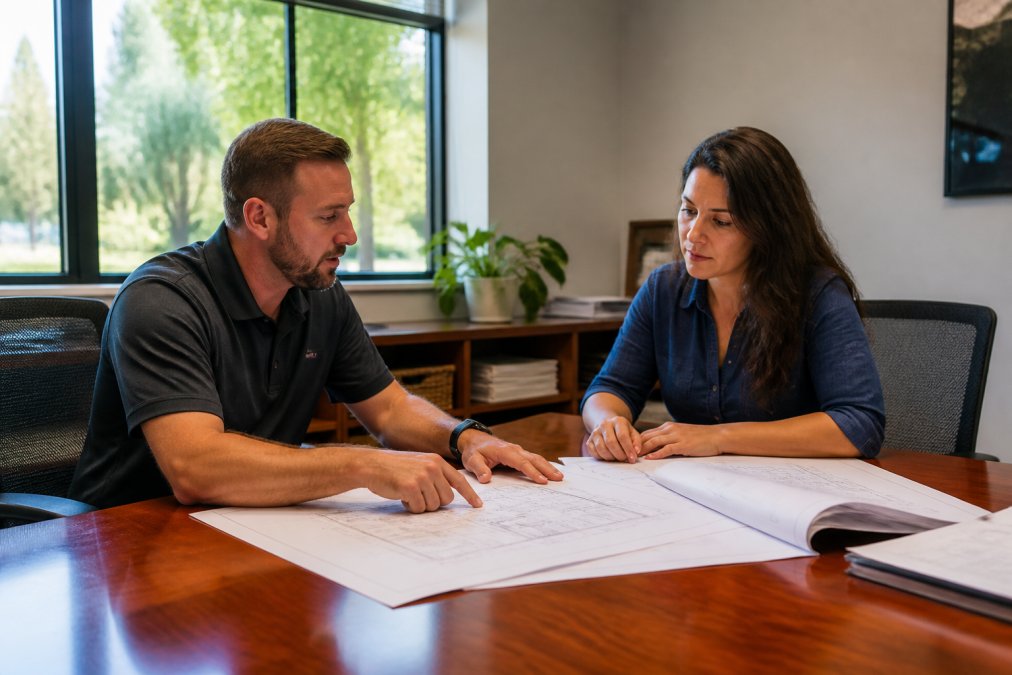
Portfolio and Track Record
Define what "right" means for your project: speed, cost certainty, or minimal disruption? A contractor excelling at industrial builds may struggle with high-end office renovations. Clarity on priorities narrows the field.
Review their portfolio on small commercial work, not their biggest projects. Have they done tenant improvements in occupied spaces? Ask for three references from the last two years and ask: Did projects stay on budget?
Understanding Design-Build Contracts: What You Actually Need to Know
Look for these specific contract elements:
Guaranteed Maximum Price (GMP). Non-negotiable. The GMP is your maximum payment. Costs below GMP benefit you; costs above due to contractor error are absorbed by them; costs from your changes or unforeseen conditions are negotiated. Without a GMP, design-build loses its primary advantage.
Red Flags in Design-Build Contracts
Trust Your Instinct About the People
Is Design-Build Right for Your Small Commercial Project?
Design-build makes sense when you need speed, value cost certainty, and will commit to a contractor early.
Frequently Asked Questions
What are the main disadvantages of design-build construction for small commercial projects?
Design-build construction can limit your choice of architects or designers since they work within the contractor's team. You have less opportunity to shop for competitive bids on individual phases, which may reduce cost leverage. If the contractor lacks experience in your specific project type, you bear more risk. Small projects also don't always justify the overhead of integrated delivery, meaning you could pay more for coordination than you'd save on change orders.
How does design-build impact the timeline of a small commercial project?
Design-build accelerates schedules by overlapping the design and construction phases instead of waiting for design completion before construction starts. Preconstruction services allow contractors to identify conflicts early, reducing delays. For small tenant improvements or office renovations, this can cut 4-8 weeks off traditional timelines. However, the actual savings depend on your contractor's efficiency and how clearly you define project scope upfront.
Is design-build more cost-effective than the traditional design-bid-build model?
Design-build can reduce costs through fewer change orders, faster delivery, and single-point accountability, but it's not automatically cheaper. You lose the competitive bidding advantage of design-bid-build, where multiple contractors quote the same completed design. Cost effectiveness depends on your project's complexity, how well you define requirements, and whether you value schedule acceleration over price competition.
What should I look for when choosing a commercial general contractor for a design-build project?
Verify the contractor has completed similar projects in scope and complexity. Ask how they manage communication between you, architects, and subcontractors, this is critical for avoiding coordination problems. Review their approach to change orders and cost control. Confirm they can work on occupied sites without disrupting operations if that's your need. Check references from recent small commercial clients, not just large developers. Ensure they have documented processes for permitting, inspections, and quality assurance.
When is design-build not worth it for a small commercial project?
Avoid design-build if your project scope is simple and well-defined (a straightforward tenant improvement with minimal customization). Skip it if you have a strong preference for a specific architect or designer not affiliated with the contractor. Don't use it if you need competitive pricing on a fixed design, design-bid-build gives you that leverage. If your timeline is flexible, the overhead of integrated delivery may outweigh the benefits.
Choosing the right approach and the right partner transforms a stressful construction project into a managed process. Master Builder LLC handles the coordination between design and construction, manages the complexity of working in your occupied space, and delivers quality work that minimizes disruption to your business. Book Online to discuss your project and see how design-build construction can work for you.