
 comparison
Metal Roofing vs Asphalt Shingles for Custom Homes
Table of Contents
- Metal Roofing vs Asphalt Shingles: A Side-by-Side Comparison
- Metal Roof Lifespan vs Asphalt Shingles
- Cost of Metal Roofing Installation vs Asphalt
- Weather Resistance and Durability
- Metal Roof Insurance Discounts and Long-Term Savings
- Maintenance, Aesthetics, and Custom Home Compatibility
- Which Material Works Best for Your Custom Home
- Frequently Asked Questions
Last Updated: September 27, 2026
Metal Roofing vs Asphalt Shingles: A Side-by-Side Comparison
The decision between metal roofing and asphalt shingles shapes your home's performance, appearance, and long-term costs for decades. This guide breaks down what matters: upfront investment, lifespan, weather performance, and total cost of ownership.
Metal roofing vs asphalt shingles depends on matching material durability to your climate, architectural vision, and ownership timeline. Some homes demand the longevity of standing seam metal; others benefit from the lower initial cost of asphalt shingles.
Comparison Table
| Feature | Metal Roofing | Asphalt Shingles |
|---|---|---|
| Lifespan | 40-70 years | 15-30 years |
| Upfront Cost (per square) | $1,100+ (metal) vs $3.50-$5.50/sq ft (asphalt) | Lower initial investment |
| Weather Resistance | Excellent (hail, wind, snow) | Moderate (vulnerable to severe weather) |
| Maintenance | Minimal | Regular (granule loss, algae growth) |
| Energy Efficiency | High (solar heat gain reflection) | Moderate |
| Architectural Versatility | Standing seam, shingle-mimicking steel | Multiple styles and colors |
| Insurance Impact | Often qualifies for discounts | Standard rates |
| Recyclability | Fully recyclable | Limited recyclability |
Metal Roof Lifespan vs Asphalt Shingles
A standing seam metal roof typically performs for 40 to 70 years, while architectural asphalt shingles last 15 to 30 years, a significant durability advantage for long-term ownership.
Asphalt shingles degrade from UV exposure and moisture, with granule loss accelerating after year 10. By year 20, many require patching or replacement. Metal roofing maintains structural integrity throughout its lifespan, with concealed fasteners preventing the fastener corrosion that causes leaks.
In freeze-thaw, hail, or high-wind climates, metal's durability advantage is pronounced, it resists ice damming, sheds snow efficiently, and withstands impact better than asphalt, often justifying the higher upfront cost.
Cost of Metal Roofing Installation vs Asphalt
The cost of metal roofing installation typically runs 2 to 3 times higher than asphalt shingles upfront. For a 2,000-square-foot roof, that's a meaningful difference in initial outlay. Pricing depends on the specific materials, project scope, and current market conditions. For current pricing, please book online.
Over the roof's lifespan, asphalt requires replacement every 15-30 years plus ongoing maintenance (algae treatment, shingle repair). Metal requires minimal maintenance. Factoring in two or three asphalt replacements over 60 years versus one metal installation often favors metal for long-term ownership.
Standing seam metal costs more than metal shingles mimicking traditional asphalt, offering a middle ground in cost and aesthetics.
Metal roofing requires specialized installation skills, increasing labor costs. Asphalt shingles install faster, reducing labor expenses.
Weather Resistance and Durability
Standing seam metal with concealed fasteners provides superior protection against wind uplift, hail, and water infiltration, resisting damage that forces asphalt into early replacement.
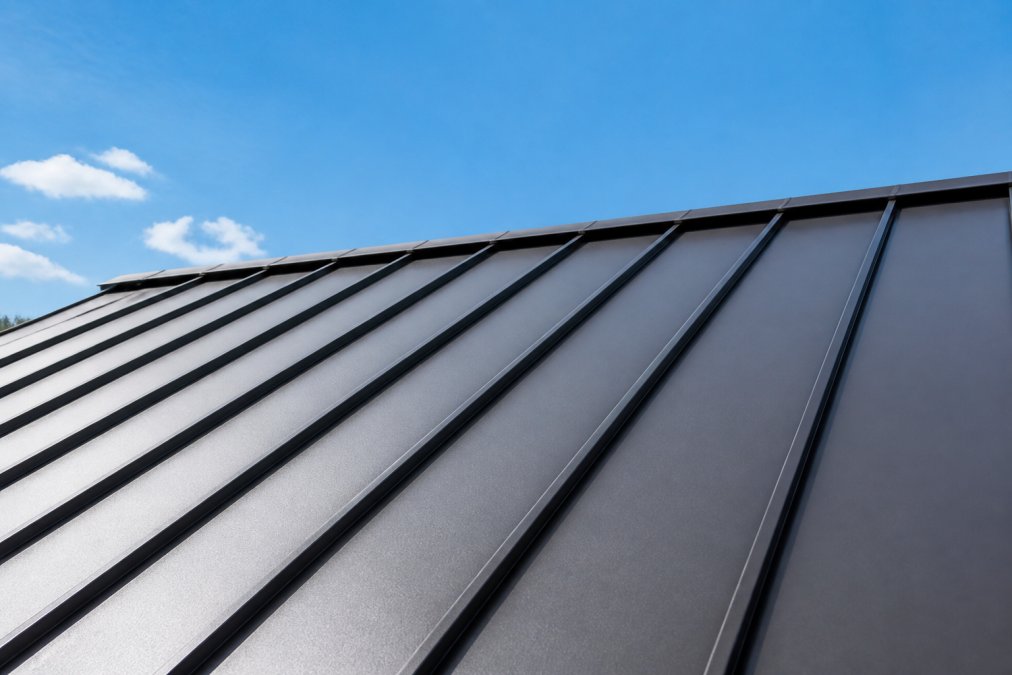
Asphalt shingles show vulnerabilities in extreme weather: hail can crack them, high winds can tear them away, and heavy snow can create ice dams.
Standing seam systems handle valleys, dormers, and steep pitches without the granule loss and cracking that plague asphalt in high-stress areas.
Metal roofs reflect solar heat, reducing attic temperatures and cooling costs. Asphalt shingles absorb heat, accelerating degradation and increasing cooling costs.
Metal Roof Insurance Discounts and Long-Term Savings
Metal roofing often qualifies for insurance premium reductions due to lower damage risk.
Metal roofs reduce claim frequency, protecting your claims history and preventing rate increases. Asphalt shingles generate more frequent claims, potentially triggering rate adjustments or coverage limitations.
Warranty Mechanics and Long-Term Cost Impact
Standing seam metal roofs typically carry non-prorated warranties of 30-50 years, covering defects at full replacement cost throughout the warranty period.
Asphalt shingle warranties are heavily prorated: 100 percent coverage for 10 years, dropping to 50 percent by year 15 and 10 percent or less by year 20. A failure at year 18 may leave you responsible for 70-80 percent of replacement costs.
A metal roof with a 50-year non-prorated warranty covers the full cost.
Cumulative Savings Over the Custom Home Ownership Timeline
Metal roofing savings accumulate through fewer replacements, minimal maintenance, energy efficiency, insurance discounts, and warranty protection.
Over 30 years, metal roofing savings accumulate through fewer replacements, minimal maintenance, energy efficiency, insurance discounts, and warranty protection. For owners staying 20+ years, metal's total cost of ownership is often lower, with growing advantage over longer timelines and full warranty protection.
For owners staying 20+ years, metal's total cost of ownership is often lower, with growing advantage over longer timelines and full warranty protection.
Maintenance, Aesthetics, and Custom Home Compatibility
Metal roofing requires minimal upkeep: annual inspections, debris removal, and fastener checks. Asphalt requires regular attention: algae treatment, shingle replacement, granule monitoring, and underlayment inspection. Over 30 years, asphalt maintenance costs $2,000-$3,500; metal averages $300-$500.
Addressing the Noise Myth: Technical Reality for Custom Homes
A persistent objection to metal roofing is excessive noise during rain or hail, yet the reality is more nuanced than the myth.
Noise depends on underlayment and attic construction, not the metal. Modern installations include sound-dampening layers: synthetic underlayment (40-60 mil) reducing sound by 10-15 decibels, attic insulation absorbing sound energy, air gap ventilation breaking transmission paths, and attic cavity design dampening low-frequency noise.
When these layers are properly installed, metal roofs are acoustically comparable to asphalt shingles. When these layers are properly installed, metal roofs are acoustically comparable to asphalt shingles. The difference is imperceptible to occupants when both systems include proper attic insulation.
The noise concern becomes relevant only in two scenarios: (1) uninsulated or poorly ventilated attics (rare in modern custom homes), or (2) metal roofs installed over thin or no underlayment (a cost-cutting measure that reputable builders avoid). For custom homes built to current building codes with standard insulation and ventilation, noise is not a legitimate concern. This is a critical point to address with your builder during the planning phase, ensure your metal roof specification includes adequate underlayment and confirms that attic insulation meets or exceeds code requirements.
Aesthetic Compatibility with Custom Home Architectural Styles
Aesthetic compatibility matters for custom homes where architectural vision is paramount. Metal roofing offers distinct visual profiles that align with specific design intentions:
-
Standing seam metal (vertical ribs with concealed fasteners) delivers a modern, clean-lined appearance that complements contemporary, transitional, and industrial designs. The sleek profile emphasizes horizontal rooflines and works particularly well on homes with flat or low-slope roofs and minimalist aesthetics.
-
Metal shingles (such as Ideal Roofing Wakefield Bridge Steel Shingles or Decra Stone-Coated Steel) mimic the appearance of traditional asphalt shingles or wood shakes while delivering metal durability. These work well on colonial, farmhouse, and traditional-style custom homes where architectural authenticity is essential but longevity is a priority.
-
Metal tiles (clay or slate-look profiles) suit Mediterranean, Spanish Colonial, or high-end transitional homes, offering the visual weight and texture of ceramic tiles with metal's durability and lighter structural load.
Asphalt shingles remain the versatile choice for traditional and transitional homes. They deliver proven curb appeal with extensive color and texture options, from muted grays and browns to bold charcoals and greens, that suit classic, colonial, and transitional designs. The granulated surface texture and color variation create visual depth that appeals to homeowners seeking traditional aesthetics.
The choice often hinges on whether your custom home's architectural style prioritizes contemporary minimalism, traditional authenticity, or a hybrid transitional approach. Both materials can work, but the aesthetic fit influences the long-term satisfaction with your choice and the home's resale appeal.
Which Material Works Best for Your Custom Home
Metal roofing is the best choice for custom homes where long-term durability, minimal maintenance, and climate resilience are priorities. If you're building in a region with severe weather, plan to stay in your home for 30+ years, or want a roof that requires almost no upkeep, standing seam metal delivers unmatched performance. The higher upfront cost becomes irrelevant when you factor in insurance savings, avoided replacements, and energy efficiency gains over decades.
Frequently Asked Questions
How much does a metal roof cost compared to asphalt shingles for a typical custom home?
Metal roofing typically costs 2-3 times more upfront than asphalt shingles. Standing seam metal roofing starts around $1,100 per square (100 sq ft), while architectural asphalt shingles range from $3.50-$5.50 per square foot. However, metal's 40-70 year lifespan versus asphalt's 15-30 years often delivers better long-term value. Installation labor for metal is also higher due to complexity. For custom homes where longevity matters, the higher initial investment frequently pays for itself over decades.
Does homeowners insurance go down with a metal roof?
Yes, many insurers offer metal roof insurance discounts, depending on the roof type, your location, and the insurer's underwriting criteria. Standing seam metal roofs qualify for discounts because they resist wind uplift, hail damage, and fire exceptionally well. Some insurers also recognize metal's impact resistance and superior weather performance. Contact your insurance provider before installation to confirm your specific discount eligibility and lock in savings.
What are the main disadvantages of metal roofing shingles?
The primary drawbacks are higher upfront installation costs and noise during heavy rain or hail (though modern underlayment minimizes this). Metal shingles require specialized installation expertise, so labor costs are significant. They also expand and contract with temperature changes, which demands precise installation to prevent leaks. Some homeowners dislike the aesthetic if not matched to their architectural style. Additionally, if damage occurs, repairs require matching panels that may be unavailable years later.
Why is metal roofing often preferred for custom architectural designs?
Metal roofing offers superior aesthetic versatility and architectural compatibility. Standing seam systems create clean, modern lines that complement contemporary designs, while metal shingles mimic traditional looks. The material's durability supports bold architectural features without compromising structural integrity. Metal also provides excellent thermal reflectivity, reducing solar heat gain and supporting energy-efficient custom home designs. Its 40-70 year lifespan means your roof won't need replacement during the life of a high-end custom home, preserving the original architectural vision.
How do asphalt shingles compare to metal in terms of long-term maintenance?
Asphalt shingles require regular maintenance: annual inspections, gutter cleaning, and moss/algae treatment in humid climates. Granule loss accelerates aging, and individual shingles may need replacement within 15-30 years. Metal roofing requires minimal maintenance, primarily occasional gutter cleaning and inspection of fasteners. Metal won't develop moss or algae growth and resists granule loss entirely. While asphalt is cheaper to repair initially, metal's lower maintenance burden and longer lifespan reduce total cost of ownership significantly over 30-50 years.