
 ultimate-guide
What to Look for in Custom Home Builders in 2026
Table of Contents
- Evaluating Credentials: Licensing, Insurance, and Financial Health
- Assessing Craftsmanship: Portfolios, Site Visits, and References
- Comparing Contract Types: Fixed-Price vs. Cost-Plus Agreements
- Understanding the Custom Home Building Process Timeline
- Red Flags When Choosing a Home Builder
- Key Questions to Ask Custom Home Builders Before Hiring
- Conclusion: Choosing a Custom Home Builder with Confidence
- Frequently Asked Questions
Last Updated: September 9, 2026
Choosing the right construction partner is the single most consequential decision in a residential build, yet most homeowners focus on aesthetics before vetting the business behind the bid. Knowing what to look for in custom home builders separates a smooth project from a costly, protracted dispute. This guide distills experience into a practical vetting framework.
A custom home builder is a general contractor who manages the entire construction process for a one-of-a-kind residence, from site preparation to final walkthrough. The financial stakes demand rigor: construction loans, permitting, and material costs all hinge on the builder's competence.
Evaluating Credentials: Licensing, Insurance, and Financial Health
Start with the basics that are non-negotiable. Verify that the builder holds a valid contractor's license in your state, carries general liability insurance, and maintains workers' compensation coverage for their crew. The National Association of State Contractors Licensing Agencies provides a directory to confirm licensing status across most states.
A common mistake is stopping at the license number. Dig into the financial health of the operation. Request proof of insurance directly from the insurer, not just a certificate, and check whether the builder has sufficient bonding capacity. A builder who is undercapitalized may struggle to pay subcontractors, which can lead to mechanics' liens on your property.
Assessing Craftsmanship: Portfolios, Site Visits, and References
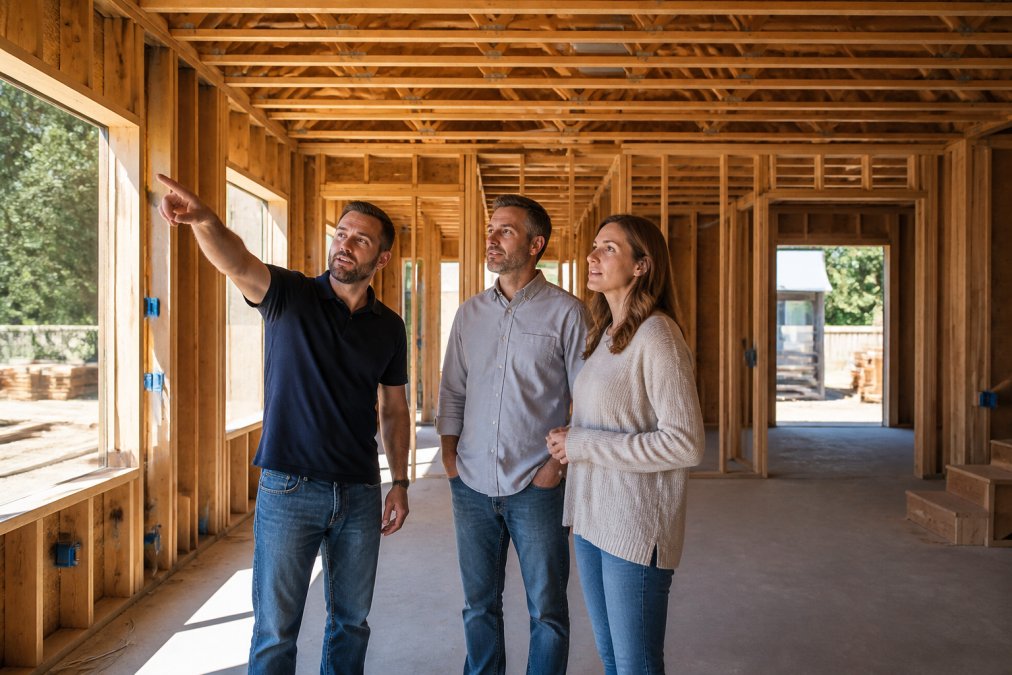
A portfolio tells you what a builder wants to show you; a site visit reveals what they actually do. Ask to walk through an active project, ideally one in the framing or finish stage, where you can inspect the quality of workmanship that will soon be hidden behind drywall. Look for straight walls, consistent fastening patterns, and clean utility rough-ins.
Then, contact references who are at least a year past their move-in date. The first year reveals how a builder handles warranty claims and minor settling issues. Ask about communication during the build, adherence to the schedule, and whether the final cost matched the contract. Recent guidance from the National Association of Home Builders emphasizes that a builder's willingness to address post-occupancy issues is a stronger indicator of integrity than the quality of the initial sales presentation.
Comparing Contract Types: Fixed-Price vs. Cost-Plus Agreements
The contract type determines who bears the financial risk of a build. A fixed-price contract sets a total cost for the defined scope of work, shifting the risk of material price increases and labor overruns to the builder. Builders price in a contingency buffer, often 5-10% of the total, so a fixed-price bid may look higher upfront, but it caps your exposure. The trade-off is that every change order becomes a negotiation, and a vaguely defined scope lets the builder justify price increases later.
A cost-plus contract reimburses the builder for actual costs plus a percentage (typically 10-20%) or a fixed fee. This model is more transparent, you see every invoice, but it places the risk of overruns squarely on you. If soil conditions require deeper foundations or lumber prices spike, you absorb the difference. A fixed-fee cost-plus arrangement mitigates this, but it requires you to trust the builder's purchasing decisions.
Beyond the basic model, the contract itself is where most disputes are born. Watch for these specific clauses before you sign:
- Allowance schedules: Vague allowances for fixtures, tile, and cabinetry are a primary source of change orders. Insist on a detailed schedule that lists specific products, quantities, and per-unit costs. A line item that says "allowance for kitchen counters" is a red flag; it should say "$4,500 for quartz countertops, 45 square feet, installed."
- Change order procedures: The contract should require that all change orders be in writing, priced, and signed by both parties before work proceeds. If the contract allows the builder to proceed on verbal approval, you lose leverage.
- Force majeure and delay clauses: Look for language that excuses the builder from schedule commitments due to "unforeseen conditions." This is standard, but it should be paired with a duty to notify you in writing within a set number of days. Without that, a builder can claim delays retroactively.
- Payment schedule: Tie payments to completed milestones, not calendar dates. A typical schedule might be 10% at permit approval, 20% at foundation, 25% at framing, 25% at drywall, 15% at finishes, and 5% at final walkthrough. Never agree to a large upfront deposit, most states cap this, but a builder asking for more than 10% before work begins is a warning sign.
- Dispute resolution: Many contracts mandate arbitration, which can be faster but limits your ability to sue. Understand what you are signing away. If the contract requires arbitration, check whether the arbitrator is selected by the builder's industry association, that can create an inherent bias.
Builders often present a contract that favors them, assuming you will not read the fine print. Have an attorney who specializes in construction law review the document before you sign. The few hundred dollars you spend on legal review is trivial compared to the cost of a dispute over a vague allowance or an unapproved change order.
For most custom homes, a fixed-price contract with a detailed allowance schedule is the safer choice, provided the scope is well-defined. If you are considering cost-plus, ask the builder for a "guaranteed maximum price" clause, which gives you the transparency of cost-plus with the protection of a fixed ceiling.
Understanding the Custom Home Building Process Timeline
A typical custom home build runs anywhere from eight to fourteen months from permit approval to final walkthrough (nahb.org). The process follows a predictable sequence: site preparation and foundation, framing and rough-in of mechanical systems, insulation and drywall, interior finishes, and finally the punch list and walkthrough. How the builder manages that timeline is what separates a smooth project from a stressful one.
Site-specific challenges frequently derail optimistic schedules. Unstable soil, rock excavation, or zoning setbacks can add weeks before construction even begins. Vet the builder for your specific land conditions before you sign. If your lot is sloped, ask how many hillside builds they have completed and whether they use a geotechnical engineer. If you are in a flood zone, confirm they have experience with elevation requirements and FEMA regulations.
Modern builders differentiate themselves through project management software. Tools like CoConstruct, Buildertrend, and Procore are now industry standards, giving you a real-time dashboard showing the schedule, budget, change orders, and daily progress photos. Ask which platform they use and whether you will have your own login. A builder who relies on weekly email updates is operating a decade behind the curve.
Ask about the specific milestones and how they are tracked. A builder using modern software will show you a Gantt chart with critical path items and lead times for materials. They should also explain how they handle supply chain disruptions, a builder who ordered windows and siding months in advance is less likely to be delayed.
The punch list, a final checklist of minor defects and unfinished details, should be completed to your satisfaction before the final payment is released. Bring your architect or a third-party inspector if you have one, they will catch issues you might miss. Walk the property slowly, test every door, window, and switch, and check for gaps in trim, uneven floors, and proper drainage. Do not let the builder rush you; a thorough walkthrough can take several hours.
Red Flags When Choosing a Home Builder
Several warning signs should end your consideration immediately. A builder who pressures you to sign without allowing attorney review, demands a large upfront deposit, or cannot provide proof of licensing and insurance is not worth the risk. Contractual red flags include vague scope descriptions, missing deadlines, and clauses that allow unilateral price changes.
Be equally cautious with a builder who refuses to put warranty terms in writing. The warranty should cover structural integrity for a defined period and address workmanship defects. A builder who is dismissive of building codes or suggests skipping permits is exposing you to liability. Trust your instincts: if communication feels difficult during the sales process, it will only get harder.
Key Questions to Ask Custom Home Builders Before Hiring
Asking the right questions reveals a builder's project management philosophy. Start with these:
- Who will be my primary point of contact on site, and how often will I receive progress updates?
- How do you handle change orders, and what is your typical timeline for pricing them?
- Can you provide a detailed project timeline with milestones, and what happens if you miss them?
- How do you manage subcontractors, and are they licensed and insured?
- What is included in your warranty, and how do you handle claims after move-in?
- How do you handle site-specific challenges like poor soil or unexpected rock?
A builder's answers should demonstrate a clear process for communication and project management. Master Builder llc. provides a seamless, end-to-end client experience, managing coordination between architects, designers, and subcontractors.
Conclusion: Choosing a Custom Home Builder with Confidence
Selecting the right partner requires verifying credentials, inspecting real work, and understanding the financial structure of your contract. The effort you invest in due diligence before signing is the best insurance against delays, budget overruns, and substandard craftsmanship.
At Master Builder llc., we build custom homes and light commercial projects with a collaborative approach and a commitment to quality craftsmanship. Our end-to-end management covers planning, staffing, and on-site organization. Book online to discuss your project and see how our process keeps you informed and in control.
| Vetting Step | What to Check | Why It Matters |
|---|---|---|
| Credentials | License, insurance, bonding | Protects you from liability and liens |
| Craftsmanship | Active site visit, references | Reveals hidden quality and warranty behavior |
| Contract | Fixed-price vs. cost-plus | Determines who bears financial risk |
| Process | Timeline, change orders, punch list | Prevents scope creep and delays |
| Communication | Point of contact, update cadence | Ensures you stay informed, not managing subs |
Frequently Asked Questions
How do I verify a custom home builder's license and insurance?
Ask the builder for their general contractor license number and verify it with your state's licensing board. Confirm that their insurance policy covers both general liability and workers' compensation for their employees and subcontractors. Request a certificate of insurance directly from their provider to ensure the policy is current. This protects you if someone gets injured on your property or if damage occurs during construction.
What is the typical custom home building process timeline?
A custom home build typically takes 10 to 16 months from breaking ground to final walkthrough, depending on complexity and permitting. The process includes site preparation and foundation, framing, rough-in of electrical and plumbing, insulation and drywall, interior finishes, and final walkthrough. Delays from weather, material shortages, or change orders are common, so build buffer time into your schedule and confirm the projected timeline in writing.
What red flags should I watch for when interviewing home builders?
Watch for builders who give a fixed price before visiting the site or reviewing plans, ask for a large upfront deposit, or are unwilling to provide references. Vague answers about subcontractors, permits, or warranties are also warning signs. A builder who pressures you to sign immediately or discourages you from getting legal review of the contract may be hiding unfavorable terms. Trust your instincts if communication feels difficult during the sales process.
What are the most important questions to ask a custom home builder?
Ask whether they handle project management directly or delegate to a site supervisor. Clarify who will be on site daily and how you will receive progress updates. Ask how they handle change orders and what the warranty covers after move-in. Request references from clients whose projects were completed at least one year ago to assess long-term quality and responsiveness.
Is a fixed-price or cost-plus contract better for a custom home?
A fixed-price contract gives you certainty about the final cost, but builders often include a higher contingency buffer. A cost-plus contract charges you for actual materials and labor plus a percentage fee, which can be more transparent but carries the risk of budget overruns. Fixed-price works well when your plans and specifications are finalized. Cost-plus may suit projects with unknowns, but only if you trust the builder and have a defined budget cap.