 ultimate-guide
Are Commercial Renovation Tax Incentives Worth It?
Last Updated: October 24, 2026
Quick Summary
Commercial renovation tax incentive benefits are real but narrow: Section 179D rewards energy-efficient upgrades at up to $5.81 per square foot once a project proves at least 25% energy savings, and the Investment Tax Credit covers 30% of a commercial solar system's total cost. Only lighting, HVAC, and building envelope work qualifies, and the deduction requires qualified third-party certification.
- Section 179D requires a 25% energy-savings threshold versus an ASHRAE 90.1 baseline building, not your pre-renovation building.
- Only interior lighting, HVAC including hot water, and the building envelope qualify for 179D.
- Utility rebates generally reduce your basis for the federal deduction, so combined benefits are smaller than the sum.
- Model energy savings before construction begins, since late modeling leaves no room to adjust scope.
- Designers and contractors may claim 179D for government-owned buildings when the entity formally allocates it.
Table of Contents
- Which Commercial Renovation Tax Incentives Actually Apply to Your Project
- Commercial Building Tax Incentive Eligibility: Who Qualifies and What Counts
- How the Section 179D Deduction for Commercial Buildings Works
- The Commercial Roof Replacement Tax Deduction and Building Envelope Upgrades
- Tax Treatment of Commercial Remodeling Costs: Repairs vs. Capital Improvements
- Stacking Incentives with Cost Segregation and Accelerated Depreciation
- Documentation and Claim Steps for Commercial Renovation Tax Incentives
- Step 1: Model the energy savings before construction begins
- Step 2: Engage a qualified third-party certifier
- Step 3: Separate repairs from improvements in every invoice
- Step 4: Retain the full documentation package
- Step 5: Coordinate with cost segregation and depreciation
- Step 6: File with your return and coordinate with your CPA
- Step 7: Keep records for the full retention period
- Planning Your Renovation with Master Builder
- Frequently Asked Questions
Which Commercial Renovation Tax Incentives Actually Apply to Your Project
Most owners assume the commercial renovation tax incentive benefits they've heard about apply to their project. Often they don't. The rules are narrow, the paperwork unforgiving, and several programs are closing faster than headlines suggest.
Start with the headline programs. The Investment Tax Credit covers 30% of a commercial solar system's total cost, according to NY Solar Map's commercial solar incentive guide.
Federal Incentives Worth Knowing
Three federal programs matter for a commercial renovation: Section 179D for energy efficiency, the 30% Investment Tax Credit for solar, and 100% bonus depreciation for qualifying facility costs. The U.S. Department of Energy's 179D guidance confirms a 25% energy-savings threshold as the entry point for 179D.
Bonus depreciation is the quiet workhorse. According to Wiss & Company's analysis of 2026 depreciation rules, 100% bonus depreciation lets businesses expense the full cost of new facilities in the first year.
State, Local, and Utility Programs
Federal programs get the press, but state and utility rebates often deliver faster cash. Many utilities offer prescriptive rebates for LED retrofits, HVAC replacements, and building-envelope work. State credits vary widely and change annually.
Two cautions. First, stacking a utility rebate against a federal deduction usually requires reducing your basis by the rebate amount, so the combined benefit is smaller than the sum of the parts. Second, verify current program status before you budget.
Commercial Building Tax Incentive Eligibility: Who Qualifies and What Counts
Eligibility for the Section 179D deduction is not a single yes-or-no test. It is a stack of requirements, building type, scope of work, energy performance, and taxpayer status, and failing any one eliminates the deduction. Most disputes come from owners who assumed the first test was the only test.
The four eligibility gates
**1.
2. Scope of improvements. Only three systems qualify: interior lighting, heating, ventilating, and air conditioning (HVAC), including hot water, and the building envelope.
3. Energy performance. The project must cut total annual energy and power costs by at least 25% versus a baseline building meeting the applicable ASHRAE 90.1 standard.
4. Taxpayer status. The party that owns the building and has the tax liability claims the deduction.
Partial vs. full qualification
The 25% threshold is the entry point, not the finish line; the deduction scales in steps as modeled savings climb toward 50%. Lighting-only retrofits often fall short on their own, while a bundled package, lighting plus HVAC plus envelope, clears the threshold. Sequencing matters: the scope you model at design time determines whether you qualify at all.
Who can claim: owners, tenants, designers, and contractors
- Building owners claim directly on their return.
- Tenants may claim if they pay for the qualifying improvements and the lease structure supports the allocation. A tenant improvement allowance and a tenant-funded build-out are treated differently, so document the allocation before construction.
- Designers and contractors, architects, engineers, and energy services contractors, may claim the deduction on behalf of a government-owned building (federal, state, or local), such as a school, courthouse, or municipal facility, if the entity formally allocates it to the firm. This is the only common scenario in which the party doing the work, not the owner, claims the benefit.
If your project involves tenant improvements, commercial tenant improvement contractor services show how that work is typically structured and documented.
What does not qualify
- Residential buildings of three stories or fewer.
- New construction that is not a retrofit of an existing building (different rules and different incentives apply).
- Work that is properly classified as a repair rather than a capital improvement.
Before you budget around a deduction, confirm all four gates against your specific building, scope, and tax position with your CPA and a qualified 179D provider.
How the Section 179D Deduction for Commercial Buildings Works
The 179D deduction is a per-square-foot federal tax deduction for commercial buildings that meet energy-savings thresholds, scaling upward as efficiency improves. The base benefit starts at 25% energy savings and increases as savings climb toward 50%, per Engineered Tax Services' 179D explainer.
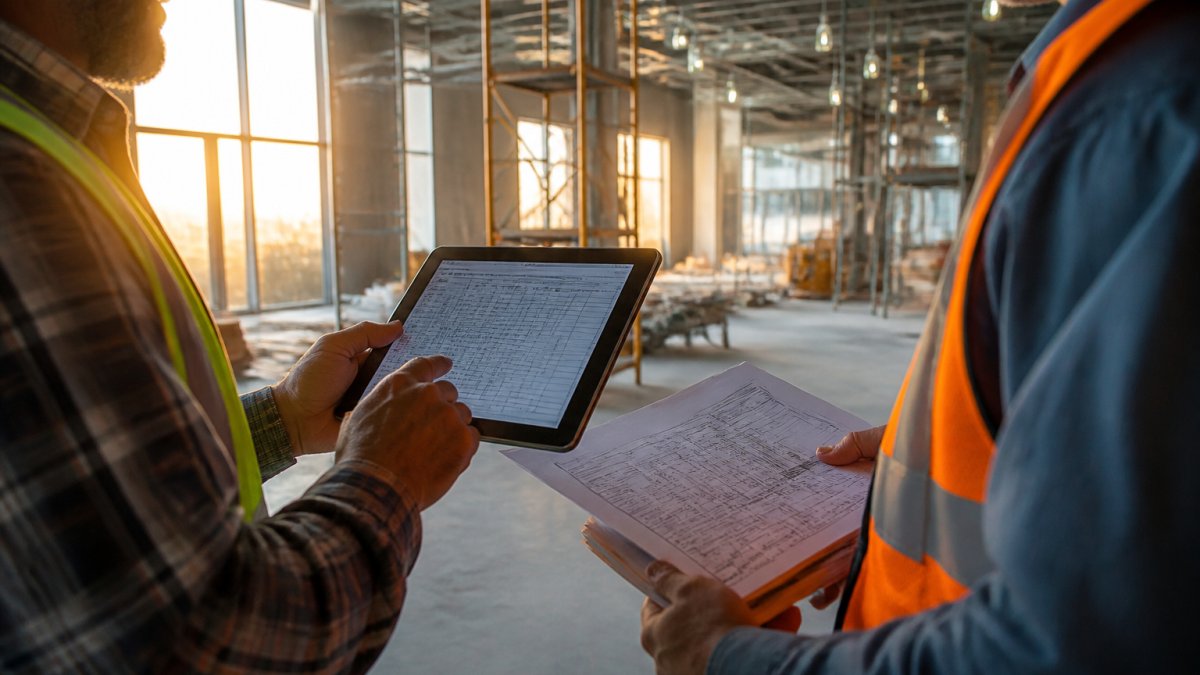
The maximum deduction can reach up to $5.81 per square foot, according to Prince CPA Group's 2026 179D overview.
The ENERGY STAR overview of commercial building tax credits notes that the deduction was extended as the Energy Efficient Commercial Building Retrofit Property deduction under IRC Section 179D.
Here are the key Section 179D figures the article cites.
| Item | Value | Note |
|---|---|---|
| Entry threshold | 25% energy savings | Base benefit starts here |
| Maximum benefit | Up to $5.81 per square foot | Per Prince CPA Group's 2026 overview |
| Scaling | Increases toward 50% savings | Deduction scales in steps |
| Example building | 20,000 square feet | Ceiling represents real money if modeled |
| Claim method | Qualified third-party certification | Not a self-reported estimate |
| Solar credit | 30% of total system cost | Investment Tax Credit |
| Bonus depreciation | 100% first-year expensing | For qualifying facility costs |
The Commercial Roof Replacement Tax Deduction and Building Envelope Upgrades
Roof replacement rarely qualifies for a standalone deduction, but it can qualify as part of a building-envelope upgrade under Section 179D. The distinction is scope, not materials.
A worn-out roof is a repair.
The commercial roof replacement tax deduction is therefore conditional. It rewards owners who bundle envelope work into a modeled energy package rather than replacing a roof in isolation.
Tax Treatment of Commercial Remodeling Costs: Repairs vs. Capital Improvements
The tax treatment of commercial remodeling costs comes down to one question: does the work restore the property or improve it? Repairs are deductible now.
The IRS draws a firm line. Painting a wall is a repair; rebuilding it is an improvement.
The practical takeaway: document the intent and scope of every work order.
Stacking Incentives with Cost Segregation and Accelerated Depreciation
Incentives stack, but not additively.
Cost segregation is the accelerator. A cost segregation study reclassifies building components into shorter-lived asset categories, which lets you depreciate them faster.
If cash flow is the constraint, how to finance a commercial renovation project explains the funding options that pair with these tax strategies.
Watch out: claiming a utility rebate and a full 179D deduction on the same improvement without adjusting basis is a red flag.
Documentation and Claim Steps for Commercial Renovation Tax Incentives
Most guides stop at "hire a certifier and file the form." In practice, the deduction is won or lost in the documentation, and the sequence matters as much as the paperwork.
Step 1: Model the energy savings before construction begins
The energy model is the foundation of the claim. It compares your proposed design against a baseline building complying with the applicable ASHRAE 90.1 standard, same size, shape, and use, and calculates the projected reduction in total energy and power costs. Two things matter:
- The model must be built before the scope is locked. If you model after construction, you are documenting what was built rather than designing to qualify. Owners who model late often discover the scope falls short of 25% and have no room to adjust.
- The model must use qualified software and a qualified modeler. The certification that supports the deduction depends on the model being defensible, and a model built by someone unfamiliar with the standard is a common audit weakness.
Step 2: Engage a qualified third-party certifier
The deduction is claimed via certification by a qualified individual, typically an engineer or energy professional with the credentials and independence the rules require. The certifier reviews the energy model, inspects the installed work, and certifies the achieved savings. It is not self-reported, and your contractor cannot sign off unless they meet the qualified-individual requirements.
Step 3: Separate repairs from improvements in every invoice
The repair-versus-improvement classification drives both the deduction and depreciation. Every invoice and change order should break out:
- Work that restores the property (repairs, deductible now).
- Work that improves the property (capitalized, potentially eligible for 179D or accelerated depreciation).
- Which qualifying system each capitalized line item belongs to (lighting, HVAC, envelope).
Owners who mix repairs and improvements on a single invoice lose the ability to claim either treatment cleanly, and reconstructing the split later is expensive.
Step 4: Retain the full documentation package
The project file should contain, at minimum:
- The pre-construction energy model and its assumptions.
- The certifier's certification and inspection notes.
- As-built drawings and equipment cut sheets for qualifying systems.
Essential documents for construction project closeout lists the records to gather and retain.
Step 5: Coordinate with cost segregation and depreciation
If a cost segregation study is planned, run it alongside the 179D analysis rather than after. The two share inputs, equipment schedules, cost breakdowns, and system-level scope, so sequencing them together avoids duplicated effort and inconsistent treatment of the same components.
Step 6: File with your return and coordinate with your CPA
The deduction is claimed on the appropriate tax form with your return. Your CPA should review the certification, the basis adjustments for any rebates, and the interaction with bonus depreciation before filing. The certifier provides the technical support; the CPA owns the return position.
Step 7: Keep records for the full retention period
Retain the entire package for the full record-retention period in case of audit. The energy model and certification are the two documents most likely to be requested, and the two most often missing from owner files.
Planning Your Renovation with Master Builder
The incentive only pays if the project is built to qualify.
At Master Builder llc., we manage the full project from design through final execution, keeping the energy scope, documentation, and construction schedule aligned.
Commercial renovation planning for small businesses walks through the practical roadmap, and commercial renovation alternatives covers approaches worth comparing before you commit.
Frequently Asked Questions
Can commercial renovations qualify for tax incentives?
Yes. Commercial renovation work can qualify for several incentives depending on what you improve. Energy-efficient upgrades to lighting, HVAC, and the building envelope may qualify for the Section 179D deduction, which reaches up to $5.81 per square foot and requires at least 25% energy savings. Separately, renovation costs are generally treated as capital improvements, so they can be depreciated or, with cost segregation, written off faster. Historic tax credits and state or utility programs may also apply. The key is matching each improvement to the incentive it qualifies for.
What is the Section 179D deduction for commercial buildings?
Section 179D is a federal tax deduction for energy-efficient improvements to commercial buildings. The deduction starts at $2.50 per square foot at 25% energy savings and scales up to $5.81 per square foot at 50% savings, based on the U.S. Department of Energy threshold. Qualifying systems include interior lighting, HVAC, and the building envelope. A qualified professional must certify the energy savings. The deduction can be claimed by building owners, and in some cases by designers and contractors on government-owned projects.
Can a commercial roof replacement qualify for a tax deduction?
A roof replacement is generally a capital improvement rather than an immediate deduction, so it is depreciated over time. However, if the new roof improves insulation or reflectivity enough to hit the energy-savings threshold, the envelope portion may qualify under Section 179D. Pairing the roof work with cost segregation can accelerate how fast you recover the cost. Keep all invoices, specifications, and energy documentation so the improvement is easy to substantiate at filing.
How do I claim commercial renovation tax incentives and what records do I need?
Start by having your contractor and tax advisor classify each cost as a repair or capital improvement before work begins. For Section 179D, hire a qualified professional to model and certify energy savings after completion. Keep contracts, invoices, permits, as-built drawings, equipment specifications, and the certification report together in one file. Then work with your CPA to claim the deductions and credits on the appropriate return. Documentation is what holds up if the IRS asks questions, so build the file as the project runs rather than reconstructing it later.
The incentives are real, but they reward owners who plan the energy scope, the documentation, and the construction sequence together. That is the work Master Builder llc. does every day: end-to-end project management, coordination with your design team, and construction on occupied sites without the disruption that derails timelines. Get started with Master Builder llc. and build a renovation that qualifies for the incentives you're counting on.