 blog
Is Basement Finishing Worth It? A 2026 Cost-Value Guide
Table of Contents
- Is Basement Finishing Worth It? The Core Trade-Off
- Basement Finishing Cost: What You'll Actually Spend
- Finished Basement Return on Investment: Will You Get Your Money Back?
- Basement Finishing Timeline: How Long Will This Take?
- Unfinished Basement Ideas on a Budget
- Critical Pre-Finishing Checks: Moisture, Drainage, and Foundation Risk
- How Long You Plan to Stay Matters More Than You Think
- Conclusion: Is It Worth It for Your Home?
- Frequently Asked Questions
Last Updated: October 10, 2026
Is Basement Finishing Worth It? The Core Trade-Off
The question of whether basement finishing worth it hinges on a single tension: the cost of the project versus the actual value it adds to your home. The answer is rarely a simple yes or no.
Basement finishing transforms an unused space into functional living area. That's the appeal. But here's what most homeowners discover too late: the true cost often exceeds the initial estimate, and the resale value gain may not match what you spent.
The best basement finishing decisions start with honest answers to hard questions. Are you doing this to enjoy the space for the next 10 years, or to recoup your investment when you sell in two years? Does your basement flood or feel damp? Are you willing to manage contractors, permits, and code compliance? This guide walks you through those decisions and the real costs involved.
Basement Finishing Cost: What You'll Actually Spend
Budget Breakdown by Project Scope
Basement finishing cost varies dramatically based on scope. A simple family room with drywall, flooring, and basic lighting runs far less than a finished basement with bedrooms, bathrooms, and full mechanical systems.
Budget categories break down roughly like this:
| Project Component | Scope Impact |
|---|---|
| Framing, drywall, insulation | Foundation for any project |
| Flooring (carpet, tile, vinyl) | Varies by material choice |
| Electrical and lighting | Code-required in most jurisdictions |
| Plumbing (if adding bathrooms) | Significant cost multiplier |
| HVAC and climate control | Comfort and code requirement |
| Permits and inspections | Often overlooked budget item |
| Contingency (10-15%) | Essential for surprises |
A basic unfinished basement conversion into a simple recreation room with standard materials costs less than a project that includes a full bathroom, bedroom egress window, and dedicated HVAC zone. The difference between a $15,000 project and a $45,000 one often comes down to whether you're adding plumbing fixtures.
Master Builder llc. recommends starting with a clear scope definition before requesting quotes. Know whether you want a family room, guest bedroom, home office, or combination. Each choice drives material and labor costs upward or downward. A family room needs flooring and walls. A bedroom needs egress, which often requires window wells and exterior work. A bathroom requires plumbing rough-in, which demands professional installation in nearly all jurisdictions.
Hidden Costs and Risk Factors
The costs that blindside homeowners rarely appear in initial quotes. Permit fees, inspection costs, and code compliance work are real expenses.
Moisture and drainage problems are the biggest hidden cost driver. If your basement has ever shown water stains, efflorescence (white mineral deposits on concrete), or a musty smell, you have a moisture issue. Finishing over a wet basement guarantees mold, structural damage, and failed materials.
Radon is another invisible risk. This naturally occurring radioactive gas seeps from soil into basements in many regions. Testing is inexpensive; remediation (sealing cracks, installing radon mitigation systems) is not. If you're selling a finished basement, radon disclosure and testing may be required by local law.
HVAC extension into the basement is often underestimated. Your furnace and air conditioning system may not have capacity to condition a new 500-square-foot space. Extending ductwork or installing a separate zone can add significant cost.
Finished Basement Return on Investment: Will You Get Your Money Back?
Resale Value Reality
Here's the uncomfortable truth: a finished basement rarely returns dollar-for-dollar on your investment at resale. Appraisers treat finished basement space differently than above-grade living space. A finished basement counts as additional living area, but at a lower value per square foot than the main floor or second story.
When a home appraises for resale, the appraiser looks at comparable homes in your neighborhood. If most homes in your area have unfinished basements, your finished basement may add minimal value because it's not a feature buyers in that market expect. If finished basements are standard in your neighborhood, you may recover 50-70% of your investment.
The appraisal process itself creates a ceiling on value. A finished basement with a bedroom and bathroom might appraise as "additional living space," but it won't appraise at the same per-square-foot rate as the main floor. This is because basements have inherent limitations: lower ceilings, potential moisture risk, and less natural light. Appraisers factor these realities into their valuation.
When ROI Works in Your Favor
Return on investment improves when the finished basement serves your actual lifestyle for years before you sell.
The ROI also improves if your unfinished basement is truly unusable. A damp, cold, dark basement adds no value to your life. Converting it to climate-controlled, dry living space has real utility value even if the resale appraiser discounts it. You're not chasing resale value; you're chasing usable square footage.
Location matters too. Neighborhoods with strong demand for family homes and limited inventory see better basement finishing ROI than declining areas. In a competitive market where homes sell quickly and buyers compete for inventory, finished basements become a selling feature that accelerates sale and may support a higher price.
Basement Finishing Timeline: How Long Will This Take?
A typical basement finishing project runs 8 to 16 weeks from permit approval to final inspection. This timeline assumes no major structural issues, no moisture remediation, and straightforward scope (walls, flooring, electrical, no plumbing).
Adding a bathroom adds 4-6 weeks. Installing an egress window for a bedroom adds 2-3 weeks if it requires exterior work. Moisture remediation, waterproofing, drainage system installation, adds 2-4 weeks and should happen before finishing begins.
Permits and inspections add time that many homeowners underestimate. Submitting plans, waiting for permit approval, and scheduling inspections at framing, electrical, and final stages can add 2-4 weeks to the overall timeline. Some jurisdictions move quickly; others have longer review periods.
We manage the permitting and inspection process as part of our end-to-end service. This keeps projects on schedule and ensures code compliance without surprises late in the work.
Unfinished Basement Ideas on a Budget
Not every homeowner needs a fully finished basement. If budget is tight or you're uncertain about long-term value, consider partial finishing or phased approaches that deliver immediate utility without full commitment.
Phased Finishing Approach
Start with the highest-value, lowest-cost improvements. Install basic flooring over the concrete, vinyl plank, sealed concrete, or inexpensive carpet, to make the space usable and warmer underfoot. Add framing and drywall to one zone (a family room corner, for example) while leaving other areas unfinished. This gives you usable space and lets you test whether the investment makes sense before committing to full finishing.
Phased finishing also lets you spread costs over multiple years, reducing financial strain. Year one might be flooring and one finished room. Year two might add a second room or bathroom. This approach works best if your basement is dry and structurally sound.
DIY-Friendly Options That Add Value
Some basement finishing tasks are within reach of motivated homeowners with basic skills. Flooring installation, painting, and simple shelving can be DIY projects. Framing walls is doable if you're comfortable with basic carpentry. Electrical and plumbing should always be professional, code requirements and safety risks make these non-negotiable.
Focusing DIY effort on finishing touches, trim work, shelving, paint colors, lighting fixtures, keeps costs down while maintaining quality. The structural and mechanical work should be professional. This hybrid approach lets you control costs while ensuring code compliance and durability.
Critical Pre-Finishing Checks: Moisture, Drainage, and Foundation Risk
Before you finish a single wall, your basement must be dry and structurally sound. This is non-negotiable. Finishing a wet basement guarantees failure and mold risk.
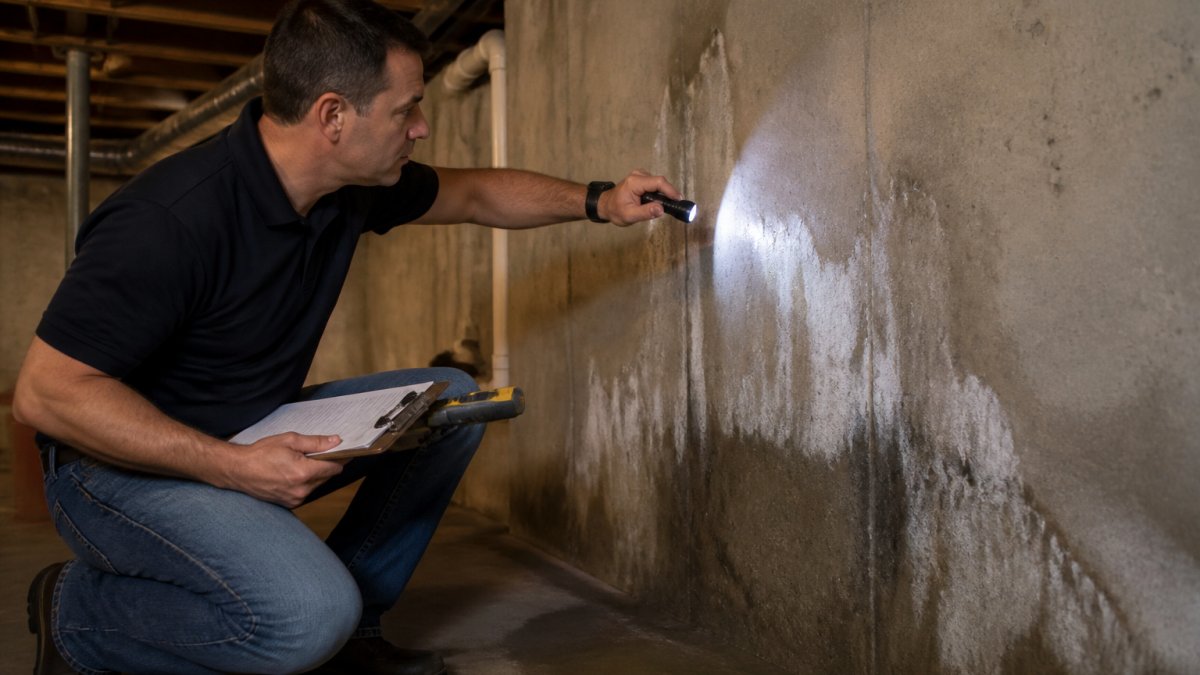
Test for moisture by taping a plastic sheet to the concrete floor for 48 hours. If condensation forms under the plastic, you have a moisture problem. Check walls for efflorescence, water stains, or mold.
Radon testing is inexpensive and essential in many regions. Contact your local health department or environmental agency for radon testing guidance.
Drainage is critical. If water pools around the foundation exterior during heavy rain, exterior drainage work (grading, gutters, French drains) must happen before interior finishing. Standing water outside will eventually find its way inside.
Foundation cracks require professional assessment. Small hairline cracks may be cosmetic; larger cracks or those that leak water need professional repair before finishing begins.
How Long You Plan to Stay Matters More Than You Think
The break-even point for basement finishing is roughly 5-7 years of ownership and use. If you plan to stay in the home for 10 years or longer, the finished basement becomes a lifestyle investment that pays dividends through daily use. If you're planning to sell in 2-3 years, finishing a basement is purely a resale value play, and the math rarely works in your favor.
Consider your life stage too. Young families with children benefit from finished basement recreation space. Empty nesters may not. If you work from home, a finished basement bedroom or office adds real value to your daily routine. If you rarely use your home, finishing adds cost without benefit.
The strongest case for basement finishing is when the decision aligns with both lifestyle and long-term ownership. You want the space, you'll use it daily, and you're staying long enough to enjoy the investment. In that scenario, the resale value question becomes secondary to the utility and enjoyment you gain.
Conclusion: Is It Worth It for Your Home?
Is basement finishing worth it? The answer depends entirely on your situation. If you're staying in the home for 10+ years, your basement is dry and structurally sound, and you have a clear use for the space, finishing delivers genuine value.
The decision also depends on your willingness to manage the project properly. Moisture remediation, permits, inspections, and code compliance are non-negotiable. Cutting corners on these basics guarantees problems later.
At Master Builder llc., we help homeowners navigate this decision by providing honest assessments of basement condition, realistic cost projections, and clear timelines.
If you're ready to explore whether basement finishing makes sense for your home, we'd like to help. The National Association of Home Builders provides resources on basement finishing standards and the EPA offers guidance on radon testing and mitigation.
A finished basement can transform your home and your lifestyle, but only if it's done right and only if it aligns with your real needs and timeline.
Frequently Asked Questions
Is finishing a basement worth it from a resale perspective?
Finished basements typically add 50-70% of their construction cost back to home value at resale, depending on local market conditions and comparable homes in your neighborhood. However, finished basements are often appraised as additional living area only if they meet code requirements (egress windows, ceiling height, proper ventilation). If you plan to stay in your home long-term, the lifestyle benefit and added usable living space often justify the investment even if full cost recovery isn't guaranteed. Consult a local real estate appraiser before starting to understand your specific market.
What's the typical basement finishing cost range?
Basement finishing costs vary by scope and region, ranging from basic finishing (framing, drywall, flooring) to fully equipped spaces with bathrooms and kitchenettes. Factors affecting cost include waterproofing requirements, foundation condition, local labor rates, and whether you hire a contractor or attempt DIY work. For a detailed estimate tailored to your project, contact a local general contractor for a consultation and quote. Master Builder LLC provides transparent pricing based on your specific needs and site conditions.
How long does a basement finishing project typically take?
Most basement finishing projects take 8-16 weeks, depending on scope, permit timelines, and whether the home remains occupied during construction. Simple finishing (framing, drywall, flooring) may take 8-10 weeks, while projects including bathrooms, kitchenettes, or extensive waterproofing can extend to 12-16 weeks or longer. Permit approval can add 2-4 weeks. Working with an experienced contractor who manages occupied job sites efficiently, like Master Builder LLC, minimizes disruption and keeps projects on schedule.
Should I finish my basement or leave it unfinished and focus on above-grade improvements?
If you're budget-conscious and planning to sell within 5-7 years, investing in above-grade improvements (kitchen, bathrooms, roof, siding) typically delivers better resale ROI than basement finishing. However, if you need extra usable living space now, for a family room, guest bedroom, or home office, and plan to stay long-term, basement finishing improves your quality of life and may justify the cost even if resale recovery is partial. Consider your timeline, budget, and how you'll use the space before deciding.