
 blog
8 Tips for Hiring a General Contractor for a Kitchen Remodel
Table of Contents
- Verify Licenses, Insurance, and Credentials
- Ask the Right Questions to Assess Experience
- Review Past Work and Check References
- How to Compare Contractor Bids Fairly
- Understand the Kitchen Remodel Timeline and Process
- Protect Yourself with a Written Contract and Clear Terms
- Watch for Red Flags and Avoid Common Pitfalls
- Frequently Asked Questions
Last Updated: October 9, 2026
Verify Licenses, Insurance, and Credentials
Before signing anything, confirm your contractor holds a valid general contractor license in your state, proof they've passed exams, met experience requirements, and follow building codes.
Search their name and license number on your state licensing board website to confirm it's current and active.
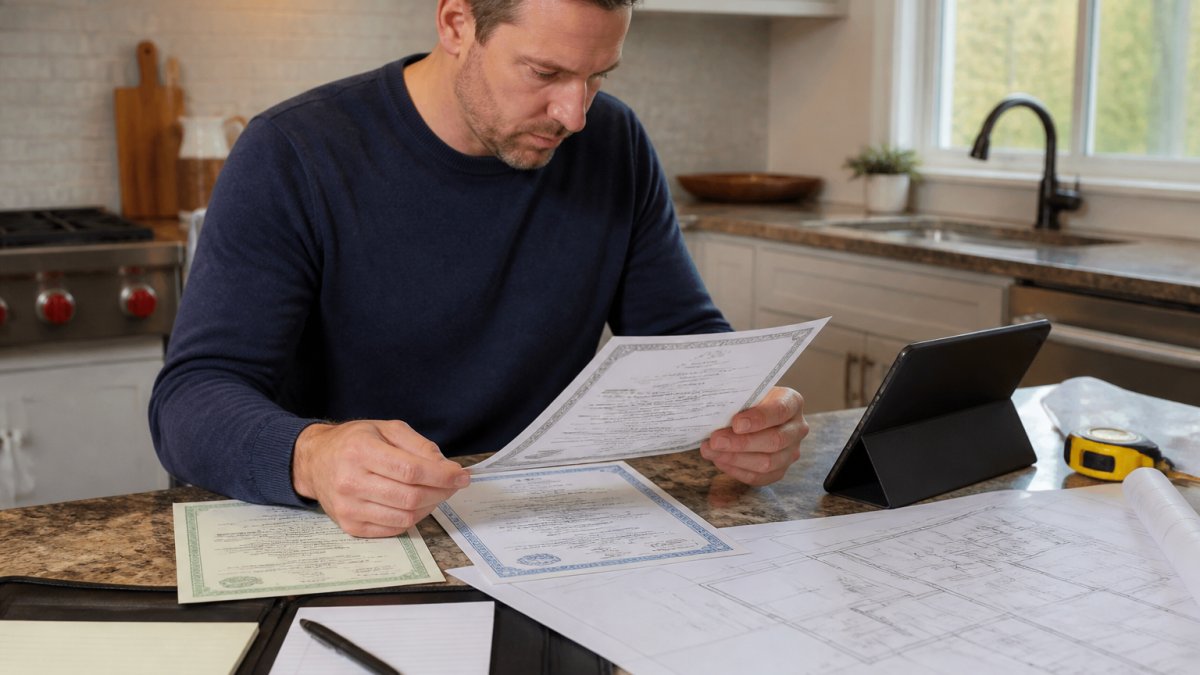
Insurance is equally critical. Ask for proof of general liability insurance (covers damage to your home) and workers' compensation (covers crew injuries on your property).
Request certificates directly from the contractor's insurance agent, not the contractor, and verify coverage amounts.
Ask the Right Questions to Assess Experience
Experience matters. A contractor who has completed dozens of kitchen remodels has solved problems you haven't imagined yet.
Ask specific questions about their background:
- How many kitchen remodeling projects have you completed in the past five years?
- What types of kitchens do you specialize in (modern, traditional, small spaces)?
- Have you worked on homes similar to mine in age and condition?
- How long have you been in business?
- Are you the general contractor who will manage my project, or will you hire a project manager?
Listen closely: shallow experience produces vague answers; real depth describes specific challenges and solutions.
Pay attention to how they communicate. A contractor who answers directly and asks about your vision is more likely to deliver what you want.
Review Past Work and Check References
Ask to see photos of recent kitchen remodeling projects, a portfolio or website with before-and-after images.
Visit completed projects in person if possible, real kitchens reveal whether cabinets are level, drawers close smoothly, and tile work is clean.
Ask for references from homeowners whose kitchens the contractor has remodeled, and call at least three. Ask:
- Did the contractor finish on time?
- Did costs stay within the original estimate?
- How was communication during the project?
- Would you hire this contractor again?
- What surprised you about working with them?
Pay attention to hesitation or negative comments. If a reference sounds lukewarm, dig deeper.
Read reviews on Google, Yelp, and the Better Business Bureau.
How to Compare Contractor Bids Fairly
Never hire based on price alone, the lowest bid often becomes the most expensive when corners are cut or the project drags on.
Request written bids from at least three contractors. Each bid should include:
- Scope of work (what's included and what's not)
- Materials and brands specified
- Labor costs and timeline
- Payment schedule
- Warranty details
- Cleanup and site management
Compare apples to apples. If one bid includes custom cabinetry and another doesn't, ask each contractor to clarify what's included.
| Bid Element | Contractor A | Contractor B | Contractor C |
|---|---|---|---|
| Scope clarity | Detailed | Vague | Detailed |
| Materials specified | Yes | No | Yes |
| Timeline provided | 6 weeks | Not stated | 8 weeks |
| Payment schedule | 3 draws | Lump sum | 4 draws |
| Warranty included | 1 year | None mentioned | 2 years |
Reputable contractors ask for a 10-20% deposit, progress payments during work, and a final payment on completion.
The mid-range bid is usually safest: the lowest often reflects corner-cutting, the highest may be inflated.
Understand the Kitchen Remodel Timeline and Process
Kitchen remodeling projects rarely finish as fast as homeowners hope. Understanding realistic timelines, and the disruption, prevents frustration.
A typical kitchen remodel takes 6-12 weeks of on-site work. Small cosmetic updates might finish in 4-6 weeks; major structural or custom work can stretch to 4-5 months.
Ask your contractor for a schedule that separates three things:
- Pre-construction, design, selections, permitting, and ordering
- On-site construction, demolition through punch list
- Closeout, final inspections, punch-list completion, and warranty paperwork
A realistic schedule breaks the on-site phase into sequenced stages:
- Design and planning
- Permitting and inspections
- Demolition and prep work
- Rough-in work (electrical, plumbing, HVAC)
- Insulation and drywall
- Cabinet installation
- Countertop template and install
Two sequencing rules trip up most homeowners.
Inspections add their own holds: most jurisdictions require a rough-in inspection before drywall and a final inspection before completion.
A realistic kitchen remodel schedule is built backward from the longest lead time, not forward from demolition day. If your contractor can't name their long-lead items and their delivery windows, the timeline is guesswork.
Planning Around a Kitchen You Can't Use
For most of the project, your kitchen will be unusable. Plan for that before demolition, not after.
Set up a temporary kitchen with a sink, microwave, refrigerator, and countertop, a basement, laundry room, or dining-room corner works.
Protect the rest of your home.
Ask these questions before work starts:
- What hours will crews be on site, and which days?
- Will you need to be home for any inspections or deliveries?
- How will debris be removed, and where will the dumpster sit?
- Will water or power be shut off, and for how long at a stretch?
- Who is my single point of contact, and how quickly will they respond?
Ask whether the contractor will pull permits and handle inspections or if that's your responsibility. Permits ensure work meets code; skipping them creates liability and problems when you sell.
A contractor who promises a fixed completion date without qualifying it by lead times, inspection holds, and hidden-condition risk is either inexperienced or misleading you. Kitchen remodels almost always encounter unexpected issues. A realistic contractor builds contingency into the schedule and tells you about it up front.
Protect Yourself with a Written Contract and Clear Terms
A written contract protects both you and the contractor. Never start work on a handshake or vague estimate, but a contract is only as strong as its specific terms.
Your contract should include:
- Detailed scope of work with materials and brands specified
- Total project cost and payment schedule
- Start date and expected completion date
- Change order process (how extra work is approved and priced)
- Warranty on workmanship and materials
- Cleanup and site management responsibilities
- Insurance and licensing requirements
Payment Milestones, Not Upfront Lump Sums
Structure payments around completed work, not the calendar:
- A deposit at signing, typically 10-20% of the contract price
- Progress payments tied to specific milestones, demo complete, rough-in inspected, drywall hung, cabinets set, countertops installed
- A final payment of 5-10% held until the punch list is complete and you have signed off
Avoid any schedule that front-loads payments before work is performed. A contractor who wants 50% upfront, or the next draw before the prior milestone is finished, is shifting risk onto you.
A payment schedule that runs ahead of completed work is one of the most common ways homeowners lose money on a remodel. If the contractor is paid more than the value of work in place, you have little leverage if they walk off the job.
Allowances and Exclusions
Most kitchen contracts include allowances, dollar amounts set aside for items you haven't selected yet, such as tile, lighting, or plumbing fixtures. Understand how they work before signing.
- What happens if your selections cost more than the allowance? You pay the difference, usually plus the contractor's markup.
- What happens if they cost less? You should receive a credit, but confirm the credit is not reduced by markup.
- Which items are excluded entirely? Appliances, countertop slabs, and specialty hardware are often excluded.
Ask for the allowance schedule in writing, with the dollar amount for each line item. A contract that says "tile allowance: TBD" is not a contract you can budget against.
Change Orders
Kitchen remodels almost always discover surprises, hidden water damage, outdated wiring, or structural issues. A good change order process means the contractor notifies you, explains the issue, provides a cost and timeline estimate, and gets written approval before proceeding.
Require that all changes be documented in writing with cost and timeline impact. Verbal agreements about "minor changes" create disputes. Written change orders prevent misunderstandings.
Lien Waivers
A lien waiver is a document in which the contractor (and each subcontractor and supplier) gives up the right to file a mechanic's lien against your home in exchange for payment.
Protect yourself by requiring, at each payment milestone, a conditional lien waiver from the general contractor and each subcontractor and supplier who has worked on the project, effective when your payment clears.
Warranty and Cancellation Terms
Read the warranty section carefully. Quality contractors offer at least a one-year workmanship warranty, sometimes longer on countertops or cabinets.
Also read the cancellation and termination clauses.
Finally, check the dispute resolution clause. Some contracts require binding arbitration, limiting your ability to go to court; others specify mediation first.
Have an attorney review the contract if the project is large or complex.
Watch for Red Flags and Avoid Common Pitfalls
Certain warning signs indicate a contractor you should avoid.
Red flags include:
- Unwilling to provide references or license information
- Requests large upfront payment (more than 20%)
- No written contract or vague terms
- Pressure to decide quickly or sign today
- No insurance or workers' compensation
- Uses only cash payments with no receipts
- Guarantees unrealistic timelines
A contractor who rushes you to commit is prioritizing their schedule, not your project.
Watch for scope creep.
Avoid contractors who guarantee specific outcomes or timelines without seeing your home.
A contractor who promises "no surprises" or "guaranteed price" is either inexperienced or misleading you. Kitchen remodels almost always encounter unexpected issues. Transparency about this reality is a good sign.
If a contractor has been in business less than five years, ask more questions and check references more carefully, longevity in construction is a sign of reliability.
Hiring the right general contractor for your kitchen remodel determines whether your project runs smoothly or becomes a nightmare.
At Master Builder llc., we understand homeowners need a contractor who manages the entire process seamlessly.
Ready to start your kitchen remodel with a contractor you can trust?
Frequently Asked Questions
What questions should I ask a kitchen remodeling contractor before hiring?
Ask about their experience with similar kitchen projects, how they handle permits and inspections, their timeline expectations, whether they manage subcontractors directly, and how they communicate during the project. Also ask about their warranty on workmanship, their payment schedule, and whether they have references from recent kitchen remodels. Understanding their process for handling unexpected issues and how they manage costs will help you assess their professionalism and reliability.
How do I verify a remodeling contractor's license and insurance?
Contact your state's licensing board or construction regulatory agency to confirm the contractor holds a current, active general contractor license with no unresolved complaints. Ask the contractor directly for proof of general liability insurance and workers' compensation coverage, then verify these policies are active by contacting the insurance companies. Request the contractor's license number and insurance policy numbers in writing, and confirm their bonding status if required in your state. Never proceed with an unlicensed or uninsured contractor.
How many bids should I get for a kitchen remodel?
Aim for at least three detailed bids from qualified contractors. This gives you a realistic range of pricing and allows you to compare scope, materials, timeline, and contractor approach. Ensure each bid covers the same scope of work so you can make a true apples-to-apples comparison. Bids that are significantly lower than others may indicate cost-cutting corners, while higher bids don't always guarantee better quality. Use the bids to understand what drives cost differences and which contractor offers the best value for your project.
What should I expect for a typical kitchen remodel timeline?
A standard kitchen remodel typically takes 6 to 12 weeks, depending on the scope. Simple updates may finish in 4 to 6 weeks, while major renovations involving structural work, custom cabinetry, or plumbing and electrical upgrades can extend to 3 to 4 months. The timeline includes design, permitting, material ordering, demolition, construction, and final inspections. Discuss your specific timeline expectations with the contractor early, confirm their schedule can accommodate your needs, and establish clear milestones in your contract so you both understand the expected completion date.