 Comparison
Vinyl Plank vs Laminate: Pros, Cons and Install Costs
Quick Summary
Vinyl plank is a multi-layer synthetic flooring with a waterproof core, making it a strong choice for wet rooms, basements and busy homes with pets. Its main pros are water resistance, durability and realistic wood-style looks, while its cons include difficult single-plank repairs and a plastic base that does not biodegrade.
- Vinyl plank is water-resistant, but standing water left for long periods can still seep through seams.
- A thicker wear layer improves scratch resistance, so check the rating on the box before buying.
- A single cracked plank can be hard to replace, so keep spare planks from the same lot.
- Most residential vinyl plank is floating click-lock, which is faster and easier to remove later.
- Typical installed materials cost is $2.50 to $7.00 per square foot, with subfloor prep often the costliest surprise.
Table of Contents
- Pros and Cons of Vinyl Plank Flooring vs Laminate at a Glance
- Advantages of Vinyl Plank Flooring: Water Resistance, Durability and Appearance
- Disadvantages of Vinyl Plank Flooring You Should Weigh Before Buying
- Vinyl Plank Flooring Installation: Methods, Subfloor Prep and Who Should Do It
- Is Vinyl Plank Flooring Easy to Install? A Realistic DIY vs Professional Breakdown
- Total Installed Cost of Vinyl Plank Flooring and What Drives the Price
- Choosing Vinyl Plank Flooring for Your Project: Get a Quote From Master Builder llc.
- Frequently Asked Questions
Pros and Cons of Vinyl Plank Flooring vs Laminate at a Glance
Last Updated: November 14, 2026
Vinyl plank is the better choice for wet rooms, basements and busy homes with pets, while laminate usually wins on look and feel underfoot. The right pick depends on where the floor goes and how much moisture it will face. Vinyl plank flooring is a multi-layer synthetic product with a waterproof core, while laminate is a wood-fiber core with a printed photo layer and a clear wear layer on top.
| Factor | Vinyl Plank | Laminate |
|---|---|---|
| Water resistance | High, suits basements and bathrooms | Low, swells if water sits on it |
| Scratch and dent resistance | Strong with a thick wear layer | Good, but dents show more easily |
| Installed cost (materials) | Typically $2.50 to $7.00 per sq. ft. | Typically lower at the entry level |
| DIY installation | Often click-lock, forgiving of minor subfloor flaws | Click-lock, but less tolerant of moisture |
| Repairs | Hard to repair a single plank | Replacing a single board is also tricky |
Start with the room. For a kitchen, mudroom or basement, vinyl plank is the safer call. For a dry bedroom where you want the warmth of real-looking wood, laminate can be the better value.
Advantages of Vinyl Plank Flooring: Water Resistance, Durability and Appearance
Vinyl plank's biggest advantage is water resistance. Vinyl is generally water-resistant, though standing water left for long periods can still seep through the seams and cause damage, so wipe up spills promptly.
Durability is the second strength. A thicker wear layer resists scratches and scuffs, and a rigid core resists denting from heavy furniture. Households with pets often find this matters more than anything else. Check the wear layer rating on any box before you buy.
Appearance has improved a lot. Modern printing makes planks look close to real hardwood, and a range of wood and stone textures are available. Expect the look to be slightly more uniform than solid wood, which some buyers see as a plus and others see as a drawback.
Disadvantages of Vinyl Plank Flooring You Should Weigh Before Buying
Repair is the main drawback. A single cracked plank can be hard to replace without lifting the surrounding boards. Keeping a few spare planks from the same lot on hand can help.
Vinyl can also feel less authentic underfoot than natural wood. Some buyers find the surface slippery when wet, particularly on smoother finishes. Check the textured options if slip is a concern.
Finally, the product is a plastic-based material that does not biodegrade. That matters at end of life, and it is worth asking about take-back or recycling programs before you buy.
Vinyl Plank Flooring Installation: Methods, Subfloor Prep and Who Should Do It
Vinyl plank installation comes down to three decisions: which method you use, how well you prep the subfloor, and whether you or a pro lays the planks. Getting any one of them wrong is the most common reason a new floor develops gaps, squeaks, or peeling edges within the first year.
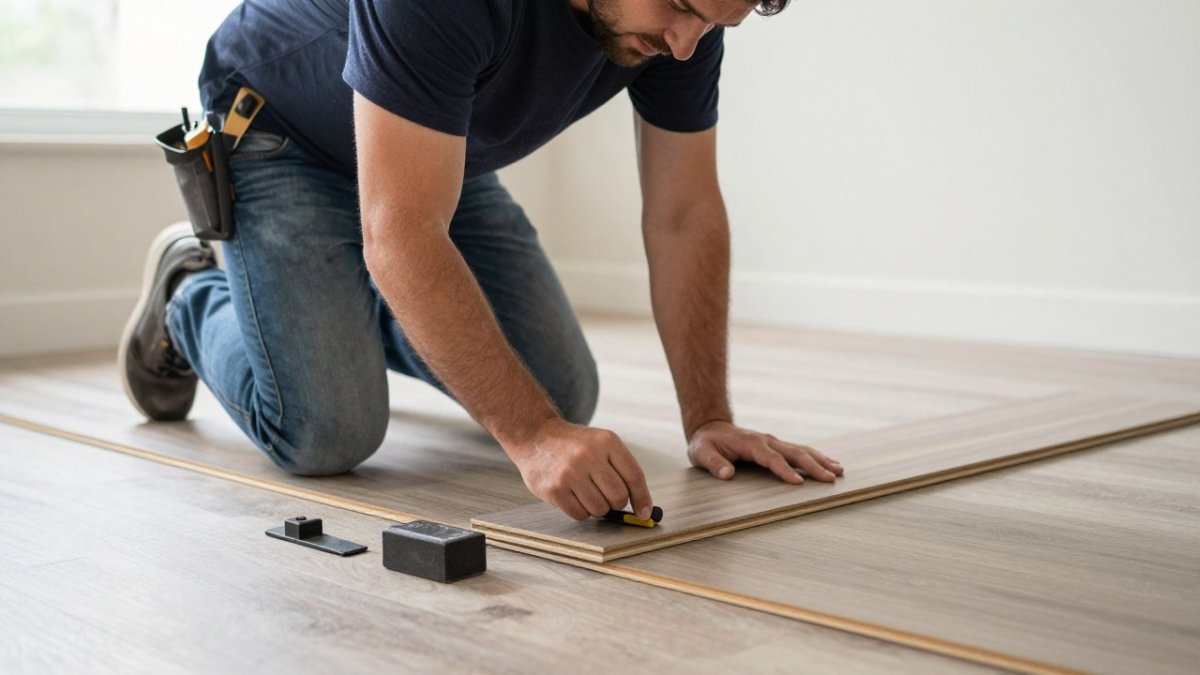
Floating versus glue-down. Most residential vinyl plank is a floating floor: the planks click together at the edges and rest on the subfloor without adhesive. Floating installation is faster, easier to remove later, and more forgiving of minor subfloor variation, which is why it dominates the DIY market. Glue-down installation bonds each plank to the subfloor with adhesive. It costs more in labor and materials, but it eliminates the hollow sound some floating floors have, holds up better under heavy rolling loads, and is often required over concrete slabs or in commercial settings. A third option, loose-lay, uses friction and the weight of the planks to stay put and is typically limited to specific products and small rooms.
Acclimation. Even though vinyl is synthetic, most manufacturers still want the planks to sit in the room where they will be installed for at least 48 hours before installation, with the HVAC running at normal living conditions. This lets the planks reach the room's temperature and humidity so they do not expand or contract after installation. Skipping acclimation is a common cause of tight joints and peaking at the seams.
Subfloor preparation. The subfloor must be clean, dry, and flat. Industry guidance generally calls for flatness within about 3/16 inch over a 10-foot span, though the exact tolerance varies by manufacturer, so read the installation instructions on the box. Low spots get patched with a cement-based floor patch; high spots get ground or sanded down. Squeaks in a wood subfloor should be screwed down before any planks go over them. Over concrete, a moisture test is essential, and a vapor barrier or moisture-suppressing underlayment is often required even with a waterproof core.
Expansion gaps and transitions. Floating floors need a small gap, typically around 1/4 inch, between the planks and any fixed object such as a wall, cabinet, or door frame. The gap is hidden by baseboard or quarter round. Without it, the floor can buckle as it expands. Transitions at doorways, where the vinyl meets carpet, tile, or another flooring, use a T-molding or reducer strip; stair nosings and thresholds need the matching profile from the same manufacturer to keep the warranty intact.
Who should install it. A handy homeowner can usually handle a single rectangular room with a flat, dry subfloor over a weekend. Hire a professional when the subfloor is damaged or uneven, the layout is large or irregular, the job involves stairs or many transitions, or the manufacturer requires certified installation to keep the warranty valid. If you are planning this in a new build, whether radiant floor heating is worth it affects the subfloor and flooring choice. Many brands, including Shaw, specify professional installation for warranty coverage on certain products, so confirm the requirement before you buy.
manufacturer installation instructions and warranty terms
Is Vinyl Plank Flooring Easy to Install? A Realistic DIY vs Professional Breakdown
For a simple room with a flat, dry subfloor, click-lock vinyl plank is one of the easier flooring jobs, and most people can finish a small room over a weekend.
The trouble starts with layout. Long straight runs, door transitions and cuts around cabinets take patience. An uneven subfloor can also cause the locks to fail. A mistake usually means pulling up planks and starting over.
Our honest take: DIY makes sense for one room with good prep. For a kitchen with cabinets to cut around, or any job where a failed lock would ruin a finished floor, a professional installation pays for itself in fewer mistakes.
Total Installed Cost of Vinyl Plank Flooring and What Drives the Price
Most homeowners compare vinyl plank on the sticker price per square foot and are surprised by the final invoice. The honest way to budget is to build the number from the bottom up: materials, underlayment, subfloor preparation, labor, removal of the old floor, and a contingency for repairs.
Subfloor preparation. This is the line item that most often blows a budget. Patching low spots, grinding high spots, screwing down squeaky boards, and leveling a badly out-of-flat slab can add a meaningful amount, and the cost depends entirely on the condition of what is under the old floor. A flat, sound subfloor may need almost nothing; a wavy one can add several dollars per square foot.
Labor. Professional installation pricing depends on layout complexity and the installation method. Glue-down takes more time and adhesive, so it costs more in labor. Stairs, many doorways, and rooms full of cabinets to cut around all add labor time.
Removal and disposal. Tearing out carpet, tile, or old vinyl and hauling it away is a separate cost. Tile removal is the most labor-intensive, and older flooring may carry disposal fees.
Repairs and contingency. Set aside a small reserve for the unexpected: a soft spot in the subfloor, a transition that needs a custom profile, or a plank damaged during installation. Keeping a few spare planks from the same lot is the cheapest insurance against a future repair, since matching a discontinued color later is difficult.
What moves the estimate most. Wear layer thickness and core type drive material cost. Layout complexity, stairs, and transitions drive labor. Subfloor condition drives prep. Old flooring drives removal. Because pricing depends on quantity, product, and local labor rates, a firm quote only comes after the space is measured. Visit the Master Builder llc. website or request a quote for current pricing.
Watch out: a quote that lists only materials and labor per square foot is not a total installed cost, so ask specifically whether underlayment, subfloor prep, removal, and disposal are included before you compare bids.
Choosing Vinyl Plank Flooring for Your Project: Get a Quote From Master Builder llc.
Vinyl plank suits wet rooms, busy households and budget-minded remodels. Laminate fits dry rooms where a warmer, more natural look matters. Compare both against your room, your traffic and your budget before you decide.
For a flooring project that is part of a larger remodel or addition, Master Builder llc. offers end-to-end project management for residential and light commercial construction. Book Online through our website to get a quote and a clear plan for your space.
Frequently Asked Questions
Is vinyl plank flooring waterproof? Vinyl plank is water-resistant and suits wet rooms, but standing water left for long periods can seep through seams and cause damage. Clean spills promptly.
Is vinyl plank better than laminate? Vinyl plank is better for moisture-prone rooms. Laminate often suits dry rooms where a warmer, more natural look matters.
Frequently Asked Questions
What is the downside to vinyl flooring?
The main downsides are that standing water left on the surface for long periods can seep between planks and cause damage, and that damaged planks are often hard to repair cleanly. Vinyl can also look less authentic than real wood underfoot, and lower-priced lines may dent or scuff more readily. Choosing a rigid-core product with a thicker wear layer, cleaning spills promptly and confirming that the subfloor is level before installation reduces most of these problems.
Is vinyl plank flooring easy to install?
Many click-lock vinyl plank products are designed for a floating installation that can be completed with basic tools, which is why DIY installation is common. The difficulty rises quickly with an uneven subfloor, complicated room layouts, or a warranty that requires professional installation. Preparation matters more than skill: a flat, dry, clean subfloor and the right underlayment account for most installation problems.
How does vinyl plank flooring compare with laminate?
Vinyl plank is generally more water resistant than laminate, which can swell at seams when moisture gets underneath, so vinyl is usually the better choice for basements, bathrooms and laundry rooms. Laminate often costs less per square foot and can look very close to hardwood, while vinyl offers a softer, more comfortable feel underfoot. Both are typically floated over the subfloor, so the decision often comes down to moisture exposure and budget.
How much does it cost to install 1,000 square feet of vinyl flooring?
Installed cost depends on the product, the subfloor condition, removal of old flooring, waste allowance and local labor rates, so there is no single figure that applies to every project. Labor, underlayment, trim and any subfloor repair are added on top of material cost. For a current figure on your home, visit the Master Builder llc. website to request a quote.