
 how-to
Commercial General Contractor Services: What to Know
Table of Contents
- What Commercial General Contractor Services Include
- Design-Build and Pre-Construction Planning
- Construction Management and Project Delivery
- How to Vet a General Contractor for Tenant Improvements
- Questions to Ask a Commercial General Contractor
- Average Timeline for Commercial Renovation Projects
- Why Licensed and Insured Contractors Matter
- Frequently Asked Questions
Last Updated: August 31, 2026
What Commercial General Contractor Services Include
Commercial general contractor services encompass full project management from initial planning through final handoff. When you hire a commercial general contractor, you engage a professional who coordinates every phase: design collaboration, permitting, subcontractor management, budget oversight, and quality assurance.
The scope includes pre-construction planning, where the contractor analyzes your site, refines cost estimates, and builds realistic timelines. During construction, they manage subcontractors, monitor code compliance and safety, handle logistics, and ensure work meets specifications. They also manage changes, keeping you informed of timeline and budget impacts.
What sets professional services apart is the coordination layer. Rather than juggling conversations between architect, subcontractors, and suppliers, you have a single point of accountability. This matters especially on occupied sites, where experienced contractors minimize disruption while maintaining schedule momentum.
Master Builder LLC specializes in this end-to-end approach, managing everything from design collaboration to final punch-list completion. The difference becomes clear when unexpected conditions arise or your business must stay operational during renovations.
Design-Build and Pre-Construction Planning
Design-build delivery represents a fundamentally different approach than traditional design-bid-build methods. A single entity, the general contractor working with architects and engineers, handles both design and construction, eliminating coordination gaps where designer and builder operate independently.
Pre-construction planning is where design-build creates its greatest advantage. Before finalizing design, the contractor provides detailed cost estimates, value engineering analysis, and constructability reviews. Your design gets refined based on real-world building knowledge. Components that look good on drawings but cost twice your budget get flagged early, when changes are inexpensive.
The pre-construction phase includes site analysis, regulatory compliance review, and preliminary scheduling. The contractor identifies zoning requirements, permit pathways, and site constraints. They work with architects to optimize design for cost and schedule, suggesting material alternatives or construction sequencing that reduces duration without sacrificing quality.
This process is especially valuable for commercial renovations where existing conditions create surprises. A contractor conducting genuine pre-construction planning discovers hidden structural issues, outdated systems, or hazardous materials before they derail your timeline. Master Builder LLC emphasizes this discovery phase, ensuring your approved plan reflects what's actually achievable on your specific site.
Value engineering, systematically reviewing project costs to identify savings without cutting corners, is a core pre-construction service. Rather than simply building what was designed, the contractor proposes alternatives: material substitutions at lower cost or construction sequencing that saves weeks and overhead.
Construction Management and Project Delivery
Construction management orchestrates execution, where plans become physical reality. A skilled construction manager maintains daily oversight of work quality, safety compliance, schedule adherence, and budget tracking. They conduct inspections, coordinate material deliveries, manage subcontractor performance, and keep all parties informed.
Project delivery methods vary. Some contractors use traditional fixed-price bidding and manage all risk. Others use cost-plus delivery, where you pay actual costs plus a management fee, this works well when conditions are uncertain or flexibility is needed. Design-build integrates design and construction management into a single contract.
Effective construction management means the contractor is present and engaged throughout, not simply checking boxes at the end. They actively prevent problems by catching issues immediately, preventing costly rework.
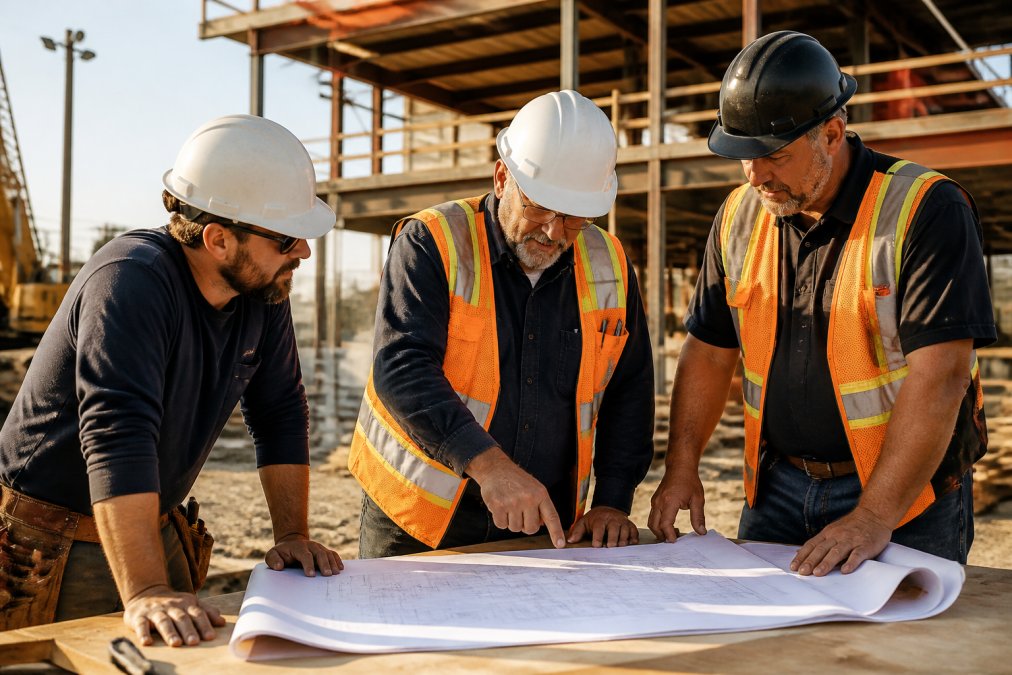
Schedule management is critical for tenant improvements in occupied spaces. Master Builder LLC's experience on fully operational job sites means understanding how to sequence work so your business stays functional. This might mean scheduling electrical work during off-hours, coordinating with your IT team, or phasing renovations so only one section is disrupted at a time.
Quality assurance throughout construction protects your investment. The contractor inspects completed work against specifications, verifies materials meet standards, and ensures structural integrity before moving forward. This ongoing oversight catches defects early, when they're inexpensive to correct.
Budget tracking during construction prevents projects from spiraling upward. A contractor who maintains detailed cost records, tracks change orders carefully, and communicates budget impacts keeps you informed and in control.
How to Vet a General Contractor for Tenant Improvements
Tenant improvements demand a contractor who understands occupied-space construction. Unlike ground-up projects where you can close the site, tenant improvements require working around active operations, customers, employees, and equipment. The wrong contractor disrupts your business; the right one minimizes impact while delivering quality work.
Start by evaluating the contractor's specific experience with tenant improvements. Ask for references from recent projects in occupied spaces. Call those clients and ask directly: "Did the contractor minimize disruption? Did they stay on schedule? Did they work around your operations effectively?" References from ground-up construction don't predict occupied-space performance.
Review the contractor's approach to safety and compliance on occupied sites. Building codes still apply, but occupied spaces add layers: protecting customers and employees, managing traffic flow around construction zones, controlling dust and noise during business hours. A contractor with proven systems in place will manage these constraints effectively.

Ask about subcontractor relationships. Tenant improvements require subs equally experienced with occupied-space work. A general contractor who works with the same reliable electricians, plumbers, and drywall crews repeatedly will deliver better results than one hiring the lowest bidder for each trade.
Verify licensing and insurance. A legitimate commercial general contractor carries liability insurance, workers' compensation coverage, and holds the appropriate contractor's license. Ask to see current certificates. Don't accept vagueness about licensing or insurance, this is a major red flag.
Check bonding status. A performance bond guarantees project completion as specified; a payment bond protects subcontractors and suppliers. For commercial projects, bonding is standard. If a contractor balks at bonding, move on.
Ask about contingency planning. What happens if a subcontractor quits mid-project? How do they handle material delays? A contractor with backup plans recovers faster when problems arise.
Questions to Ask a Commercial General Contractor
Before signing a contract, ask these questions to understand how the contractor operates and whether they're a good fit.
On Project Management and Communication: "Who will be my primary point of contact, and how often will we communicate?" A dedicated project manager providing regular updates prevents surprises. Daily or weekly communication should be standard.
"How do you handle change orders?" This reveals whether the contractor has a disciplined process. A professional contractor documents change orders with cost and schedule impact before work begins.
"What's your approach to quality assurance?" Ask about inspections, testing, and how they verify work meets specifications.
On Timeline and Scheduling: "How do you build realistic timelines?" Ask whether they account for permitting delays, seasonal factors, and material lead times. A contractor acknowledging these variables is more likely to deliver on schedule.
"What's your track record for on-time delivery?" Ask for specific examples from recent projects.
On Budget and Costs: "How do you track and report costs?" A contractor providing monthly cost reports and explaining variances keeps you informed.
"What contingency do you include in the estimate?" Most contractors include 5-10% contingency for unforeseen conditions.
"Are there any costs not included in the estimate?" Clarify whether permits, inspections, temporary utilities, or other items are included or billed separately.
On Experience and References: "Can you provide references from similar projects?" Ask for at least three recent comparable projects.
"What's your experience with occupied-space construction?" For tenant improvements, this is critical. Ask for specific examples of how they minimized disruption.
On Licensing, Insurance, and Compliance: "Can you provide proof of current licensing and insurance?" Request current certificates and verify coverage limits are appropriate.
"How do you ensure compliance with building codes and safety regulations?" A contractor taking compliance seriously has systems in place: safety meetings, inspections, documentation.
Average Timeline for Commercial Renovation Projects
Commercial renovation duration varies widely based on scope, complexity, and site conditions. A modest tenant improvement might take 4-8 weeks (aia.org). Comprehensive renovations involving structural changes and system upgrades typically run 3-6 months (agc.org). Large-scale projects can extend 12-24 months or longer.
Several factors drive timeline length. Work complexity matters most: replacing finishes is faster than relocating electrical and HVAC systems. Permitting timelines vary by jurisdiction; some process permits in weeks, others take months. Material lead times, especially for specialized items, extend schedules. Site conditions, discovering hidden structural issues or outdated infrastructure, add time.
Occupied-space renovations typically take longer than vacant-site work because the contractor must coordinate around business operations. Work happening continuously on an empty site might occur only during evenings or weekends in occupied spaces, adding duration but preventing business disruption.
The permitting process itself deserves attention. Building, electrical, and mechanical permits can take 4-12 weeks depending on jurisdiction and complexity (iccsafe.org). A contractor with established relationships with permit offices often expedites approvals.
Weather impacts timelines for projects with exterior work. Contractors who plan for seasonal factors build realistic timelines.
Realistic scheduling includes buffers for the unexpected. A contractor promising a timeline with no contingency for material delays or unforeseen conditions is either inexperienced or likely to miss deadlines. Master Builder LLC's pre-construction planning specifically identifies potential delays and builds realistic schedules.
Why Licensed and Insured Contractors Matter
Hiring a licensed, insured contractor is non-negotiable for commercial projects. Licensing ensures the contractor has met state or local requirements, typically including education, experience, and passing a trade exam. A licensed contractor is accountable to a licensing board, providing recourse if work is defective or the contractor abandons the project.
Insurance protects you from liability if someone is injured on the job site or if the contractor damages your property or neighboring properties. Without adequate insurance, you could face lawsuits and financial loss. A payment bond ensures subcontractors and suppliers are paid, preventing liens against your property.
Ask to verify licensing through your state's licensing board, most maintain online databases confirming current, good-standing licenses. Request current insurance certificates and verify coverage limits are appropriate for your project scope.
A contractor evasive about licensing or insurance, or suggesting these requirements are "just bureaucracy," is a major red flag. Professional contractors maintain these protections as standard practice.
Choosing the right commercial general contractor services is one of the most important decisions in any construction project. The contractor you select will either simplify your project, managing complexity and preventing surprises, or become a source of frustration and cost overruns.
Master Builder LLC brings end-to-end accountability to every project, from pre-construction planning through final completion. Our collaborative approach with architects and designers, combined with proven ability to work efficiently on occupied sites, means your business stays operational while your space transforms. Whether planning a tenant improvement, renovation, or ground-up construction, we manage the details so you can focus on your business.
Ready to start your project with a contractor who treats your success as their own? Book Online or contact Master Builder LLC today for a consultation. Let's discuss your vision and build a realistic plan that delivers on time and on budget.
Frequently Asked Questions
What should I look for when hiring a commercial general contractor?
Verify licensing and insurance first. Ask for references from similar projects and check their portfolio. Confirm they have experience with your specific project type, whether ground-up construction, tenant improvements, or renovations. Discuss their approach to working on occupied sites if that applies to you. Request a detailed cost estimate and timeline, and clarify how they handle change orders and communication during the project.
How do I verify the licensing and insurance of a commercial contractor?
Ask the contractor directly for proof of their general contractor license and current insurance certificates, including general liability and workers' compensation coverage. Verify the license number with your state's licensing board. Contact their insurance carrier to confirm the policy is active. Request to be named as an additional insured on their policy. A reputable contractor will provide this documentation without hesitation.
What is the difference between a general contractor and a commercial contractor?
A general contractor oversees all aspects of a construction project, managing subcontractors and coordinating timelines and budgets. A commercial contractor specifically handles commercial projects like office buildings, retail spaces, and tenant improvements. Many general contractors work on both residential and commercial projects. The key difference is specialization, a commercial general contractor has expertise in commercial zoning, building codes, and the unique demands of business spaces.
How do commercial general contractors structure their project bids?
Most contractors provide quotes based on the project scope, materials, labor, and timeline. Some use value engineering to identify cost savings without compromising quality. Bids typically include a breakdown of labor, materials, subcontractor costs, and overhead. Ask your contractor to explain each line item so you understand what you're paying for. Transparent bidding helps prevent surprise costs later.
This article was written using GrandRanker