
 Ultimate guide
Common Challenges in Historic Home Restoration Projects
Last Updated: November 23, 2026
Quick Summary
The most common challenges in historic home restoration are hidden damage behind walls, foundation and water intrusion problems, hazardous materials like lead paint and asbestos, scarce period-matched materials and skilled trades, and code compliance with preservation review. These unknowns multiply once walls come down, so historic home restoration almost always costs more and takes longer than a standard remodel.
- Open a small exploratory section in each major room before the bid is finalized to reduce surprises.
- Test for lead paint and asbestos before bidding, and sequence licensed abatement before other trades arrive.
- Modern Portland cement mortar traps moisture in historic brick, so specify soft lime mortar for repointing.
- Hold contingency separately and release it only against documented unforeseen conditions.
- Confirm historic designation status and file preservation review and building permit in parallel where allowed.
Table of Contents
- Why Historic Home Restoration Projects Go Over Budget and Off Schedule
- Hidden Damage and Unforeseen Conditions Behind Historic Walls
- Structural Deterioration, Foundation Settling, and Water Intrusion
- Hazardous Materials and Safety Remediation in Older Homes
- Sourcing Specialized Materials and Skilled Tradespeople
- Building Code Compliance for Historic Properties
- Historic Home Renovation Budget Tips and Risk Prioritization
- Hiring a Contractor for Historic Home Restoration
- Frequently Asked Questions
Why Historic Home Restoration Projects Go Over Budget and Off Schedule
Historic home restoration is the process of repairing and updating an older house while preserving its original character, materials, and architectural details. The work almost always costs more and takes longer than a standard remodel, and the reasons are structural rather than cosmetic. According to the 2026 U.S. Houzz & Home Study, 50% of homeowners planned renovation projects in 2026, down from 52% the year before, and the median planned budget fell to $15,000 from $20,000. Owners of older houses feel that squeeze harder because the unknowns multiply once walls come down.
At Master Builder LLC, we plan historic work around three realities: hidden conditions, trade availability, and review timelines. Below, we walk through the common challenges in historic home restoration projects and how to prepare for each one before you sign a contract.
| Challenge | Why It Hits Budget | Why It Hits Schedule | Primary Mitigation |
|---|---|---|---|
| Hidden damage | Uncovered after demolition | Change orders mid-project | Preconstruction investigation |
| Foundation and water issues | Structural repair costs | Engineering review delays | Structural assessment first |
| Hazardous materials | Abatement is a separate trade | Licensed abatement wait times | Test before bidding |
| Material sourcing | Period-matched stock is scarce | Long lead times | Order early, allow alternates |
| Code compliance | Upgrades trigger added scope | Permit review cycles | Pre-application meeting |
Hidden Damage and Unforeseen Conditions Behind Historic Walls
The most expensive surprise in any old house is what the last renovation covered up. Removing plaster often reveals water-stained lath, spliced wiring, or framing that was notched decades ago and never reinforced. A 2025 study published in Buildings & Cities on revitalizing heritage buildings identifies high renovation costs, difficulty sourcing specialized materials, and a lack of expertise as core obstacles, and hidden conditions feed all three.
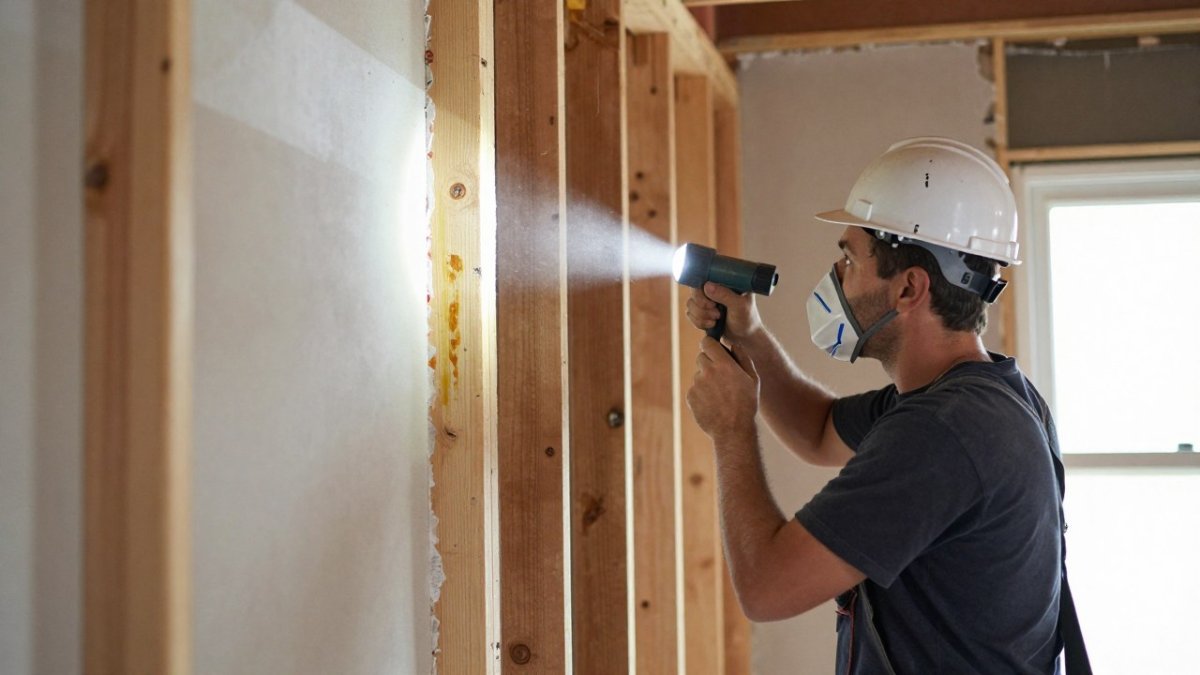
You cannot eliminate surprises, but you can price them. Opening a small exploratory section in each major room before the bid is finalized is a sound way to reduce them.
Structural Deterioration, Foundation Settling, and Water Intrusion
Foundation problems drive the largest cost swings in old-house work. Many historic homes sit on stone, rubble, or shallow foundations, and that variability makes foundation repair the biggest single unknown in restoration budgets, according to JL Construction's 2026 historic restoration cost guide. Look for stair-step cracks in brick, doors that stick only in humid weather, and gaps where additions meet the original structure.
Water is the other silent destroyer. Roof leaks travel along rafters before they stain a ceiling, and moisture trapped behind historic masonry freezes, expands, and spalls the face of the brick. Repair the envelope before you touch finishes. Stabilizing a wet wall and then installing new drywall is money thrown away.
Hazardous Materials and Safety Remediation in Older Homes
Lead paint and asbestos are not hypothetical in pre-1978 housing, and both require licensed abatement before demolition or sanding begins. Mold follows water intrusion, and pest damage, especially termite damage in framing, is frequently found alongside it. This is health and safety work, not a DIY category.
The regulatory layer is what most owners underestimate.
A workable sequence looks like this:
- Test before bidding. A certified inspector collects paint-chip, bulk, and air samples and produces a written report. The cost of a pre-renovation survey depends on square footage and the number of samples, and it is typically a modest line item in the project.
- Scope the remediation separately. Abatement is its own trade with its own contract, schedule, and clearance testing. Do not let a general contractor fold it into a lump-sum bid, because you lose visibility into what was actually removed.
- Contain and clear. Abatement crews build negative-pressure containment with HEPA filtration, seal HVAC returns, and wet-wipe surfaces. Clearance testing by an independent inspector, not the abatement contractor, confirms the area is safe before other trades enter.
- Sequence abatement first. Remediation happens before framing, electrical, plumbing, or drywall crews arrive, never in parallel with them. Parallel work is how fibers migrate into newly installed systems.
Watch out: a contractor who says "we'll just wear masks and be careful" is telling you they intend to violate the RRP Rule, and the liability for a contaminated house follows the owner, not the crew.
Mold and pest damage deserve the same discipline. Mold is a moisture problem first and a remediation problem second, so fix the water source before anyone sprays or scrubs. Termite damage in framing is often structural, not cosmetic, have a licensed pest inspector assess the extent and a structural engineer confirm whether sistering or replacement is required.
Sourcing Specialized Materials and Skilled Tradespeople
Period-appropriate brick, mortar, and stone are genuinely hard to source, and the mortar matters as much as the masonry. Modern Portland cement mortar is harder than the soft lime mortar historic brick was laid with, and repointing with it traps moisture and accelerates spalling. The same problem applies to trim profiles, old-growth lumber, and matching plaster.
Labor is the second half of the equation. Roughly 25% of historic restoration projects face significant challenges from high cost and a persistent lack of skilled labor, per Business Research Insights' 2026 market report. Ask any crew for examples of lime mortar repointing and plaster matching before you hire. For a deeper look at vetting trades, see our guide on hiring specialists for historic renovations.
Building Code Compliance for Historic Properties
Building code compliance for historic properties means meeting current life-safety requirements without destroying the features that make the house historically significant. The two goals conflict more often than owners expect. Adding egress windows, upgrading wiring, or improving stair geometry can require altering original walls and trim, and local preservation review adds a step most standard remodels never see.
The good news is that the codes themselves contain relief valves written specifically for older buildings. Model building codes for existing structures generally include provisions written for older buildings, so confirm with your local building department which compliance paths your jurisdiction has adopted before finalizing the design.
Preservation review is a separate track from building permitting, and the two run on different clocks. If the house sits in a locally designated historic district or is listed on the National Register of Historic Places, exterior alterations typically require a Certificate of Appropriateness (COA) from the local historic preservation commission before a building permit will be issued. Commission meetings are often monthly, and a complete application with drawings, material samples, and a written justification for the change is what keeps you on the agenda rather than deferred to the next cycle.
The financial leverage is real. Federal and state historic preservation tax incentives may be available for certain rehabilitation work, but eligibility depends on property use and on meeting preservation review requirements, so confirm details with the State Historic Preservation Office before making design decisions.
A practical approval sequence:
- Confirm designation status. Check the local planning department and the SHPO for district, landmark, and National Register status before you draw anything.
- Pre-application meeting. Meet the plans examiner and the preservation planner together, bring the IEBC compliance path you intend to use, and get the review sequence in writing.
- File preservation review and building permit in parallel where the jurisdiction allows it, and build the longer of the two timelines into the schedule.
- Document as you go. Photograph existing conditions, retain material samples, and keep the SHPO or commission informed of field changes, undocumented deviations are the most common reason credits are reduced or denied.
Energy efficiency and modern systems belong in this conversation too. Insulating a historic wall incorrectly can trap moisture and rot the framing, and spray foam against historic masonry is a frequent cause of later damage.
Historic Home Renovation Budget Tips and Risk Prioritization
Historic home renovation budget tips start with one number: contingency. Hold it separately from the rest of the budget and release it only against documented unforeseen conditions, so a surprise change order does not derail the project.
Rank risks before you spend. Structural and water issues come first because they get worse. Then envelope, then systems, then finishes. If the budget tightens, cut finishes, never structure. For tactics on holding the line, read how to avoid construction budget overruns, and ask upfront how the contract handles hidden fees.
Hiring a Contractor for Historic Home Restoration
Hiring a contractor for historic home restoration comes down to proof: proof of preservation experience, proof of a clear scope, and proof of who actually manages the subs. Ask three questions. Who runs the schedule? What is excluded from the bid? How are unforeseen conditions priced? Vague answers on any of them become your problem later.
At Master Builder LLC, we manage design through final execution with on-site organization and direct coordination with architects and designers, so you are not the messenger between them. We also work on occupied and fully operational job sites, which matters if you are staying in the house or keeping a business open. Compare approaches in our article on whether design-build for historic renovations is worth it, and learn to spot red flags in contractor estimates before you sign.
Old houses reward preparation and punish optimism. If your historic property needs structural repair, a sensitive addition, or a full restoration, get a plan built around what is actually behind the walls.
Frequently Asked Questions
What are the most common structural issues in historic homes?
Foundation problems top the list. Many older homes sit on stone, rubble, or shallow foundations that settle unevenly and crack over time. You also see deteriorated framing, failing masonry, roof leaks, and water intrusion that has quietly rotted sill plates and joists. A structural assessment before design work begins is the only reliable way to find these issues. Skipping that step is how a cosmetic remodel turns into a full structural repair.
How do historic preservation regulations affect renovation costs?
Preservation rules can add cost and time in two ways. First, exterior changes often need review and approval from a local historic preservation commission, which adds weeks to the schedule. Second, approved work may require period-appropriate materials, such as specific brick, mortar, or wood windows, which cost more than modern off-the-shelf options. Build a contingency budget and confirm review requirements before you finalize the scope. A contractor experienced in historic home restoration can flag these early.
How do you budget for unexpected repairs in historic homes?
Start with a preconstruction investigation: open a few walls, inspect the attic and crawlspace, and get a structural engineer's report. Then set a contingency budget separate from your finish allowances. For historic homes, a contingency sized to the condition of the house is a realistic starting point, and a larger reserve is prudent if the home has had deferred maintenance. Get line-item cost estimates rather than lump sums so you can see what changes when hidden damage appears.
Do I need a specialized contractor for historic home restoration?
Yes, or at least a contractor with documented historic experience. Historic home restoration involves lead paint and asbestos protocols, preservation-compliant materials, and coordination with preservation commissions. A general contractor without that background may propose modern replacements that violate review requirements or damage historic fabric. When hiring a contractor for historic home restoration, ask for past projects in older homes, references from owners of similar properties, and proof of how they handle occupied sites and unforeseen conditions.