 how-to
Hiring Specialists for Historic Renovations: A Practical Guide
Last Updated: November 2, 2026
Quick Summary
Hire contractors and architects with documented experience on buildings of your home's era, not just general remodelers. Verify preservation-specific skills such as lime mortar, plaster repair and window restoration, and compare bids line by line. A historic renovation depends on matching specialists to each project phase.
- A state contractor license is the minimum; verify preservation-specific experience separately.
- Ask for photos and client contacts from past projects on buildings of similar age.
- Ask how the contractor decides between repairing and replacing a deteriorated feature.
- Compare bids by line item, since a much lower total often omits masonry, lead-safe work or permits.
- Hire specialists by phase: assessment, design and permits, structural, interior, then final coordination.
Table of Contents
- Why Historic Renovations Need Different Specialists
- Step-by-Step: How to Find Contractors and Architects for Historic Buildings
- Historic Renovation Contractor Qualifications to Verify
- Checking Historic Preservation Contractor References
- Understanding Historic Building Renovation Costs and Contingency Planning
- Comparing Bids and Scope of Work Across Specialists
- Scheduling Your Specialist Hires by Project Phase
- Frequently Asked Questions
Why Historic Renovations Need Different Specialists
Historic buildings are not just older versions of new ones. Their walls, floors and roofs were built with materials and methods that modern crews often never learned, so hiring specialists for historic building renovations is the first decision that shapes the whole project. At Master Builder llc., we start every older-home conversation by asking what era the building is from, because that answer tells us which trades matter most.
Preservation work usually needs a mix of skills that a general remodeling crew may not have. Plaster repair, slate roofing, wood window restoration and masonry repointing each follow their own rules. Unexpected site conditions and material problems are common risks in this kind of work.
Here is what that usually means for you:
- Old masonry often needs lime-based mortar, not modern cement
- Original plaster may need patching by hand, not replacement with drywall
- Windows are often repaired rather than swapped out
- Some projects need a historic structure assessment before any design work starts
Step-by-Step: How to Find Contractors and Architects for Historic Buildings
Start by listing the work you need, then find people who have done that exact type of work before. Look for contractors and architects with a track record on older buildings, not just general remodels. You can review the renovation services offered for historic buildings to see whether a firm handles this kind of work.
- Define the scope. Write down the repairs, systems and finishes you want to address.
- Ask for referrals. Local preservation groups, your state historic preservation office and past clients are useful starting points.
- Check job boards and listings. Historic Trades career information on preservation carpenter openings shows how much demand exists for these trades.
- Request project portfolios. Ask for photos and descriptions of older buildings they have worked on.
- Schedule a site visit. A good contractor will look at the building before quoting.
Historic Renovation Contractor Qualifications to Verify
A license is the minimum, not the proof of experience. Learn how to find a reliable general contractor before you narrow your list. On historic work, the qualification that matters most is demonstrated competence with older materials and methods, and that is rarely captured by a state contractor license alone. State licensing exams generally focus on general business and code knowledge rather than specialized preservation trades. So treat the license as a gate, then verify preservation-specific qualifications separately.
Work through these checks before you sign anything:
- License and registration. Confirm an active contractor license for your state and the classification that matches your project type (Consumer Awareness). learn the steps to verify a general contractor license with your state board.
- Insurance. Ask for a current certificate of liability insurance and proof of workers' compensation coverage, and confirm the limits are adequate for a project of your size.
- Preservation-specific training. Ask whether key staff have completed recognized preservation training, such as courses offered by historic preservation organizations or trade programs that cover historic methods. Training is not a substitute for experience, but it signals intent and baseline knowledge.
- Familiarity with the Secretary of the Interior's Standards. For any project that touches a designated historic property or pursues preservation tax incentives, the contractor should be able to explain how the Standards for Rehabilitation shape treatment decisions, repair over replacement, matching materials, and preserving character-defining features (The Secretary of the Interior's Standards for the Treatment of Historic Properties). Ask them to walk through a past project where the Standards affected a decision.
- Trade certifications and crew depth. For masonry, ask about experience with lime-based mortar and repointing; for roofing, slate and standing-seam metal; for windows, sash repair and reglazing. Confirm whether the firm employs these trades in-house or subcontracts, and who supervises on site each day.
- References tied to your building type. A contractor who has restored a similar era and construction type is worth more than a long list of general remodels. Ask for two references from projects comparable in age and scope.
Design-build can simplify coordination on older homes. Read our breakdown of whether design-build suits a historic home before deciding how to structure the team.
Watch out: a contractor who cannot name a single past project where preservation standards or historic materials drove a decision is likely a general remodeler with a preservation marketing page, not a preservation specialist.
Questions to Ask Before You Hire
Use these questions in your first call or meeting:
- Have you completed projects on buildings this old, and can you share photos and client contacts?
- Which preservation training or trade certifications do your key staff hold?
- How do you decide between repair and replacement when a feature is deteriorated?
- Who will supervise the crew on site each day, and which subcontractors will you use?
- How do you handle concealed damage found during work, and how is that priced?
- Can you share two references from historic projects similar to mine?
Checking Historic Preservation Contractor References
References matter more on historic work than almost anywhere else. Call past clients and ask specific questions about how the contractor handled problems.
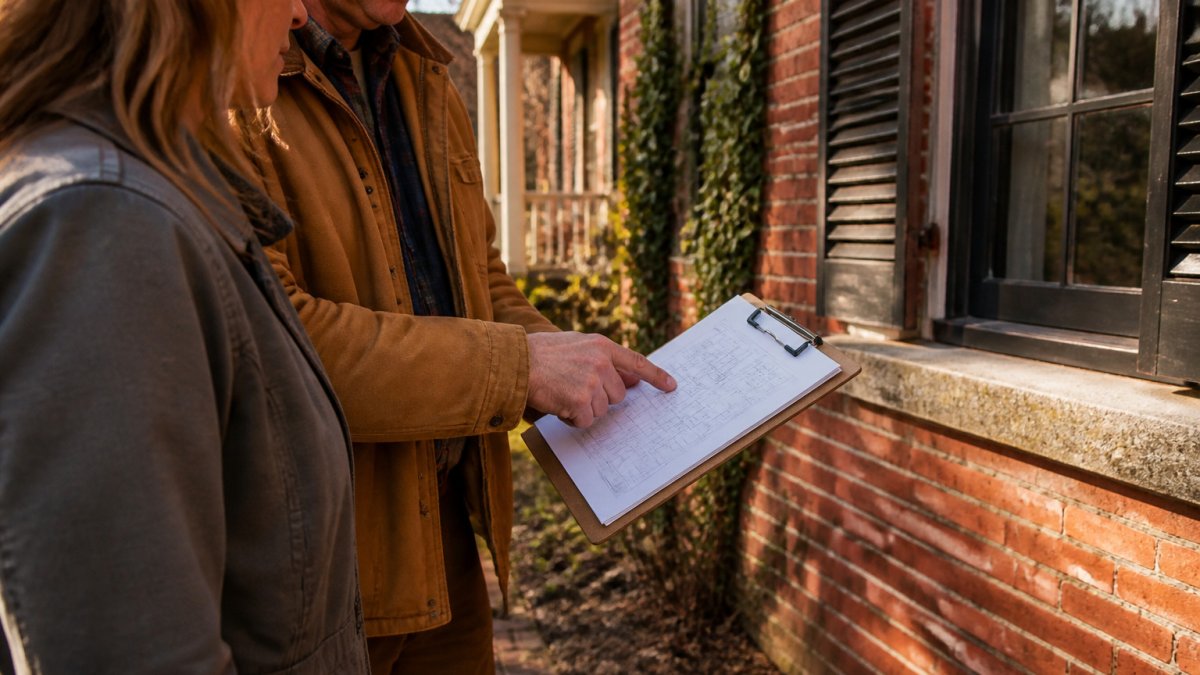
Ask whether the project finished on time and on budget, how changes were communicated, and whether the finished work still looks right years later. A contractor who restored a similar building and can show you the result is worth more than a long list of general jobs.
Understanding Historic Building Renovation Costs and Contingency Planning
Historic renovation costs vary based on the building's condition, materials and scope. Pricing depends on how much hand work is required, how hard the materials are to source and what the site reveals once walls are opened. Because so much is unknown until work begins, the budget conversation should focus less on a single total and more on how the contract handles uncertainty.
Ask for a detailed written quote broken into line items, and check with Master Builder llc. for current pricing on your project. A quote you can actually compare should separate:
- Known scope, work the contractor can see and price with confidence.
- Allowances, placeholder amounts for items not yet selected or quantified, such as replacement slate, millwork profiles, or hardware. Ask how overages on allowances are billed.
- Contingency, a line item reserved for concealed conditions. Contingency amounts on older buildings vary with the building's condition and the amount of unknown areas, so ask each bidder how they size theirs. Confirm whether unused contingency is returned to you or absorbed.
- Permit and inspection fees, confirm whether these are included or billed separately.
- Payment schedule, progress payments tied to completed phases, with a final payment held until punch-list completion. Avoid large upfront deposits beyond what your state allows.
Plan the contingency fund before work begins. Hidden conditions such as rot, outdated wiring or failing foundations are common in older buildings. Learn how to avoid construction budget overruns and set aside funds for surprises.
Watch out: a quote that is far below the others often leaves out masonry, lead-safe work or permit costs. Compare line items, not totals, and ask each bidder to explain what they excluded.
Reading Bids Side by Side
When bids arrive, normalize them before comparing. Build a simple table with one row per scope item and one column per bidder, then note for each whether the bid includes, excludes, or allowances the item. Pay particular attention to:
- Materials and methods specified (lime mortar versus cement, plaster repair versus drywall, window restoration versus replacement).
- Who pulls permits and coordinates inspections.
- How change orders are priced and approved.
- Whether the schedule accounts for material lead times common on historic work.
A bid that is clear about what it does not cover is often safer than one that looks complete but hides assumptions.
Comparing Bids and Scope of Work Across Specialists
Bids for historic work can look very different even when they describe the same project. One contractor may include hand plaster repair while another assumes drywall. Compare the scope, not just the price.
- Do the bids list the same materials and methods?
- Does each bid say who handles permits and inspections?
- Are allowances for unknown conditions clearly stated?
- Does the timeline match the phases of the work?
Our approach is to put scope in writing, so you can compare proposals on equal terms.
Bids for historic work can look very different even when they describe the same project, so the article suggests comparing what each bid covers.
| Bid item | What to check | Why it matters |
|---|---|---|
| Materials and methods | Lime mortar, plaster repair, window restoration | One bid may assume drywall or cement |
| Permits and inspections | Who pulls and coordinates them | Avoids gaps in responsibility |
| Allowances | Clearly stated for unknown conditions | Shows how overages are handled |
| Timeline | Matches the project phases | Confirms the schedule is realistic |
Scheduling Your Specialist Hires by Project Phase
Most historic projects happen in stages, and each stage may need a different specialist. Hire for each phase as the work requires.
- Assessment: A preservation architect or consultant documents the building's condition.
- Design and permits: An architect prepares plans that meet preservation guidelines.
- Structural and envelope work: Masonry, roofing and carpentry crews complete exterior repairs.
- Interior restoration: Plaster, millwork and finish specialists handle interior work.
- Final coordination: A general contractor manages schedules, inspections and the final walkthrough.
Coordinating these specialists is a core part of the general contractor's role. Master Builder llc. works with architects and subcontractors to coordinate schedules between trades.
Ready to talk through your historic project? Book online with Master Builder llc. to start with a site visit and written scope.
Frequently Asked Questions
How much does it cost to renovate a historic building?
Historic renovation costs depend on the building's age, its size, the condition of original materials such as masonry, slate, and wood trim, and how much of the work must follow preservation standards. Specialty trades often price higher than general repairs because they use traditional materials and skilled labor. Request itemized bids that separate assessment, materials, labor, and contingency. Master Builder llc. does not publish fixed prices, so contact the company for a quote based on your project's scope, timeline, and site conditions.
What qualifications should a historic preservation contractor have?
Look for documented experience with historic buildings, familiarity with the Secretary of the Interior's Standards for Rehabilitation, and crews with trade skills in masonry, carpentry, or slate roofing as the project requires. Ask whether the contractor has worked with preservation consultants or architects on comparable structures. Verify licensing and insurance for your state and locality, and confirm that the people doing the work are the ones the company has described.
How do you verify a contractor's experience with historic buildings?
Ask for a list of completed historic projects, including the year built, the work performed, and the owner or architect you can contact. Visit one or two sites if possible. Request photos of finished work and ask how the contractor handled original materials that needed repair rather than replacement. A contractor with genuine experience can describe specific challenges, such as matching historic mortar or dealing with hidden structural decay.
When should you hire an architect for a historic renovation?
Bring in an architect or preservation consultant before construction begins, ideally during the assessment and planning phase. They can document existing conditions, prepare a historic structure report, and coordinate with contractors and subcontractors so the design stays consistent with preservation goals. Hiring them early reduces the risk of costly changes once walls are opened and original fabric is exposed.