 comparison
Hardwood Floors vs Luxury Vinyl Plank: A 2026 Comparison
Table of Contents
- Hardwood Floors vs Luxury Vinyl Plank: Quick Comparison
- Durability, Wear Resistance, and Longevity
- Moisture and Water Resistance
- Hardwood Flooring Installation Cost Per Square Foot
- Luxury Vinyl Plank Flooring Pros and Cons
- Engineered Hardwood vs Luxury Vinyl Plank: Which Offers Better Long-Term Value
- Maintenance, Refinishing, and Repair
- Aesthetic Appeal, Resale Value, and Home Investment
- Frequently Asked Questions
Last Updated: September 23, 2026
Hardwood Floors vs Luxury Vinyl Plank: Quick Comparison
When comparing hardwood floors vs luxury vinyl plank (LVP), the choice depends on your priorities, budget, and how you use your space.
Hardwood offers authentic beauty and long-term home value but demands moisture control and refinishing. Luxury vinyl plank delivers waterproof durability and lower upfront costs but can't be refinished and won't increase resale value like solid wood.
| Comparison Factor | Hardwood Floors | Luxury Vinyl Plank |
|---|---|---|
| Durability (years) | 20-30+ with refinishing | 10-20 |
| Moisture Resistance | Poor in wet areas | Excellent (100% waterproof) |
| Installation Cost | Higher labor costs | Lower labor costs |
| Maintenance | Refinishing needed | Minimal (no refinishing) |
| Resale Value Impact | Significant increase | Modest increase |
| Comfort Feel | Warm, authentic | Softer underfoot |
| Repairability | Can be sanded/refinished | Surface damage permanent |
Durability, Wear Resistance, and Longevity
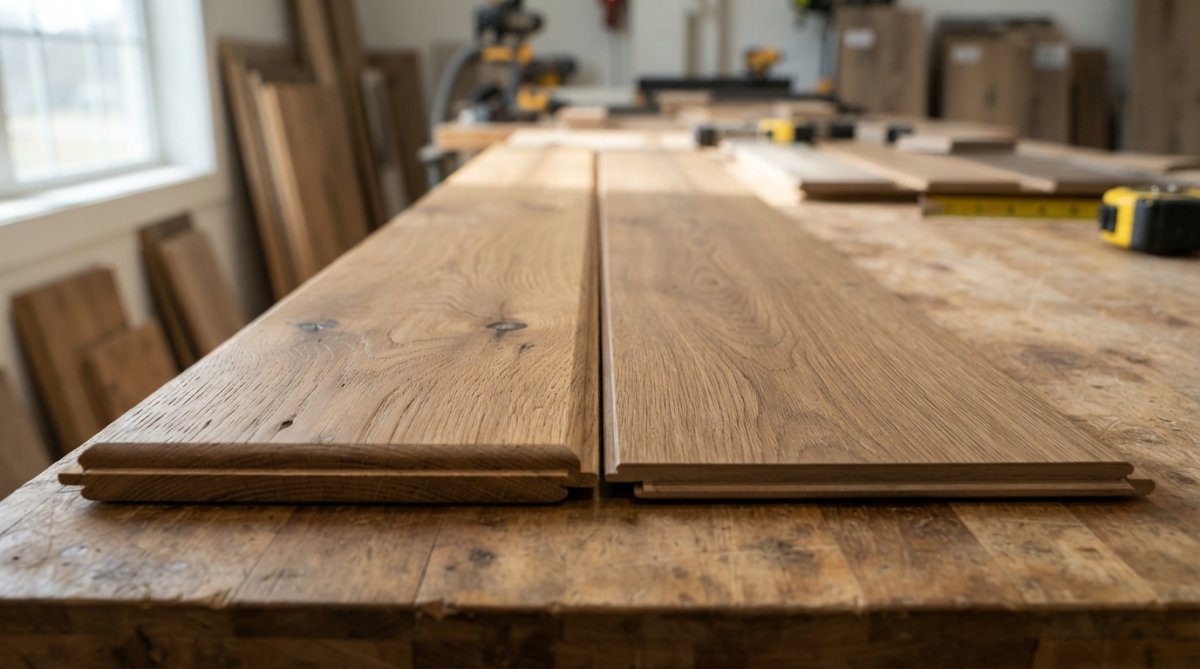
Hardwood floors last 20-30+ years and can be sanded and refinished multiple times, allowing a 50-year-old floor to look brand new. Hardwood's authentic natural wood grain ages beautifully.
Luxury vinyl plank lasts 10-20 years but cannot be refinished once damaged. However, LVP's wear layer resists scratches and dents better than natural wood in busy households, Shaw Floors' ScufResist Platinum finish exemplifies this durability.
For young children, pets, or high-traffic spaces, luxury vinyl's scratch resistance matters. For long-term home investment (20+ years), hardwood's refinishing ability lets it look new again at the 15-year mark.
Moisture and Water Resistance
Luxury vinyl plank is 100% waterproof, making it ideal for kitchens, bathrooms, basements, and moisture-prone areas. CoreTec's patented waterproof core technology prevents water damage even in direct contact, critical for occupied job sites.
Hardwood is susceptible to moisture damage. Seasonal humidity causes expansion and contraction, leading to cupping or crowning. Water damage causes permanent warping. Solid hardwood is unsuitable for bathrooms, kitchens with heavy water use, or basements without moisture barriers.
Engineered hardwood's multi-ply construction offers better moisture stability than solid wood, reducing seasonal shrinking and expansion. However, it's not waterproof and shouldn't be installed in direct-moisture areas.
For occupied spaces, commercial offices, and tenant improvements, luxury vinyl's waterproof finish prevents costly damage and disruption.
Hardwood Flooring Installation Cost Per Square Foot
Hardwood installation costs depend on the type of wood and complexity of the project, but material is only part of the total cost.
Subfloor Preparation: The Hidden Cost Difference
This is where hardwood and luxury vinyl diverge dramatically in total installed cost. Hardwood requires rigorous subfloor preparation that luxury vinyl does not.
Hardwood installation demands moisture testing, subfloor leveling to industry standards, acclimation time, and optional underlayment.
Total subfloor prep for hardwood adds to the overall cost and timeline, especially if moisture or leveling issues arise.
Luxury vinyl plank is more forgiving on subfloor condition but requires smoothness to prevent joint failure. LVP tolerates up to 1/4 inch variation over 10 feet (versus hardwood's 3/16 inch), with lower leveling costs. LVP requires no moisture testing or acclimation time, allowing faster installation and occupancy.
Hardwood installation is labor-intensive, requiring subfloor prep, moisture testing, and acclimation time. Total installed costs depend on the specifics of the project.
Luxury vinyl plank installation is simpler and faster. Many LVP products use click-lock systems that don't require adhesive, reducing labor time. Installation can often be completed in a single day for a typical room, with minimal subfloor prep. Total installed costs depend on the specifics of the project.
The real cost difference emerges over time. Hardwood may cost more upfront, but refinishing extends its life significantly. Luxury vinyl requires replacement when the wear layer fails. For a long-term timeline, hardwood's ability to be refinished makes it a strong long-term option, but only if you account for the upfront subfloor prep investment and factor in that refinishing itself adds to the cost every 15-20 years.
Luxury Vinyl Plank Flooring Pros and Cons
Luxury vinyl plank flooring pros are compelling for specific situations. The waterproof finish makes it ideal for moisture-prone areas. Installation is quick and affordable. The aesthetic versatility is excellent, modern LVP mimics natural wood grain so convincingly that most people can't tell the difference at first glance. Shaw Floors luxury vinyl offers many wood-look visuals and plank sizes to match any design.
Maintenance is minimal. Luxury vinyl doesn't require waxing, polishing, or refinishing. A simple sweep and damp mop keep it clean. For busy households or commercial spaces, this low-maintenance profile is a major advantage.
The cons are significant for long-term planning and indoor health. Luxury vinyl plank flooring cons include limited resale value impact compared to hardwood. While it improves your home's appeal, it doesn't command the same price premium as authentic hardwood. The surface layer cannot be refinished if damaged.
Indoor Air Quality and VOC Emissions represent a health consideration most flooring guides overlook. Luxury vinyl products are manufactured from polyvinyl chloride (PVC) and plasticizers. During and immediately after installation, some LVP products release volatile organic compounds (VOCs), primarily phthalates and other chemical off-gases. The EPA and California Air Resources Board (CARB) regulate VOC emissions, and many manufacturers now produce low-VOC or FloorScore-certified products that meet stricter standards. However, budget LVP options may still off-gas noticeably for 48-72 hours after installation, causing headaches, respiratory irritation, or odor complaints in occupied spaces. High-quality LVP products from manufacturers like Coretec and Karndean are engineered to minimize off-gassing, but this quality difference directly impacts price. If you have chemical sensitivities, asthma, or are installing flooring in an occupied home with infants or elderly residents, request third-party certifications (FloorScore, GreenGuard Gold, or ANSI/BIFMA standards) before purchase. Hardwood, by contrast, off-gases minimal VOCs, primarily from the finish coat (polyurethane or water-based sealers), which cure within days and emit far fewer chemicals than vinyl's ongoing off-gassing potential.
Additionally, luxury vinyl doesn't feel or sound like real wood. The underfoot feel is softer and more plastic-like, which some homeowners find less satisfying than the solid feel of hardwood. The acoustic profile is also different, footsteps on LVP produce a hollow sound that some perceive as less refined than hardwood's solid thud.
Engineered Hardwood vs Luxury Vinyl Plank: Which Offers Better Long-Term Value
Engineered hardwood vs luxury vinyl plank comes down to your timeline and priorities. Engineered hardwood offers real wood aesthetic with better moisture stability than solid hardwood. The multi-ply construction resists seasonal expansion and contraction, making it suitable for basements or areas with variable humidity. Armstrong Flooring Engineered Hardwood is compatible with various subfloor types, including concrete slabs.
However, engineered hardwood has a limitation: it can be refinished, but only once or twice because the wear layer is thinner than solid wood. After refinishing, the real wood veneer eventually wears through to the plywood substrate. This limits its long-term repairability compared to solid hardwood.
Luxury vinyl plank offers no refinishing option at all, but it costs less upfront and requires zero maintenance. For a 10-15 year horizon in a high-traffic space, luxury vinyl wins on total cost and hassle. For a 20-30 year investment where you plan to stay in the home, engineered hardwood or solid hardwood delivers better long-term value because you can refinish it and maintain authentic wood character.
The decision hinges on whether you're optimizing for immediate affordability or long-term home value.
Maintenance, Refinishing, and Repair
Maintenance demands differ dramatically between these two options. Hardwood requires regular care: sweeping to remove grit (which scratches the finish), damp-mopping with hardwood-specific cleaners, and avoiding standing water. Every few years, hardwood benefits from recoating (a thin new finish layer without sanding). Every 15-20 years, professional refinishing restores the floor to like-new condition.
Aesthetic Appeal, Resale Value, and Home Investment
Hardwood floors add undeniable aesthetic value. The authentic natural wood grain, warm tones, and character that develops over time create a sense of quality and permanence that luxury vinyl cannot replicate. Hardwood signals investment and care to potential buyers.
Frequently Asked Questions
Should I replace my hardwood floors with luxury vinyl plank?
The choice depends on your priorities. If your hardwood floors show signs of water damage, cupping, or severe wear, and your home experiences high moisture or heavy foot traffic, luxury vinyl plank offers better moisture resistance and durability in those conditions. However, if your hardwood is structurally sound and you value long-term resale appeal and the ability to refinish the floors later, keeping or maintaining hardwood may be the better investment. Consider your lifestyle, budget, and how long you plan to stay in the home.
What are the downsides of luxury vinyl plank flooring?
Luxury vinyl plank has several limitations: it cannot be refinished if the wear layer is damaged, it does not increase home resale value as significantly as hardwood, some products may emit VOCs (volatile organic compounds) affecting indoor air quality, and it can feel less authentic than real wood despite realistic textures. Additionally, luxury vinyl plank is not as eco-friendly as solid hardwood, and lower-quality products may dent or show wear in high-traffic areas over time. Always check product specifications for VOC emissions and wear-layer thickness.
How does the installation process differ between hardwood and luxury vinyl plank?
Hardwood installation typically requires professional expertise, takes longer, and involves subfloor preparation, nailing or stapling, and finishing work on-site. Luxury vinyl plank uses click-lock or glue-down systems that are faster and simpler, often allowing DIY installation. LVP requires a clean, level subfloor but no sanding or finishing. Hardwood installation costs more in labor, while LVP installation is more affordable and less disruptive, making it ideal for occupied spaces where minimal downtime is critical.
Do high-end homes use luxury vinyl plank flooring?
High-end homes typically favor solid hardwood or engineered hardwood in living areas because of the aesthetic prestige and resale value these materials command. However, luxury vinyl plank is increasingly used in high-end homes specifically in kitchens, bathrooms, and laundry rooms where moisture resistance is essential. Premium luxury vinyl plank products with realistic wood grain and thick wear layers are chosen for these spaces, but hardwood remains the standard for primary living areas in luxury properties due to its long-term investment appeal.