 Listicle
Best Countertops for Small Kitchen Remodels Compared
Last Updated: November 6, 2026
Quick Summary
For most small kitchen remodels, quartz is the best all-around countertop because it is non-porous, stain resistant, and needs no sealing. Laminate is the lowest-cost option, while butcher block and solid surface suit households that value warmth or easy repair. The right pick depends on how often you cook and how much upkeep you will accept.
- Replacing countertops in a small kitchen is estimated at $800 to $2,500 in 2026.
- Quartz resists stains and needs no sealing, but trivets matter because heat can discolor it.
- Granite and quartzite handle heat well but must be sealed periodically.
- Laminate is the least expensive option but scorches under hot pans and cannot take much heat.
- Fixed costs like removal and crew visits do not shrink with counter size, so small kitchens can cost more per square foot.
Table of Contents
- Why Countertop Choice Matters More in a Small Kitchen
- Countertop Materials Suitable for Small Kitchens
- Best Countertops for Small Kitchen Remodels on a Budget
- Installed Cost Factors and Small-Project Pricing
- Best Countertop Colors and Patterns for Small Spaces
- Space-Saving Countertop Designs and Small Kitchen Organization Ideas
- Quartz Alternatives for Kitchen Countertops
- Scheduling a Countertop Consultation for Your Remodel
- Frequently Asked Questions
Why Countertop Choice Matters More in a Small Kitchen
Countertops take up more of your visual field in a small kitchen than in a large one, and they carry more daily work per square foot. In a compact layout, the counter is often your only prep surface, your landing zone for groceries, and the place where everything meets the sink and range. Picking the wrong surface means you feel it every single day.
The cost range for replacing countertops in a small kitchen is estimated at $800 to $2,500 in 2026, according to G&S Design and Build's 2026 kitchen remodeling cost estimate. That estimate varies with material, size and removal work, so the surface you choose drives much of the final number. Master Builder llc. works with homeowners on these decisions, and the right countertop depends on how you actually cook and clean.
Countertop Materials Suitable for Small Kitchens
Most small-kitchen remodels narrow down to a handful of materials. Each one trades off cost, heat tolerance, maintenance, repairability and how it reads visually. Light surfaces tend to make a compact room feel more open, while darker stone can make the same room feel smaller. The table below compares the materials most often specified for compact kitchens against the priorities that actually drive satisfaction after installation.
| Material | Typical installed cost tier | Heat tolerance | Staining and etching | Maintenance routine | Repairability | Best fit |
|---|---|---|---|---|---|---|
| Laminate | Lowest | Low, scorches under hot pans | Resists most stains; seams can swell if water intrudes | Damp cloth; avoid abrasive cleaners | Limited; damaged sections usually replaced | Tight budgets, rentals, low-heat cooking |
| Butcher block | Low to moderate | Low, scorches and can char | Stains from liquids if left unwiped; knife marks are normal | Oil every few weeks; sand and refinish periodically | High, sanding removes scratches and stains | Warmth, knife-friendly prep, willing maintainers |
| Solid surface | Moderate | Low to moderate, trivets recommended | Non-porous; scratches can be sanded out | Mild soap and water | High, seams and scratches can be renewed | Seamless looks, households wanting easy repair |
| Quartz | Moderate to high | Moderate, resin can discolor under sustained heat | Highly stain resistant; non-porous | Soap and water; no sealing | Low to moderate, chips need professional repair | Busy households, low-maintenance priorities |
| Granite | Moderate to high | High | Porous; needs sealing to resist stains | Seal periodically; wipe up oils and acids | Moderate, chips can be filled but color match varies | Heavy cooking, heat exposure |
| Quartzite | High | Very high | Porous; sealing required | Seal periodically | Moderate | Heavy cooking with natural-stone look |
| Marble | High | Moderate | Etches and stains easily, especially from acids | Seal; wipe spills immediately | Low, etching is difficult to reverse | Low-use kitchens, baking stations, visual impact |
| Porcelain | Moderate to high | High | Non-porous; highly stain resistant | Soap and water | Low, chips are difficult to repair | Slim profiles, scratch resistance |
Quartz and Quartzite: Durability and Upkeep
Quartz is engineered from crushed stone bound with resin, which makes it non-porous and easy to clean. You rarely need to seal it, and it resists staining better than most natural stone. The tradeoff is heat: sustained contact with a hot pan can discolor the resin, so trivets matter more than they do on granite. Quartzite is a natural stone that is harder than granite and more heat resistant, but it needs periodic sealing. Both suit small kitchens where the counter sees constant use, but quartz favors low-maintenance households while quartzite favors cooks who want natural stone and can commit to sealing.
Granite, Marble and Butcher Block: Tradeoffs
Granite is durable and heat resistant, though it is porous and needs sealing. Marble looks striking and bright, but it etches and stains easily, so it suits low-use kitchens better than heavy cooking. Butcher block is warm and affordable, but it needs oiling and can scorch near the range. Choose based on how you actually use the space.
Matching Material to Household and Cooking Habits
A common pattern is that the right material depends less on style than on who cooks and how often. Frequent cooks who sear, fry and set down hot pans tend to be happiest with granite or quartzite, accepting the sealing routine in exchange for heat tolerance. Households that want a wipe-and-go surface with minimal upkeep usually land on quartz or solid surface. Rentals and budget-driven remodels often favor laminate for its low upfront cost and easy replacement, while bakeries-at-home and households that value repairability over heat resistance do well with butcher block or solid surface. Marble is best reserved for low-use kitchens or dedicated baking stations where etching can be tolerated or avoided.
Watch out: a material that scores well on style can still fail the daily-use test, if you routinely set hot pans down without a trivet, resin-based quartz and laminate will show it before natural stone does.
Best Countertops for Small Kitchen Remodels on a Budget
If your budget is tight, laminate and solid surface options can save money without sacrificing function. Laminate is the least expensive and comes in many light patterns, though it scratches and cannot take much heat. Solid surface sits in the middle, repairs well and can be seamed invisibly. Engineered quartz often costs more upfront but holds up for years with minimal care.
Installed Cost Factors and Small-Project Pricing
Installed cost depends on more than the slab price. Removal of the old counter, sink cutouts, edge profile, backsplash and plumbing reconnection all add to the bill. Small kitchens often have fewer linear feet, which can lower material cost, but the fixed labor for a crew visit stays about the same. Get a written, itemized quote that lists removal and reinstallation separately.
The line items below are the ones that most often move a compact-remodel countertop budget, and each behaves differently in a small kitchen than in a large one.
- Material and slab minimums. Stone and engineered slabs are sold as whole slabs, and a small kitchen may use only part of one. Ask whether the fabricator charges for the full slab or only the square footage used, and whether remnants from other jobs are available, remnant pricing is one of the few ways a small project can lower a stone budget.
- Fabrication. Cutting, edge profiling and polishing are priced per linear foot or per job. Fewer linear feet lowers the fabrication line, but complex edges and cutouts add back.
- Removal and disposal. Tearing out the old counter and hauling it away is a separate labor line. Older counters with tile or backsplash attached can take longer to remove.
- Sink and cooktop cutouts. Each opening is a fabrication step. Undermount sinks usually require edge polishing and sometimes additional support, which adds cost compared with a drop-in sink.
- Edge profile. A simple eased or square edge is typically the least expensive; bullnose, bevel and ogee profiles add fabrication time.
- Backsplash. A short backsplash using the same material adds linear feet and cutouts for outlets; a full-height slab backsplash adds significantly more material.
- Plumbing and electrical reconnection. Disconnecting and reconnecting the sink, disposal and any cooktop wiring is often billed by the trade, not the fabricator.
- Access and scheduling. Tight kitchens, stairs and building access can slow installation, and small jobs may be scheduled around larger projects, which can affect timing more than price.
Because fixed costs, crew mobilization, template visit, removal, do not shrink with the size of the counter, the per-square-foot installed price in a small kitchen is often higher than the same material in a large one. That is the main reason a compact remodel can feel expensive relative to its square footage. A practical approach is to request quotes on two or three materials with the same scope so the comparison is apples to apples, and to ask each fabricator to break out material, fabrication, removal, cutouts and backsplash as separate lines.
For a broader view of how remodel budgets are built, see Refinish or Replace Hardwood Floors: Cost Guide. Pricing from Master Builder llc. depends on material, measurements and schedule, so request a quote for current figures. To see how these costs compare with other remodel projects, read the Custom Home vs Production Home: Cost Breakdown.
Best Countertop Colors and Patterns for Small Spaces
Light colors such as white, cream and soft gray reflect more light, which helps a small kitchen feel larger. Subtle veining or speckled patterns hide daily wear better than solid dark tones. Contrast works well on kitchen islands, where a darker surface can anchor the room without shrinking the rest of the space.
Space-Saving Countertop Designs and Small Kitchen Organization Ideas
Fold-down or slim-profile counters can add a temporary prep surface without permanent footprint. Continuous countertops with fewer seams keep crumbs and spills from collecting, which matters when every inch counts. Pair the surface with drawer organizers and vertical storage to keep the working area clear.
Quartz Alternatives for Kitchen Countertops
If quartz is not right for you, consider quartzite for heat tolerance, solid surface for seamless repairs, or porcelain for a thin, scratch-resistant option. Our Kitchen Countertop Alternatives to Granite guide compares these options in more depth. Each alternative carries its own maintenance profile, so weigh them against your cooking habits. Our Kitchen Countertop Alternatives to Granite guide compares these options in more depth.
Scheduling a Countertop Consultation for Your Remodel
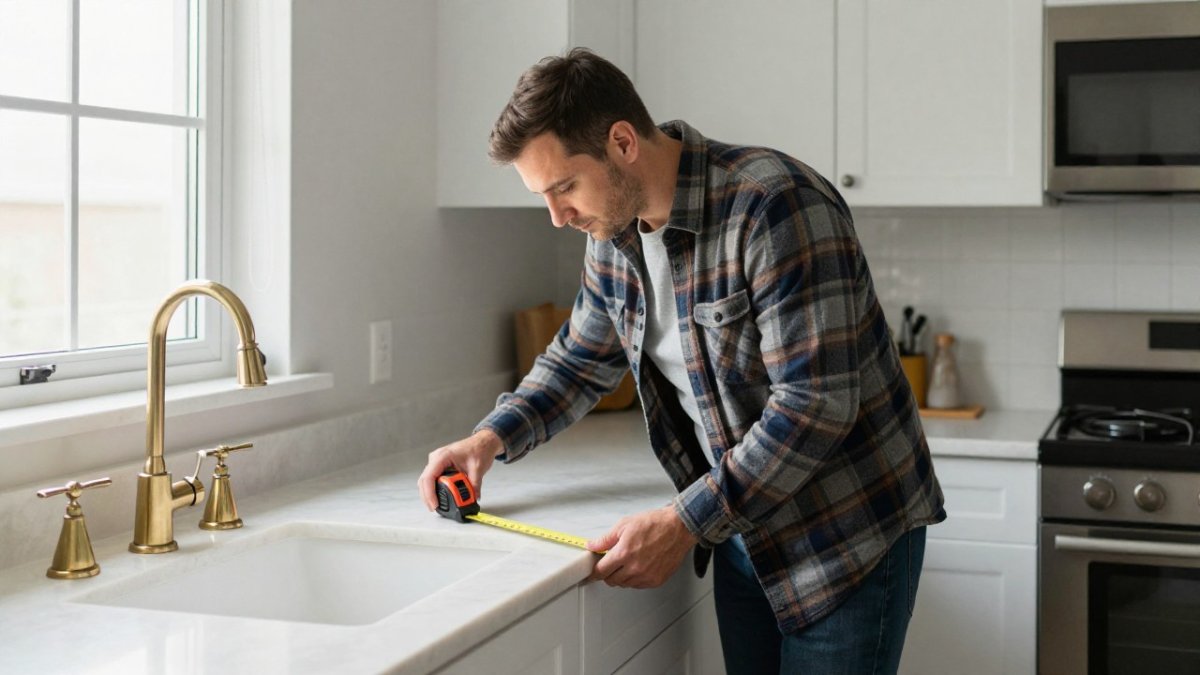
A consultation is the fastest way to match a countertop to your layout, budget and daily routine. Before you call, measure the run of counter, note your sink and appliance locations, and list the materials you like. Overall project timelines can vary, so review How Long Does It Take to Build a Custom Home? to plan around other trades. When you are ready, you can book online with Master Builder llc. to get started.
Frequently Asked Questions
What is the best countertop for a small kitchen?
For most small kitchens, engineered quartz offers the best balance of durability, low maintenance and consistent appearance. It is non-porous, resists staining and does not need sealing like natural stone. Granite and quartzite suit homeowners who want natural variation and heat tolerance, while butcher block works well as a secondary prep surface. Installed cost depends on material, size and removal, so compare written estimates that itemize material, labor and removal before deciding.
Which countertop colors make a small kitchen look bigger?
Light colors such as white, cream and light gray reflect more light and create a sense of visual continuity, which can make a compact room feel more open. Soft neutrals with subtle veining or low-contrast patterns keep the space calm without drawing too much attention. Rounded edges and slim profiles also reduce visual weight. Contrast is becoming more prominent on kitchen islands, so a darker island can work if the perimeter counters stay light.
Are quartz countertops a good choice for a small kitchen?
Quartz is a strong choice for small kitchens because it resists stains, needs no sealing and handles everyday use well. It comes in many colors and patterns, including light tones that help a small room feel brighter. Its main drawbacks are that it is sensitive to prolonged high heat and can cost more than laminate. Ask your contractor to confirm the heat limits of the specific product before placing hot pans directly on the surface.
What countertop material is best for a small kitchen on a budget?
Laminate and solid-surface materials are typically the most affordable options, while engineered quartz sits in the mid-range. Budget-conscious remodels often pair a cost-effective perimeter surface with a higher-end material on a smaller prep area. Cost depends on material, square footage, edge profile and removal of the existing top, so request an itemized quote from your general contractor to compare accurately.