
 ultimate-guide
Signs of Quality Construction Workmanship
Table of Contents
- What Defines Quality Construction Workmanship
- Visual Inspection Techniques for Identifying Poor Workmanship in New Homes
- Structural Integrity Indicators and Building Standards
- How to Evaluate Contractor Craftsmanship During Walkthroughs
- Construction Quality Control Checklist for Homeowners
- Warning Signs of Poor Craftsmanship and Subcontractor Performance
- Long-Term Performance and Material Serviceability
- Frequently Asked Questions
Last Updated: September 3, 2026
What Defines Quality Construction Workmanship
Quality construction workmanship combines precise execution, attention to detail, and adherence to building standards. It's the difference between a structure that functions beautifully for decades and one that deteriorates within years, creating costly repairs and safety concerns.
At Master Builder llc., we understand that true workmanship extends beyond surface appearance. It encompasses structural integrity, proper material installation, consistent finishing standards, and meticulous attention to how every component performs over time. When you walk into a well-constructed home, you feel it, doors close smoothly, floors are level, trim sits flush. These details result from skilled labor, careful planning, and quality assurance practices that separate professional contractors from those cutting corners.
Poor workmanship leads to water infiltration, misaligned fixtures, uneven surfaces, and structural issues that compound over years. This guide walks you through the visual inspection techniques, structural assessments, and evaluation methods that reveal whether a contractor delivers genuine quality or merely cosmetic appeal.
Visual Inspection Techniques for Identifying Poor Workmanship in New Homes
The most critical skill for evaluating construction quality is learning to see what separates acceptable work from excellent work.
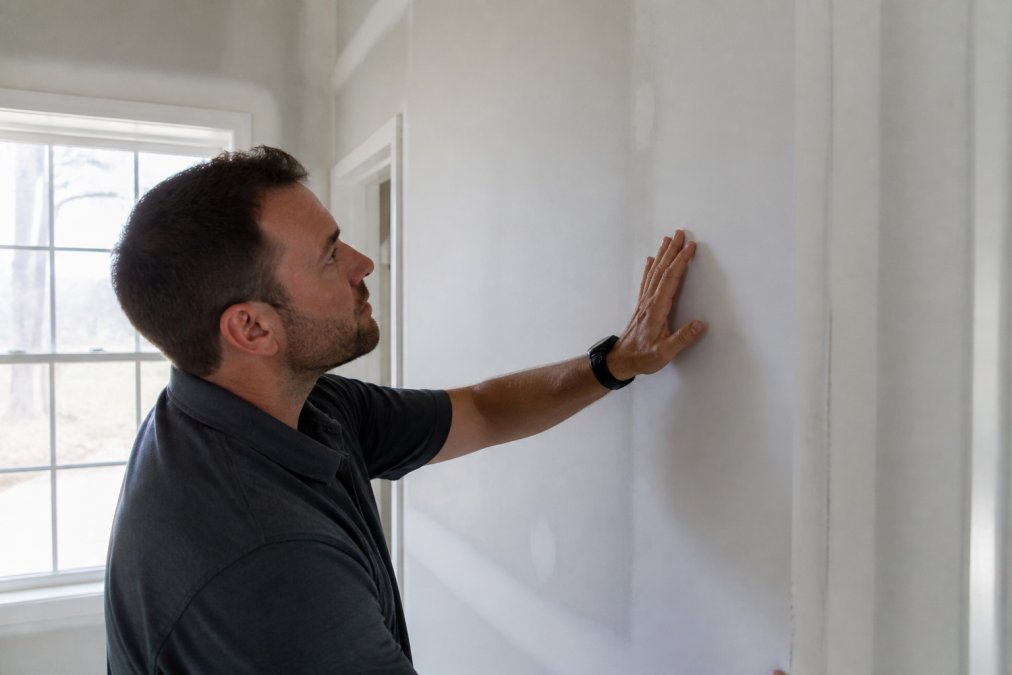
Walk into each room and stand still. Look at walls, ceilings, and trim from across the room, then move closer. Poor workmanship becomes obvious when you shift perspective, uneven paint, visible seams, gaps between trim and walls, and inconsistent finishes jump out under scrutiny.
Bring a flashlight. Many defects hide in shadows or become visible only under direct light. Paint roller marks, drywall imperfections, and surface irregularities reveal themselves under bright, angled light. Check corners where two walls meet for crisp, straight lines without gaps or visible caulk lines.
Run your hand along trim, countertops, and built-in surfaces to feel for inconsistencies, rough spots, gaps, or uneven transitions. Quality workmanship means smooth surfaces with proper transitions between materials.
Checking Drywall and Paint Finish Standards
Drywall and paint quality set the tone for how finished a space feels. Examine drywall seams closely, quality finishing means seams are barely perceptible, properly taped, mudded, and sanded so they blend seamlessly. Walk along walls at an angle to the light; poorly finished seams create shadows that make them obvious.
Paint finish quality involves consistent coverage, proper sheen levels, and absence of drips, runs, or roller marks. Quality paint application means two coats minimum with even color throughout (nahb.org). Look at transitions between wall colors or between walls and trim for sloppy overlap marks or inconsistent blending.
Inspect paint around fixtures, outlets, and trim. Quality workmanship means clean lines with no paint overlap onto trim or fixtures. Paint splatters, uneven coverage, or paint buildup on hardware indicates rushed or careless finishing work.
Evaluating Trim Work and Caulking
Trim work reveals contractor attention to detail more clearly than almost any other element. Quality trim installation means straight lines, tight joints, and consistent gaps where trim meets walls.
Check for gaps between trim and walls, properly installed trim sits flush with minimal gaps. Look at inside and outside corners where trim meets for tight, seamless corners without visible gaps or caulk lines.
Caulking quality matters significantly. Where caulk is used, it should be smooth, consistent, and nearly invisible. Poor caulking looks lumpy, discolored, or creates visible lines where gaps exist. Run your finger along caulked seams; they should feel smooth and continuous.
Examine door and window trim for even spacing and square installation. Doors and windows should sit square in their openings. Crooked, uneven, or poorly fitted trim signals installation problems that may affect door and window operation long-term.
Structural Integrity Indicators and Building Standards
Beyond visual finish, structural integrity determines whether a building performs safely and reliably. Several indicators reveal whether a contractor followed proper building standards.
Plumb, Level, and Square Assessments
Three measurements define structural quality: plumb (vertical), level (horizontal), and square (90-degree angles). Professional contractors verify these constantly during construction.
Walls should be plumb, perfectly vertical (iccsafe.org). Stand in a corner and look up, does the corner line appear straight? Check door frames for perfect verticality and squareness. Doors that don't close properly often indicate framing that isn't square.
Floors should be level. Walk across them and notice if they feel flat or if you sense subtle slopes. Check with a simple level tool if available. Floors that aren't level signal either improper framing or settling issues.
Countertops, shelving, and built-in surfaces should be level. Liquids shouldn't pool or roll across surfaces. Kitchen and bathroom countertops are particularly important, improper leveling causes water to collect in unwanted areas, leading to damage.
Building Envelope Quality
The building envelope, the outer shell protecting the interior from weather, must be airtight and properly sealed. Poor envelope quality leads to water infiltration, energy loss, and structural damage.
Inspect around windows and doors from both inside and outside. Caulking should be continuous and complete. Gaps or missing caulk allow water infiltration. Check for water stains, discoloration, or soft spots around windows and doors, these indicate previous or ongoing water problems.
Look at the foundation and exterior where walls meet the ground. Proper grading slopes away from the structure, directing water away. If grading slopes toward the house or water pools near the foundation, that's a structural concern.
Check attic spaces if accessible. Proper ventilation and insulation matter for long-term structural health. Moisture accumulation leads to wood rot and mold, compromising structural integrity. Quality construction ensures proper ventilation without air leaks that compromise the thermal envelope.
How to Evaluate Contractor Craftsmanship During Walkthroughs
A systematic walkthrough process reveals contractor quality more effectively than casual observation. Approach the inspection methodically, room by room, checking the same elements in each space.
Create a checklist before the walkthrough, noting specific items to evaluate: drywall finish, paint quality, trim installation, fixture alignment, surface finish, and visible defects. Photograph or video-record defects you find for clear communication and documentation.
Check functionality as well as appearance. Open and close all doors and windows multiple times, they should operate smoothly without sticking or binding. Drawers should slide smoothly. Cabinet doors should close evenly without gaps. These functional elements reveal installation quality that visual inspection alone might miss.
Pay attention to inconsistencies. If one room has perfectly finished drywall and another has visible seams, that signals inconsistent quality control. Professional contractors maintain consistent standards throughout a project.
Cabinet Hardware and Fixture Installation
Cabinets and fixtures reveal craftsmanship through installation precision. Examine cabinet alignment, doors should align perfectly with adjacent doors and the cabinet frame. Gaps between cabinet doors should be uniform and minimal.
Check hardware functionality. Hinges should allow doors to open and close smoothly. Drawer slides should glide without resistance. Hardware should be installed straight and secure. Loose hardware or misaligned hinges signal rushed installation.
Look at cabinet finish quality. Edges should be smooth without splinters. Finish should be consistent across all visible surfaces. Blotchy, uneven, or poorly applied stain or paint reflects on overall finishing quality.
Examine countertop installation and seams. Countertop seams should be nearly invisible, properly aligned and finished. Countertops should sit level and flush against backsplash and trim.
Interior Finish Quality and Surface Defects
Interior finishes reveal overall craftsmanship quality. Inspect flooring for levelness, gaps, and finish quality. Wood or laminate flooring should sit flush without gaps between planks. Tile should be level with consistent grout lines. Carpet should be smooth without wrinkles or bunching.
Check wall surfaces for damage, inconsistent finish, or visible defects. Paint should be uniform in color and sheen. Wallpaper should be smooth without bubbles, wrinkles, or peeling edges.
Examine ceiling finishes. Textured ceilings should be even without obvious gaps or imperfections. Drop ceilings should be level and properly aligned. Sagging, staining, or misalignment indicates installation problems or hidden moisture issues.
Construction Quality Control Checklist for Homeowners
This checklist helps homeowners systematically evaluate contractor craftsmanship during walkthroughs.
| Element | What to Check | Signs of Quality | Red Flags |
|---|---|---|---|
| Drywall Finish | Seams, smoothness, tape visibility | Seamless, smooth surface | Visible seams, ridges, tape |
| Paint Coverage | Color uniformity, finish consistency | Even coverage, no drips | Roller marks, inconsistent color |
| Trim Installation | Gaps, alignment, corners | Flush against walls, tight corners | Visible gaps, crooked trim |
| Caulking | Smoothness, visibility, consistency | Smooth, nearly invisible | Lumpy, discolored, excess material |
| Doors & Windows | Operation, alignment, frame square | Smooth operation, square frames | Sticking, binding, misaligned frames |
| Cabinets | Door alignment, hardware function | Uniform gaps, smooth operation | Misaligned doors, loose hardware |
| Countertops | Level, seam quality, finish | Level surface, invisible seams | Visible seams, uneven surface |
| Flooring | Level, gaps, finish quality | Smooth, flush, even color | Gaps, wrinkles, uneven finish |
| Fixtures | Installation, alignment, function | Secure, level, smooth operation | Loose, crooked, binding |
| Walls | Surface finish, color consistency | Even finish, no damage | Damage, inconsistent color |
Walk through each room and check these elements systematically. Document any defects with photos or notes.
Warning Signs of Poor Craftsmanship and Subcontractor Performance
Certain defects consistently indicate broader quality problems. Uneven or misaligned surfaces suggest framing problems or inadequate quality control. If walls bow, floors slope, or surfaces don't align properly, that indicates either improper construction or poor installation.
Water stains, discoloration, or soft spots near windows, doors, or the foundation reveal envelope failures. Water infiltration is one of the most damaging construction defects and signals serious structural risk.
Gaps, cracks, or separation between materials indicate improper installation or material selection. Quality construction means tight, seamless transitions. Visible gaps suggest rushed work or inadequate material fit.
Loose fixtures, hardware, or trim that moves when touched reveal inadequate fastening. Quality installation means everything is secure and stable.
Inconsistent quality across different areas signals poor quality control. If one contractor's work appears excellent while another's appears rushed, that indicates the general contractor didn't maintain consistent standards.
Long-Term Performance and Material Serviceability
Quality workmanship extends beyond initial appearance to long-term performance. Materials must be installed correctly to perform as intended.
Quality installation means materials will perform for their intended lifespan. Properly installed roofing, siding, and weatherproofing protect the structure from the elements. Poor installation compromises material durability, leading to premature failure and costly repairs.
Finish quality affects long-term appearance and maintenance requirements. Quality paint and stain finishes resist fading and deterioration. When evaluating workmanship, consider how finishes will age over five, ten, or twenty years.
Structural elements installed to proper building standards perform safely and reliably. Framing, foundation work, and load-bearing elements must meet code requirements and be installed precisely.
Master Builder llc. understands that quality construction workmanship isn't just about meeting minimum standards, it's about creating structures that serve their occupants reliably, beautifully, and safely for decades. Our collaborative approach with architects and designers, combined with comprehensive on-site quality assurance, ensures that every detail receives the attention it deserves.
Evaluating construction quality requires systematic observation, attention to detail, and understanding of what separates professional workmanship from shortcuts. The checklist and inspection techniques covered here give you the tools to assess whether a contractor delivers genuine quality craftsmanship. When you're ready to move forward with your construction project, partner with a contractor who demonstrates these quality standards consistently. The National Association of Home Builders provides construction standards guidance to help homeowners understand professional expectations. Master Builder llc. brings expertise in delivering quality construction workmanship across residential and light commercial projects. Book a consultation with us to discuss your project and experience the difference that genuine craftsmanship makes.
Frequently Asked Questions
Q: What are the most common signs of poor workmanship in new construction?
A: Poor workmanship often shows up as uneven surfaces, misaligned fixtures, drywall seams that are visible or cracked, paint coverage that's thin or uneven, and caulking that's inconsistent or missing. Cabinets that don't close properly, countertops with visible gaps, and trim work that doesn't fit flush against walls are also red flags. Structural issues like walls that aren't plumb or floors that aren't level indicate deeper problems with quality construction workmanship and warrant professional inspection.
Q: How do I evaluate contractor craftsmanship before hiring?
A: Ask to see completed projects and visit active job sites if possible. Request references from recent clients and ask specifically about schedule adherence and how the contractor handled surprises. During your initial walkthrough, pay attention to how the contractor communicates, whether they explain their quality assurance process, and if they can articulate their standards for fit and finish. Ask how they manage subcontractor performance and what guarantees they offer on workmanship. A contractor confident in their craftsmanship will be transparent about their methods and standards.
Q: What should I look for during a construction walkthrough?
A: Use a construction quality control checklist covering drywall and paint finish standards, plumb and level assessments, cabinet hardware functionality, and fixture installation alignment. Inspect countertop seams, grout sealing, and caulking consistency. Check that doors and windows operate smoothly, trim work is flush and properly finished, and there are no visible surface defects. Document any discrepancies with photos and dates. A professional walkthrough should take 2-3 hours for a typical residential project and should be done before final payment.
Q: How does building code compliance relate to craftsmanship quality?
A: Building codes establish minimum safety and structural standards, but they don't guarantee superior fit and finish or long-term durability. Quality craftsmanship exceeds code minimums by using proper materials, precise installation techniques, and attention to detail that prevents future problems. A home can pass inspection and still have poor interior finish quality, misaligned fixtures, or workmanship that won't hold up over time. The best contractors understand that structural integrity and building envelope quality must meet code, while superior craftsmanship adds value through durability and functionality.
This article was written using GrandRanker