
 how-to
Book Your Custom Home Remodel Consultation: A Homeowner's Guide
Table of Contents
- Why Book a Custom Home Remodel Consultation
- Home Remodeling Consultation Checklist: What to Prepare Before You Meet
- Questions to Ask General Contractors During Your Consultation
- Understanding Remodeling Project Timeline Expectations
- Virtual vs. In-Home Consultation: Which Is Right for You
- Consultation vs. Estimate vs. Quote: What's the Difference
- What Happens After Your Consultation
- Frequently Asked Questions
Last Updated: September 1, 2026
Why Book a Custom Home Remodel Consultation
A custom home remodel consultation is where your vision meets professional expertise and rough ideas transform into actionable plans. Many homeowners skip this step or treat it as a formality, assuming they already know what they want or believing consultations are just sales pitches. That's a costly misunderstanding. A well-conducted consultation establishes whether you and your contractor are aligned on scope, timeline, budget, and communication style before any work begins.
A custom home remodel consultation allows the contractor to assess your property, understand the scope of work, identify potential challenges, and provide accurate guidance on timeline and feasibility. It gives you the opportunity to evaluate the contractor's process, communication style, and whether they'll manage the entire project or leave you coordinating between architects, designers, and subcontractors. It's also where realistic budgeting happens, not rough estimates, but thoughtful cost analysis based on actual site conditions and your specific requirements.
Home Remodeling Consultation Checklist: What to Prepare Before You Meet
Walking into a consultation unprepared wastes everyone's time and results in incomplete or inaccurate information. Preparation shows the contractor you're serious and organized, ensuring the conversation stays focused on what matters most.
Gather Your Home Documentation
Collect your original home purchase documents, permits from past renovations, floor plans, and photographs of areas you want to remodel. If you've had a recent inspection, bring that too. Contractors use this information to understand how your home was built, what systems are in place, and what potential complications might exist behind walls or under floors.
A contractor reviewing your home's history can often predict where problems might surface during construction. If your home was built in the 1970s and you're doing a kitchen remodel, knowing that information helps the contractor anticipate outdated wiring, plumbing configurations, or insulation approaches that no longer meet code.

Bring photos of the current state of spaces you want to remodel, showing wear, damage, and existing conditions. These photos give the contractor context they can't get from a site visit alone.
Define Your Project Scope and Vision
Spend time thinking about what you actually want to accomplish. Are you remodeling your kitchen to improve functionality? Updating a bathroom for modern fixtures? Adding a room? Write down your priorities. If you're working with an architect or designer already, bring their preliminary sketches or concept drawings.
Think about your timeline. Do you need the project completed by a specific date? Are you living in the home during construction? Do you operate a business from the property that needs to stay operational? These constraints dramatically affect how a contractor plans the work and what they charge.
Consider your budget range. You don't need exact numbers, but you should have a realistic sense of what you can spend. A contractor can't give you meaningful guidance if they don't understand your financial boundaries. A contractor working without budget parameters will naturally propose comprehensive solutions that may exceed what you're willing to spend.
Questions to Ask General Contractors During Your Consultation
The questions you ask during a consultation reveal whether a contractor has the experience, process, and communication style you need. Specific questions about their actual approach to project management, communication, and problem-solving tell you how they'll work with you over months of construction.
Questions About Experience and Process
Ask: "Walk me through your process from initial consultation to project completion. What happens at each stage?" This forces the contractor to articulate their actual workflow. Listen for specifics: Do they do formal pre-construction planning? Do they create a detailed project schedule? Do they identify potential issues before they become problems?
Ask about their experience with projects similar to yours. "How many whole-home remodels have you completed in the last three years?" A contractor with genuine experience can speak specifically about complications they've encountered and how they handled them.
Inquire about their collaborative approach with architects and designers. "How do you work with the design team? Who manages the relationship between architecture and construction?" Master Builder llc. manages this liaison directly, ensuring design decisions translate smoothly into construction without you acting as intermediary.
Ask how they handle occupied job sites. "Can you work on a property where people are living or working? What precautions do you take?" If you can't relocate during construction, this is critical.
Questions About Timeline, Budget, and Communication
Ask: "How do you create your project schedule? What factors affect timeline most significantly?" Listen for whether they consider seasonal factors, permit acquisition time, material lead times, and coordination with other trades.
Ask about their communication process. "How often will I hear from you during construction? How do I reach you if issues come up? Who's my primary contact?" Clarify expectations upfront so you're not frustrated by communication that doesn't match your needs.
Discuss budget management directly. "How do you handle change orders? If we discover something unexpected during construction, how do we address it?" Ask: "What's included in your estimate, and what isn't?" This question gets at whether the contractor will surprise you with costs or work transparently.
Ask about their guarantee or warranty on work. "What's your warranty on the work you perform? If something isn't right after completion, how do we address it?" A contractor confident in their work will have a clear answer.
Understanding Remodeling Project Timeline Expectations
One of the most common sources of frustration in home remodeling is unrealistic timeline expectations. Homeowners often underestimate how long quality work takes, and some contractors deliberately lowball timelines to win business.
A realistic custom home remodel timeline depends on scope. A kitchen remodel typically takes 8-16 weeks depending on complexity (nahb.org). A whole-home remodel can take 6-12 months or longer. These timelines assume no major unforeseen issues and assume the contractor has availability to start promptly.
Permit acquisition adds time many homeowners don't anticipate. Depending on your jurisdiction and scope, permits can take 2-8 weeks to obtain (iccsafe.org). Your contractor should factor this into their timeline estimate and manage the permit process.
Material lead times have extended in recent years. Custom cabinetry, specialty fixtures, and high-end appliances can take 6-12 weeks to arrive (nkba.org). A contractor who doesn't discuss material lead times upfront is setting you up for delays.
Seasonal factors affect construction schedules. Work requiring exterior access or involving roofing, siding, or foundation work may be constrained by weather.
The contractor's workload also affects your timeline. If they're booked solid, your project may not start for several weeks or months. Ask: "When could you realistically start my project?" and "What's your typical timeline from contract signing to construction start?"
Complexity and site conditions matter significantly. A straightforward kitchen remodel in a newer home will progress faster than a remodel in an older home where walls might contain outdated wiring, plumbing, or structural issues.
Virtual vs. In-Home Consultation: Which Is Right for You
An in-home consultation allows the contractor to assess your property directly. They see the actual space, understand how light moves through it, identify structural elements that might affect the remodel, and spot potential complications like water damage, settling, or outdated systems. For a custom home remodel, an in-home consultation is almost always necessary.
Virtual consultations work best for initial screening or follow-up conversations after an in-home visit. They're efficient for discussing design concepts or reviewing plans you've already created together. But a virtual consultation cannot replace an in-person assessment of your property.
Some contractors offer a hybrid approach: a virtual consultation to discuss your project goals, followed by an in-home visit if both parties want to move forward.
For a whole-home remodel or any project involving structural changes, insist on an in-home consultation. The contractor needs to see your property and identify potential issues. A quote based solely on virtual conversation or photos will likely be inaccurate.
Consultation vs. Estimate vs. Quote: What's the Difference
Many homeowners use these terms interchangeably, but they mean different things.
A consultation is an exploratory conversation where the contractor learns about your project, assesses your property, discusses your goals and constraints, and provides general guidance on feasibility, timeline, and budget range. A consultation doesn't include a detailed price.
An estimate is a preliminary cost projection based on limited information. It's typically provided during or shortly after a consultation and gives you a ballpark figure. Estimates are often non-binding and subject to change once more detailed planning happens.
A quote (or formal proposal) is a detailed, itemized price for the specific work outlined in a contract or scope document. A quote is typically binding, with specifics: materials, labor, timeline, payment schedule, and warranty. You receive a quote after detailed planning and design are complete.
The progression typically looks like this: consultation → estimate → detailed planning and design → formal quote → contract → construction.
Many homeowners expect a quote after a single consultation. That's unrealistic for a custom home remodel. A detailed quote requires understanding your exact specifications, coordinating with architects or designers, and planning the work in detail.
Ask during your consultation: "What will I receive from you after this meeting? Will it be an estimate or a formal quote? What does that document include, and what does it not include?"
What Happens After Your Consultation
After your consultation, the contractor should follow up with documentation of what you discussed. This might be an email summarizing key points, a preliminary estimate, or a formal proposal outlining next steps.
If you're seriously interested in moving forward, the contractor typically provides a more detailed estimate or proposal outlining the scope of work, preliminary timeline, budget range, and the process for moving to a formal design and quote phase.
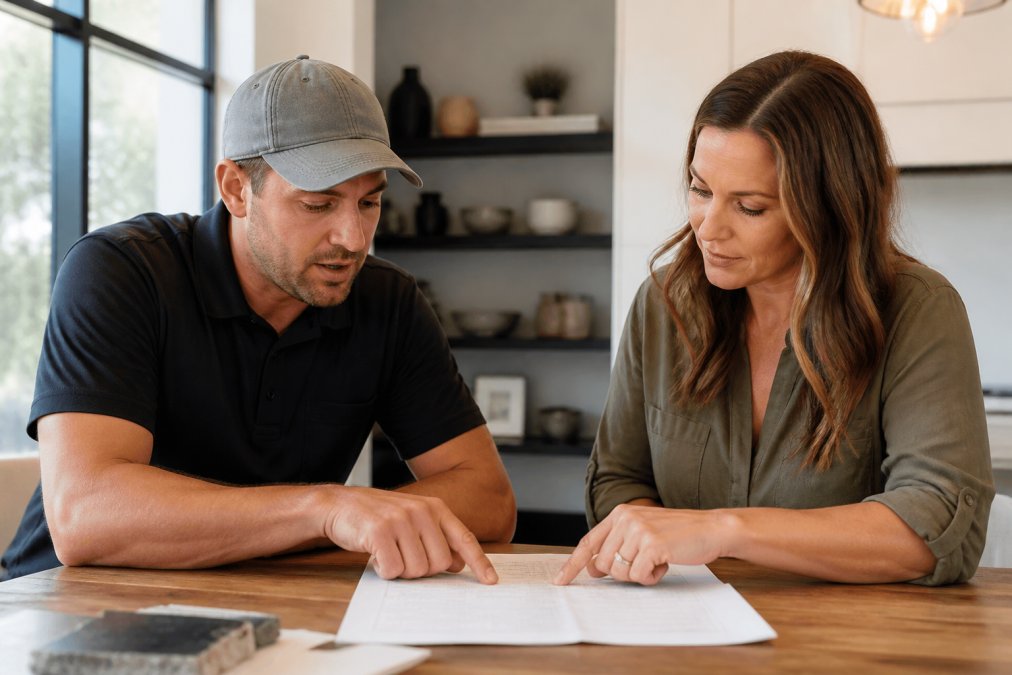
Many contractors offer a pre-construction planning phase before actual work begins. This phase involves detailed design coordination, material selection, permit acquisition, and schedule finalization. During this phase, you move from the estimate stage to a binding quote. Master Builder llc. uses this pre-construction phase to ensure complete alignment with clients before construction starts, preventing surprises and ensuring the contractor manages all coordination with architects, designers, and subcontractors.
Ask during your consultation: "What happens between now and when construction actually starts? How long does the pre-construction phase typically take? When would we finalize the contract and lock in the price?"
If you're considering multiple contractors, it's reasonable to get consultations and preliminary estimates from all of them before deciding who to move forward with. Compare not just the pricing but the process, communication style, and how thoroughly each contractor addressed your concerns.
Pay attention to how quickly the contractor follows up after your consultation. A contractor who gets back to you within a day or two is likely organized and takes client communication seriously.
Booking a custom home remodel consultation is your opportunity to evaluate whether a contractor has the expertise, process, and communication style your project needs. The questions you ask, the documentation you prepare, and the attention you pay to how the contractor responds will tell you far more than any portfolio or testimonial ever could. Master Builder llc. approaches every consultation as the beginning of a partnership, taking time to understand your vision, assessing your property thoroughly, and ensuring you have realistic expectations before committing to work together. When you're ready to take the next step, book your consultation and experience the difference that thoughtful, professional guidance makes from day one.
Frequently Asked Questions
Q: What should I prepare before a home remodel consultation?
A: Gather your home's documentation, including floor plans, building permits, and previous inspection reports if available. Create a list of your project goals, desired finishes, and any specific challenges you've experienced. Take photos of the areas you want to remodel, and bring inspiration images or design samples. Document your budget range and timeline expectations. Having this information ready helps your contractor understand the full scope and provide accurate guidance during the consultation.
Q: What questions should I ask during a home remodeling consultation?
A: Ask about the contractor's experience with similar projects, their approach to working on occupied sites, and how they manage communication with architects and subcontractors. Request details on their project timeline process, how they handle budget changes, and what guarantees they offer on workmanship. Ask for references from recent clients and clarification on what's included in their pre-construction proposal. Understanding their process for permit acquisition and site management will help you determine if they're the right fit for your project.
Q: How long does a custom home remodel consultation typically take?
A: Most initial consultations last 60 to 90 minutes, depending on your project's complexity and the size of the area being remodeled. A detailed site assessment and discussion of your vision, budget, and timeline require adequate time. Some contractors may schedule follow-up consultations if your project involves multiple phases or requires architectural design input. Plan to discuss the full scope, feasibility, and next steps before concluding the meeting.
Q: What's the difference between a consultation, estimate, and quote?
A: A consultation is an initial meeting where you discuss your project goals, needs, and expectations with a contractor. An estimate is a preliminary cost assessment based on general scope, while a quote is a formal, detailed proposal with specific pricing for defined work. During your consultation, the contractor conducts a site assessment and creates a construction proposal outlining the project scope, timeline, and budget feasibility. Understanding these distinctions helps you know what to expect at each stage of the process.
This article was written using GrandRanker