 how-to
Does Homeowners Insurance Cover Metal Roof Replacement?: What to Know
Quick Summary
Homeowners insurance usually covers a metal roof replacement only when damage comes from a sudden, covered event such as a storm, hail, or fire. It generally does not pay for a roof that wore out with age, neglect, or cosmetic wear. Your policy's dwelling coverage and valuation basis decide how much you actually receive.
- Covered causes include windstorms, hail, fire, and falling trees or objects.
- Wear and tear, aging, neglect, and cosmetic damage are commonly excluded.
- Under replacement cost policies, the first payment is actual cash value, with holdback released after completion.
- Document the damage with dated photos and get a written inspection before filing.
- Get itemized written quotes from at least two licensed contractors.
Table of Contents
- Covered Causes: Wind, Hail, Fire and Falling Objects
- Will Insurance Cover a 20-Year-Old Roof?
- Actual Cash Value vs. Replacement Cost for Metal Roofs
- Metal Roof Hail Damage Insurance Claim: Coverage and Limits
- Metal Roof Replacement Cost for a 2,000-Square-Foot House
- How to File a Roof Damage Insurance Claim, Step by Step
- Scheduling Your Roof Inspection and Next Steps with Master Builder llc.
- Frequently Asked Questions
When Homeowners Insurance Pays for a Metal Roof Replacement
Homeowners insurance usually covers a metal roof replacement only when the damage came from a sudden, covered event such as a storm. It generally does not pay for a roof that simply wore out with age. Many homeowners find this distinction surprising, and it decides most claims.
Your policy's dwelling coverage is the part that pays for the roof. Coverage applies to direct physical loss, meaning damage you can see and document. Gradual aging, normal wear, and lack of maintenance fall outside that coverage.
Watch out: a metal roof can look fine from the ground while it carries hail dents or loose fasteners. Get a close inspection after any major storm, before the damage gets worse.
Covered Causes: Wind, Hail, Fire and Falling Objects
Most policies cover roof damage from a list of named or covered perils. The common ones include:
- Windstorms that lift or tear panels
- Hail that dents or cracks the roof
- Fire, including damage from a fire on a neighboring property
- Falling trees or other objects
Many metal products carry a UL Class 4 impact-resistance rating, which insurers often view as a durable choice UL Class 4 impact rating for roofing products.
Exclusions: Wear and Tear, Aging and Cosmetic Damage
Policies commonly exclude:
- Wear and tear and normal aging
- Neglect and lack of maintenance
- Cosmetic damage, such as small surface marks that do not affect how the roof works
Cosmetic damage exclusions can affect metal roof claims. Ask your insurer how its policy defines cosmetic damage.
Will Insurance Cover a 20-Year-Old Roof?
A 20-year-old roof can still be covered, but the age itself does not decide the claim. Insurers look at the roof's condition and whether a covered event caused the damage.
Some insurers will not renew a policy once a roof reaches a certain age. Metal roofs are generally considered insurable for roughly 30 to 40 years before age-related non-renewal may apply RoofVista guide on roof insurance and age in 2026. That means a 20-year-old metal roof is often still within the normal range, though rules differ by insurer and state.
Connecticut recently tightened the rules. Insurers there must show evidence of material degradation or damage before they can refuse to renew a policy over the roof Connecticut Insurance Department 2026 consumer advisory.
Actual Cash Value vs. Replacement Cost for Metal Roofs
Your policy type changes not just how much you receive but when you receive it. Replacement cost value (RCV) pays what it costs to replace the roof at current prices, up to policy limits. To compare how metal roofing and asphalt shingles differ over their service lives, see that guide.
Most RCV policies do not pay the full replacement amount up front. The common pattern works like this:
- Initial payment is ACV. The insurer pays replacement cost minus depreciation first, which is often well short of the contractor's price.
- Depreciation is held back. The withheld amount is called recoverable depreciation, and it is released only after you show the work was completed.
- You must document completion by a deadline. Submit the contractor's final invoice, receipts, and completion photos within the period stated in the policy, commonly 180 days, though the window varies by policy and state. Miss it and the holdback can be forfeited.
- Nonrecoverable depreciation never comes back. Some items are depreciated permanently under the policy, so read the settlement to see which depreciation is recoverable and which is not.
With an ACV-only policy, there is no holdback to recover: the depreciated amount is the final payment, and an older metal roof may pay out far less than a new roof costs.
A roof surface payment schedule, if your policy has one, can reduce the payout based on roof age regardless of whether you carry RCV. Second, matching rules affect scope: if damage is confined to one slope but matching panels or the factory finish are no longer available, the insurer may pay to replace more than the damaged area, or may not, depending on the policy's matching language.
Check your declarations page for the valuation basis, any roof schedule, and the completion deadline for recoverable depreciation. If you are unsure, ask your agent in writing, and keep that answer with your claim file.
Metal Roof Hail Damage Insurance Claim: Coverage and Limits
Hail is one of the most common reasons for a metal roof claim. Large hail can still dent metal panels.
Check your policy for these items:
- Your windstorm or hail deductible, which is often a percentage of dwelling coverage rather than a flat dollar amount
- Any limit on roof payouts
- Whether the policy includes a roof surface payment schedule that reduces the payout based on roof age
Hail damage is usually covered, but the deductible can take a large share of a small repair. Get a repair estimate before you file to see whether the claim is worth it.
Metal Roof Replacement Cost for a 2,000-Square-Foot House
Replacement cost depends on roof size, panel type, pitch, and labor in your area. The average cost to replace a roof in 2026 has been reported at about $9,526, with a typical range between $5,868 and $13,217 RubyHome 2026 roofing statistics. Metal roofs usually cost more than asphalt shingles up front.
Get written quotes from at least two licensed contractors. For a broader view of what a custom or production home build costs, compare the cost breakdowns. Pricing depends on the panel system, underlayment, and removal of the old roof, so ask each contractor for an itemized estimate.
The article gives these figures for what a metal roof replacement typically costs.
| Item | Value | Note |
|---|---|---|
| Average roof replacement cost (2026) | $9,526 | Reported average figure |
| Typical cost range | $5,868 to $13,217 | Varies by size, panel type, pitch, and local labor |
| Metal vs. asphalt cost | Metal costs more up front | Compare itemized quotes from at least two licensed contractors |
How to File a Roof Damage Insurance Claim, Step by Step
A metal roof claim rewards preparation more than most property claims, because the damage is often subtle from the ground and the policy language around cosmetic damage and matching is where payouts get trimmed. The steps below are ordered the way a claim typically unfolds.
- Document the damage before anything else. Photograph each roof plane from the ground with a date stamp, then take close-ups of dents, lifted panels, displaced fasteners, creased seams, and any granule-like debris or paint transfer in gutters. Consider shooting a straight-on and a raking-angle photo of the same dent, since raking light can show deformation a flat photo may miss. Note the date of the storm and keep a simple log of when you first noticed each item.
- Prevent further damage and keep every receipt. Tarping, temporary bracing, or moving valuables out of a leaking area is your duty under the policy, and those costs are typically reimbursable as part of the claim. Keep the tarp receipt and a photo of the temporary repair in place.
- Report the claim promptly and in writing. Call your insurer, get a claim number, and follow up with an email summarizing what you reported and when. Most policies require prompt notice, and delay is one of the most common reasons a claim gets scrutinized.
- Get a written inspection from a licensed roofer who works on metal. Ask for a report that identifies the panel profile and finish, lists each damaged area by roof plane, states whether the damage is functional or cosmetic, and gives an itemized repair estimate. A report that says only "roof damaged" gives the adjuster nothing to price.
- Ask for the policy language that will govern the claim. Before the adjuster visits, request the dwelling coverage form, any cosmetic-damage exclusion, any roof surface payment schedule, and any endorsement that changes how the roof is valued. Reading these first tells you which questions to ask on the roof.
- Walk the roof with the adjuster. Point out each documented area, hand over the contractor report, and ask the adjuster to note in the file any item they are excluding and why. Ask whether the estimate is being written on a repair or replacement basis and which pricing platform is being used.
- Compare the settlement line by line. Put the adjuster's estimate next to your contractor's estimate and identify the differences: quantity of panels, labor hours, underlayment, flashing, removal and disposal, and any code-required upgrades. Ask for an itemized written explanation for every line that was reduced or omitted.
- Dispute in writing, then escalate. If the numbers do not reconcile, send a written disagreement that cites the specific line items and attaches your contractor's report and photos. Ask for a reinspection. If that fails, request the written basis for the denial or underpayment, and review your policy for an appraisal clause, which lets each side hire an appraiser and, if needed, an umpire to set the amount. Your state insurance department also takes consumer complaints, and the back of your policy or the department's website explains how to file one.
Watch out: do not sign a release, a proof-of-loss with numbers you have not verified, or a final payment until you understand whether it closes the claim or leaves recoverable depreciation available later.
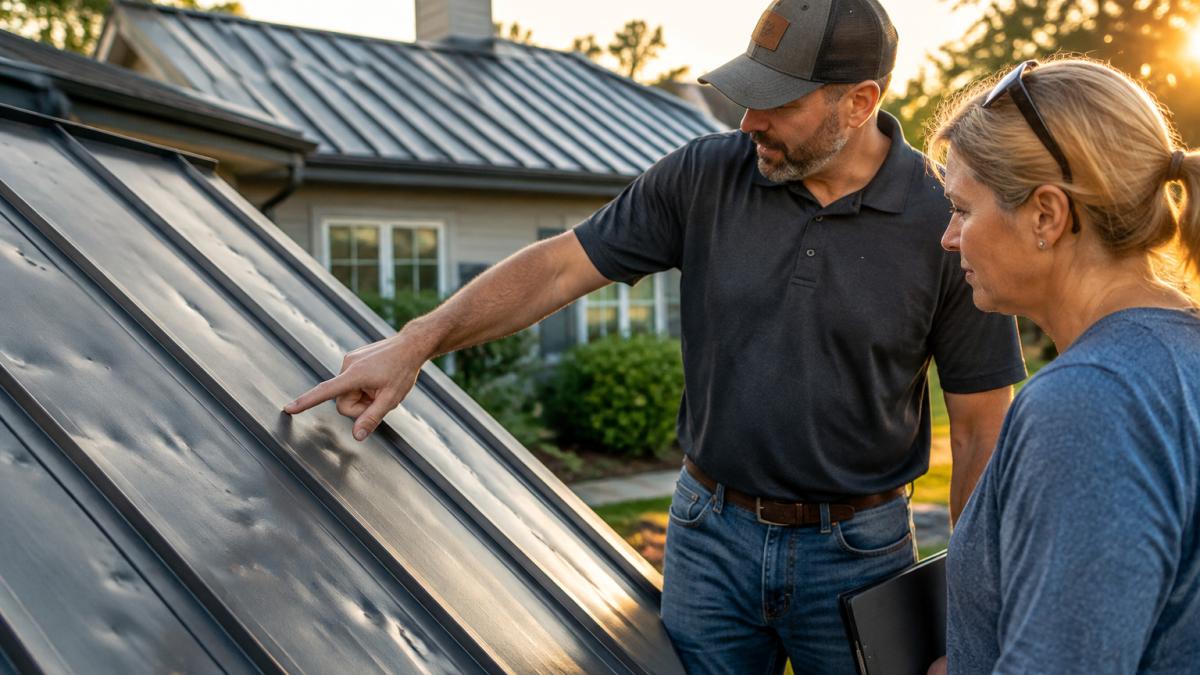
A claim file is only as strong as the documentation behind it, and the contractor report is the document your insurer will lean on most. Learn how we approach quality craftsmanship on our site.
Scheduling Your Roof Inspection and Next Steps with Master Builder llc.
Start with a clear picture of your roof's condition and your policy terms. Master Builder llc. works on residential and light commercial projects, and we can help you plan repairs or replacement. Contact us to schedule an inspection and get a written estimate you can share with your insurer. Before you book, you can review steps to verify a general contractor license.
Last Updated: November 4, 2026
Frequently Asked Questions
Will homeowners insurance cover a metal roof damaged by hail or wind?
Usually yes, if the damage is sudden and accidental. Hail and windstorm damage are standard covered perils under most homeowners policies, so a dented or torn metal roof from a storm is typically eligible for repair or replacement. Coverage can still be limited by your deductible, any separate wind or hail deductible, and the policy's payout method. Document the damage with dated photos right after the storm, and ask your adjuster to note any cosmetic-only dents, since many policies exclude purely cosmetic damage to metal roofing.
Will insurance cover a 20-year-old roof?
Age alone rarely triggers coverage. A 20-year-old roof is typically insured for storm damage that is sudden and accidental, but insurers may not pay for replacement due to gradual wear, aging, or lack of maintenance. Some carriers also apply age-based non-renewal rules, and insurers set their own age-based rules. Keep maintenance records and inspection reports, since they help show the roof was in good condition before the loss.
Is house insurance more expensive with a metal roof?
It depends on your insurer and location. Insurers price roofs differently, so ask whether any discount applies to your roofing material. Ask your agent for a quote comparing your current roof with a metal roof before you replace it, and confirm whether any discount applies to your policy.
How much does a metal roof replacement cost for a 2,000-square-foot house?
Cost varies widely with the metal type, panel style, pitch, roof complexity, tear-off requirements, and local labor rates, so Master Builder llc. does not publish a standard price. The most reliable figure comes from a written, itemized estimate based on your actual roof. For a current quote, visit the Master Builder llc. website and request an estimate. Compare estimates on the same scope of work, including underlayment, flashing, and disposal.